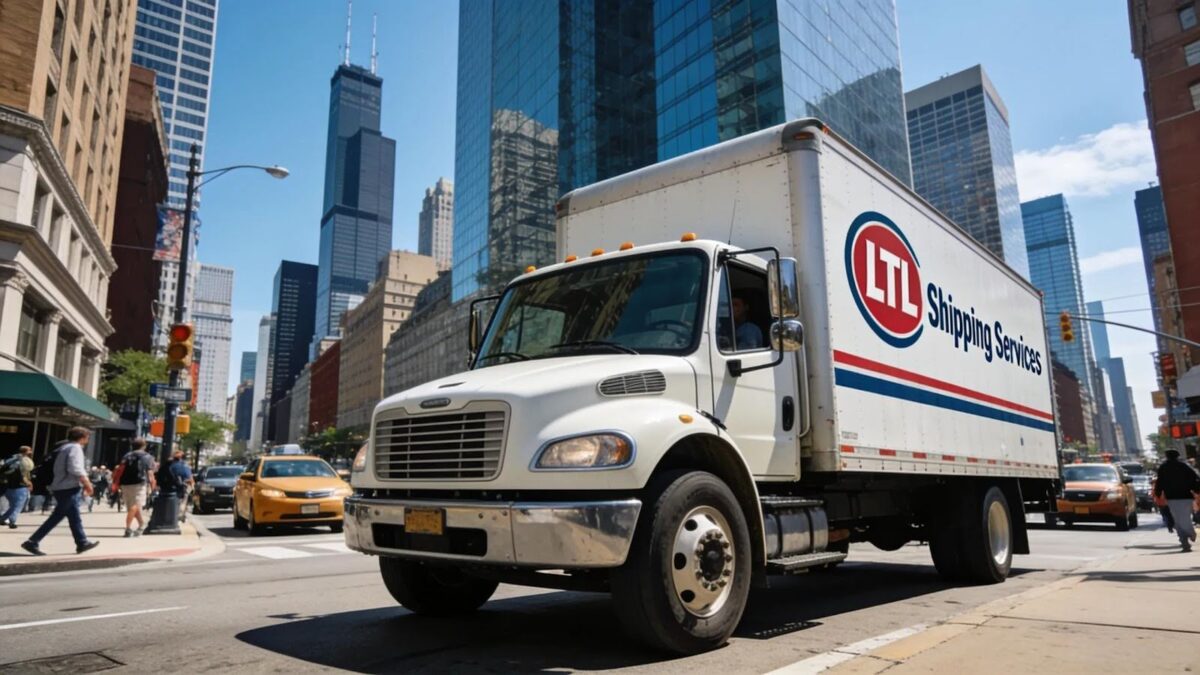
LTL Chicago Trucking Services: How Less Than Truckload Shipping Saves You Money
Navigating logistics in Chicago can be complex, particularly for freight shipping. Less Than Truckload (LTL) shipping provides a cost-effective option for businesses moving smaller freight volumes. This article examines LTL’s definition and benefits, freight consolidation practices, comparisons with full truckload services, the Chicago industries that use LTL, and the operational challenges and trends affecting the market. It also explains how First Class Trucking supports efficient LTL solutions.
What Is LTL Freight Shipping and How Does It Benefit Chicago Businesses?
LTL freight shipping consolidates several smaller shipments from different shippers into a single truckload. This method reduces transportation costs by allocating freight charges across multiple customers rather than paying for an entire truck. LTL also provides volume flexibility, enabling companies to ship varying quantities without requiring full-truck capacity—an advantage for smaller enterprises that lack consistent FTL volume.
How Does Less Than Truckload Shipping Optimize Freight Consolidation?
Optimising freight consolidation is a primary benefit of LTL. By combining shipments headed along similar routes, carriers lower the cost per shipment and allow smaller shippers to access economies of scale. Consolidation also reduces vehicle miles travelled, lowering fuel use and emissions while improving network efficiency.
Which Chicago Industries Commonly Use LTL Trucking Services?
Several Chicago industries commonly use LTL services:
- Retail and E-commerce : Fast, small shipments are essential for inventory replenishment.
- Healthcare Services : Timely delivery of medical supplies and equipment is critical.
- Manufacturing Companies : Manufacturers often require LTL solutions for parts and materials.
These sectors use LTL for cost-effective, flexible shipping that supports inventory management and competitive positioning.
How Does LTL Shipping Compare to Full Truckload in Chicago?
LTL typically offers lower costs for smaller shipments, while full truckload (FTL) is better suited to larger volumes. LTL transit times can be longer due to multiple stops and transfers; FTL shipments are generally more direct and faster. Businesses should evaluate shipment size, transit time requirements and cost trade-offs when selecting between LTL and FTL. For larger loads, consider full truckload services.
What Are the Typical Rate Differences Between LTL and Full Truckload Shipping?
LTL rates are generally lower for smaller shipments because carriers spread costs across multiple customers. For large, high-volume loads, FTL can offer better per-unit economics. Pricing is influenced by shipment dimensions, weight and commodity type; assessing these variables helps companies choose the most cost-effective option.
How Does Shipment Size Affect Chicago Freight Shipping Costs?
Shipment size directly affects freight costs. LTL pricing is calculated by dimensions and weight, so smaller shipments benefit from not paying for unused truck space. Larger consignments may achieve lower per-unit costs via FTL. Analysing shipment profiles against rate structures enables more effective logistics budgeting.
How Does Freight Consolidation Reduce Shipping Costs for Chicago Businesses?
Freight consolidation through LTL lowers per-unit shipping costs by sharing truck space among shippers. This reduces logistics expenditure, can lower inventory carrying costs and improves operational efficiency. The shared model also decreases the number of trucks required, contributing to reduced emissions and improved sustainability.
Transportation Cost Analysis & Vendor Consolidation in Chicago
This analysis covers vendor freight at the Chicago, IL, Enhanced Defense Logistics Agency (EDDS) contractor-operated facility for the 11-month period ending 31 March 1990. Analysis showed vendor consolidation at Chicago saved approximately 151,630 in transportation expenditures during the first 11 months, including losses from start-up. During the final five months of operation, estimated transportation savings were 170,282. Observed EDDS trends for Chicago indicate continued transportation savings. Keywords: Transportation, Vendor, Consolidation, Cost analysis.
Transportation Cost Analysis for EDDS Vendor Consolidation-Chicago, Illinois, 1990
What Are the Logistics Challenges of Freight Consolidation in Chicago?
Consolidation introduces operational challenges such as increased handling and longer transit times from multiple stops, and a higher risk of damage when loads are transferred. LTL pricing structures can also be complex, complicating cost assessments. Identifying these risks and implementing mitigation measures is essential to realise consolidation benefits.
How Does First Class Trucking Ensure Reliable LTL Freight Consolidation?
First Class Trucking uses real-time tracking to provide shipment visibility, offers personalised scheduling to align pickups and deliveries with customer operations, and relies on experienced logistics staff to manage loading procedures that reduce damage and delays. These controls support dependable LTL consolidation for business customers.
How Can Businesses Request Quotes and Manage Their LTL Shipments in Chicago?
Quote requests are typically initiated via online portals where businesses submit shipment details such as dimensions and destination. Tracking tools enable ongoing visibility from pickup to delivery, allowing companies to manage workflows and respond to exceptions. For direct assistance, contact the contact page.
What Is the Process to Obtain Less Than Truckload Shipping Cost Estimates?
Obtain LTL cost estimates by collecting shipment dimensions, weight and destination, then request and compare quotes from providers. After selecting a carrier, schedule the pickup and confirm terms to ensure smooth execution. A structured approach simplifies cost comparison and logistics planning.
Which Tools Does First Class Trucking Provide for Shipment Tracking and Management?
First Class Trucking provides real-time tracking for shipment status and location, dedicated account management for personalised support, and nationwide coverage to connect regional networks. These tools improve visibility and operational reliability.
What Are the Emerging Trends Affecting LTL Shipping Costs and Sustainability in Chicago?
Several trends are influencing LTL costs and sustainability in Chicago: e-commerce growth increases demand for frequent, smaller shipments; sustainability programmes push carriers to reduce emissions through route optimisation and consolidation; and advances in data analytics and automation improve planning and cost control.
How Is E-Commerce Growth Driving Demand for LTL Freight Services?
E-commerce has increased the frequency of smaller shipments, creating demand for LTL solutions that handle volume variability without requiring FTL commitments. LTL enables retailers and online sellers to scale deliveries efficiently and meet customer expectations for timely fulfilment.
What Sustainability Initiatives Are Influencing Chicago Trucking Operations?3
Sustainability initiatives focus on reducing carbon footprints through measures such as route optimisation and load consolidation. LTL supports these goals by lowering the number of trucks on the road, which can deliver both environmental benefits and cost savings for businesses.
| Shipping Method | Cost Efficiency | Ideal Shipment Size | Transit Time |
|---|---|---|---|
| LTL Shipping | High | Small to Medium | Longer due to stops |
| FTL Shipping | Medium | Large | Faster due to direct routes |
Chicago businesses must leverage LTL capabilities to optimise operations, manage shipping costs and maintain reliable delivery performance.
Frequently Asked Questions
What are the typical delivery times for LTL shipping in Chicago?
LTL delivery times vary with distance, route complexity and the number of stops; typical transit ranges from two to five business days. Traffic, weather and carrier operations also affect schedules, so businesses should factor these variables into planning.
How can businesses ensure proper packaging for LTL shipments?
Proper packaging protects goods during handling and transfer. Use sturdy boxes or pallets, secure items with cushioning and strapping, and apply clear labels for fragile or special-handling items. These practices reduce damage risk and handling delays.
Are there size restrictions for shipments using LTL services?
Yes. LTL carriers impose size and weight limits that vary by provider—common weight limits range from 150 to 20,000 pounds—and dimensional restrictions may apply. Verify specific carrier guidelines to avoid surcharges and ensure smooth handling.
What additional services can LTL providers offer beyond shipping?
Many LTL providers offer value-added services such as warehousing, freight tracking, dedicated account support and specialised handling for fragile items. Providers may also offer expedited options, customs support and end-of-line delivery services.
How does seasonal demand affect LTL shipping pricing?
Seasonal peaks increase demand and can raise freight rates. Companies can mitigate cost increases by negotiating contracts, booking in advance or shifting shipments to off-peak periods when rates are more competitive.
What should businesses consider when selecting an LTL carrier?
Evaluate carrier reputation, service reliability, network coverage and pricing structure. Review available technology for tracking, customer support capabilities and handling expertise for specific freight types to ensure operational alignment.
How do LTL shipping rates change based on freight class?
Freight class affects LTL rates by categorising cargo based on density, stowability and liability. Classes run from Class 50 to Class 500; denser, easier-to-handle shipments usually receive lower classes and lower rates. Correct classification helps control shipping costs.
Conclusion
Leveraging LTL shipping delivers measurable cost savings, improved operational efficiency and environmental benefits through consolidation. Understanding LTL options enables companies to make informed logistics decisions. Explore our LTL services and contact First Class Trucking to assess how these solutions can optimise your shipping processes.