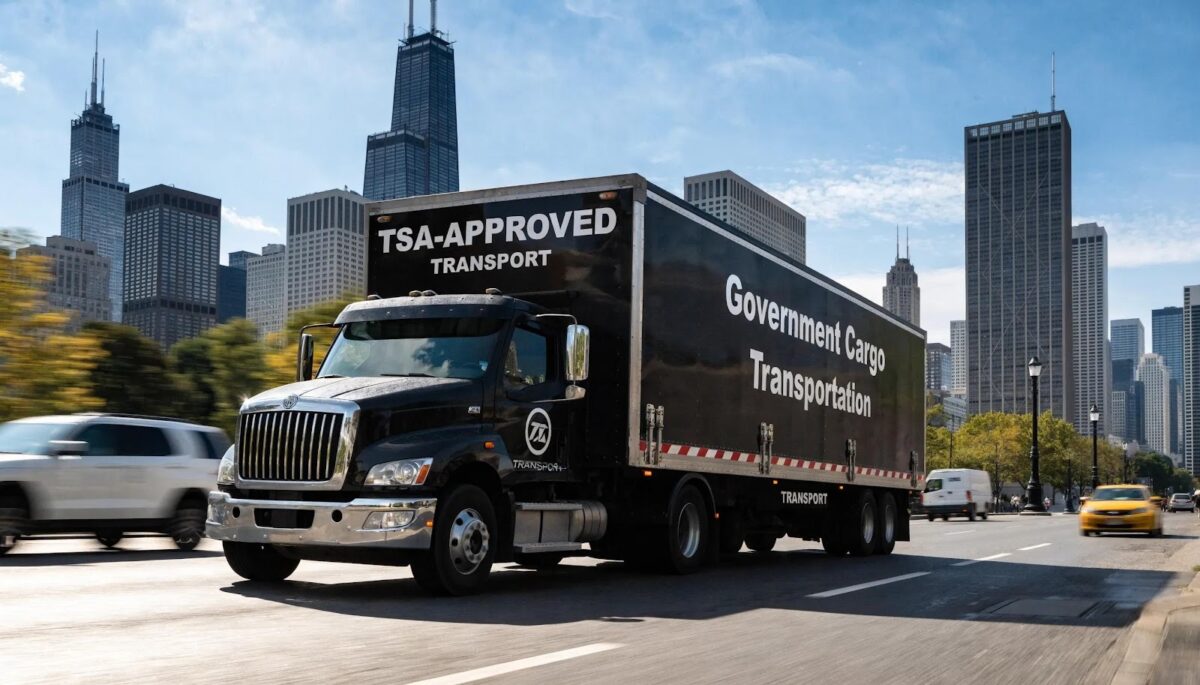
Government Chicago Trucking Services: Reliable TSA-Approved Logistics for Secure Public Sector Cargo Transport
Secure, efficient transport is critical for government logistics in Chicago. Agencies require TSA‑approved trucking that meets compliance standards for sensitive materials. This article outlines TSA compliance requirements, how TSA approval secures handling, and the federal and local regulations affecting Chicago trucking. It also reviews full truckload services from First Class Trucking, the implications for public‑sector freight, and the roles of flatbed solutions and security technologies in optimizing logistics.
Secure trucking is essential given government cargo such as military equipment, humanitarian supplies, and hazardous materials. Understanding TSA requirements and carriers’ operational capabilities — including those of First Class Trucking — allows agencies to meet transport needs safely and reliably. This article provides practical best practices, operational protocols, and an overview of available services.
What Are the Essential TSA Compliance Requirements for Government Freight Transport in Chicago?
TSA compliance for government freight encompasses core components designed to protect cargo integrity and maintain chain‑of‑custody. These elements set the standards carriers must follow to secure shipments across the transport lifecycle.
- Security Documentation: Transporters must maintain accurate documentation indicating compliance with TSA regulations, including security threat assessments for personnel.
- Operational Protocols: Freight providers are required to implement operational protocols that minimize security risks, such as surveillance measures during loading and unloading processes.
- Training and Background Checks: All personnel involved in the transport of government cargo must undergo thorough training and background checks to ensure they meet TSA standards.
Compliance not only fulfills regulatory obligations but also reinforces operational trust — essential for providers such as First Class Trucking that specialise in TSA‑approved public‑sector logistics.
TSA Programs for Secure Transportation Infrastructure
TSA operates programs to ensure individuals with unescorted access to critical transportation infrastructure do not pose security threats. Central to these programs are security threat assessments that screen for links to terrorism, criminal history, and immigration status; TSA’s Adjudication Center serves as the primary operational component. GAO was asked to examine the center’s performance and staffing strategy. The report addresses the extent to which: (1) TSA has measured performance for the center and what the data show; (2) TSA offices have coordinated to meet security threat assessment workload; and (3) TSA addressed potential risks posed by using a mix of government employees and contractors to adjudicate security threat assessments. GAO analyzed TSA data describing the center’s performance since October 2010; reviewed documentation, including staffing plans; and interviewed TSA officials about data measurement and staffing practices.Transportation Security: Action Needed to Strengthen TSA’s Security Threat Assessment Process, 2013
How Does TSA Approval Ensure Secure Handling of Public Sector Cargo?
TSA approval ensures cargo handling aligns with national security protocols through defined practices that strengthen shipment security and accountability.
TSA certification subjects providers to rigorous security evaluations, including routine audits and compliance reviews that identify vulnerabilities and prompt corrective actions. TSA‑approved drivers receive specialised training for handling sensitive cargo. As a result, agencies using certified services gain greater assurance in the integrity and reliability of their logistics operations.
| Compliance Feature | Importance | Benefit |
|---|---|---|
| Security Threat Assessments | Identifies potential threats before transport | Minimizes risk of malicious actions |
| Regular Audits | Ensures ongoing compliance with TSA protocols | Enhances reliability of transport services |
| TSA-Approved Personnel | Trained to handle sensitive cargo securely | Professionals reduce the chance of errors |
This structured approach provides a clear framework for operational effectiveness and establishes benchmarks for industry best practices.
Which Government Regulations Govern Chicago Freight Trucking Services?
Local and federal regulations govern freight trucking operations in Chicago, especially when sensitive cargo is involved. Understanding these rules is essential for legal compliance and consistent service delivery.
Primary regulation sources include the TSA and the Department of Transportation (DOT), which enforce documentation, safety, and operational standards. Noncompliance can result in fines, license revocation, and other penalties. Adherence to these regulations helps carriers operate without interruption and maintain eligibility for government contracts.
TSA Hazmat Truck Security Pilot Program
In April 2008, the U.S. Transportation Security Administration (TSA) completed work on the TSA Hazmat Truck Security Pilot (HTSP), a congressionally mandated pilot to demonstrate the feasibility of a hazmat truck tracking system from both technology and systems perspectives. The HTSP project team built a prototype of a “smart truck” tracking system and developed the Universal Communications Interface — the XML gateway for hazmat carriers to transmit data to a centralized truck tracking center. In August 2007, Congress enacted the 9/11 Act (PL110‑53) directing TSA to develop a program, consistent with the HTSP, to facilitate tracking of motor carrier shipments of security‑sensitive materials. In June 2008, TSA took a major step forward in establishing a nationalThe North American Transportation Security Center–Fedtrak Specifications and Release Plan, 2009
What Full Truckload Services Does First Class Trucking Offer for Government Cargo in Chicago?
First Class Trucking offers full truckload services tailored to government requirements in Chicago, designed to provide secure and efficient transport for sensitive cargo.
- Dedicated Trucks for Time-Sensitive Shipments: First Class Trucking offers dedicated trucks for urgent shipments, ensuring timely delivery of critical materials.
- Real-Time Tracking and Compliance Focus: Advanced tracking systems are implemented, allowing agencies to monitor their shipments in transit and ensure compliance with TSA standards.
- Cost Structure: Competitive pricing models are available to accommodate varying government budgets for freight services.
These services demonstrate First Class Trucking’s commitment to secure, efficient logistics for government clients in Chicago.
How Do Full Truckload Services Meet the Security Needs of Public Sector Freight?
Full truckload services meet public‑sector security needs by allocating dedicated vehicles to government shipments, enabling strict safety protocols and controlled handling throughout transit.
Carriers must comply with TSA cargo security rules, including driver training for specific government cargo. A dedicated fleet streamlines handling, reduces the risk of mishandling, and supports federal compliance — assuring agencies that logistics follow required standards.
What Case Studies Demonstrate Successful Government Freight Transport?
Case studies demonstrate the effectiveness of TSA‑approved logistics in securing government freight, highlighting operational best practices and successful strategies for sensitive shipments.
- Military Equipment Transport: One case involved the transport of military vehicles where TSA-certified protocols ensured that the cargo was delivered without incident, illustrating the effectiveness of compliance measures.
- Emergency Response Supplies: During a natural disaster, First Class Trucking successfully managed the logistics for humanitarian supplies, demonstrating real-time adaptability while adhering to security protocols.
- Hazardous Materials: Another noteworthy case involved the safe transport of hazardous materials that required specialized handling, showcasing the importance of having trained personnel involved in securing and moving such sensitive freight.
These examples show operational success and underscore the value of TSA‑approved logistics partners such as First Class Trucking.
How Are Flatbed Transport Solutions Optimized for Chicago Government Freight Logistics?
Flatbed trucks are essential for oversized or non‑standard government cargo, offering flexible, secure loading options that enclosed vehicles may not provide. For details, see flatbed transport solutions.
Flatbed equipment supports loading and unloading at construction sites and government facilities where enclosed vehicles can be impractical. Timely delivery practices and specialised fleet capabilities ensure different cargo types and sizes are transported securely and on schedule.
Which Types of Government Cargo Require Specialized Flatbed Trucking?
Certain categories of government cargo require specialised flatbed trucking due to size, weight, or configuration. Identifying these needs is essential to implement effective transport solutions.
- Military Equipment: Often bulky and heavy, military equipment requires flatbed trucks to accommodate dimensions that exceed standard trucking capacities.
- Humanitarian Supplies: These may include oversized materials meant for disaster relief that require rapid delivery to affected areas.
- Construction Equipment: Large machinery and construction materials often need the open space that flatbed trucks provide for secure loading and transportation.
Recognising these requirements enables carriers to prepare appropriate equipment and helps agencies select the correct transport method.
What Safety Protocols Are Implemented for Flatbed Government Cargo Transport?
Safety protocols for flatbed government cargo mitigate risks associated with oversized or sensitive loads, preserving cargo integrity and protecting personnel throughout the transport process.
- Safety Standards for Cargo Securement: All cargo transported must adhere to strict securement standards to prevent movement during transit, which can lead to accidents or loss of cargo.
- Technology for Monitoring: Advanced technology is employed for real-time monitoring to track cargo integrity throughout the transport process.
- Transportation Safety Checks: Regular safety checks are conducted at loading points as well as en route to ensure compliance with safety standards and to address any emerging concerns proactively.
These protocols reduce risk and improve reliability across flatbed transport operations.
Which Freight Security Technologies Enhance TSA-Compliant Trucking Services in Chicago?
Advanced security technologies are integral to TSA‑compliant trucking services in Chicago, supporting cargo security, operational visibility, and incident response.
- Real-Time Tracking Systems: These systems provide continuous visibility into the location and status of shipments, allowing for timely responses to potential security breaches.
- Cybersecurity Measures: In an age of digital threats, implementing robust cybersecurity measures protects sensitive data related to government freight logistics, ensuring that information remains confidential and compliant with regulations.
- Encrypted Communications: Utilizing encrypted communication channels ensures that sensitive messages regarding cargo remain secure throughout the transport process.
Such technologies enable real‑time decisions and strengthen operational security for government freight.
How Do Security Technologies Protect Sensitive Government Freight?
Security technologies protect sensitive government freight by providing continuous monitoring and secure communication channels throughout transport, reducing exposure to physical and information risks.
Real‑time monitoring ensures shipments remain secure; electronic logging supports compliance checks, and secure communication protocols protect routing and handling information from interception.
What Are Examples of Freight Security Systems Used by First Class Trucking?
First Class Trucking uses multiple security systems to enhance safety and reliability for government cargo, reflecting the company’s commitment to TSA compliance and operational standards.
- Real-Time GPS Tracking: This system enables the continuous tracking of shipments throughout their transit, ensuring that any unauthorized deviations are promptly addressed.
- Documented Inspection Procedures: Thorough inspection procedures ensure that all cargo meets required safety standards before transport, minimizing potential risks.
- TSA-Compliant Training Programs: Dedicated training programs for staff ensure that all personnel are knowledgeable about TSA requirements and best practices for handling sensitive cargo.
These measures reinforce First Class Trucking’s position as a provider of TSA‑approved logistics for public‑sector cargo.
How Can Chicago Businesses Request a Quote for TSA-Approved Government Trucking Services?
Requesting a quote for TSA‑approved government trucking follows a clear process that helps businesses define their logistics requirements and obtain an accurate estimate.
Contact First Class Trucking via their dedicated contact methods. Provide cargo details, specifications, and required timelines to receive an accurate quote. Agencies typically receive prompt responses to support planning.
Contact Method: Call (954) 228-2441 or email csr@truckfirstclass.com to request a quote or ask questions.
What Is the Step-by-Step Process to Obtain a Government Freight Transport Quote?
Obtaining a quote from First Class Trucking follows a series of clear steps designed to streamline the request and review process.
- Initial Contact: Reach out to First Class Trucking via phone or email to express interest in their services.
- Information Submission: Provide necessary details, including the type of cargo, sizes, weight, and specific transport requirements.
- Custom Quote Generation: The logistics team reviews the submitted information and generates a custom quote based on the scope of services requested.
- Contract Finalization: Upon agreement on terms and pricing, the relevant contracts can be finalized to initiate the transport process.
Following these steps enables agencies to engage First Class Trucking efficiently for government logistics.
Which Information Is Required When Contacting First Class Trucking for Public Sector Cargo?
When requesting a public‑sector transport quote, provide accurate details to enable a comprehensive estimate and appropriate resource allocation.
Key information to include:
- Cargo Details: Specifications about the type of cargo, weight, dimensions, and any special handling requirements.
- Preferred Contact Methods: Indicate how you prefer to receive correspondence regarding the quote, whether by phone or email.
- Follow-Up Expectations: State any anticipated timelines for receiving a quote or additional communications.
Providing this information allows First Class Trucking to produce accurate quotes and support timely logistical planning.
How Does TSA Certification Impact Government Cargo Transport?
TSA certification enhances security assurance across logistics operations. Certified providers follow strict regulations that reduce transit risks and demonstrate compliance with national security standards.
Why Choose TSA-Approved Trucking Providers for Chicago Public Sector Freight?
TSA‑approved providers reduce the likelihood of incidents, ensure regulatory compliance, and support on‑time delivery — delivering a secure, cost‑effective transport solution for government agencies.
Frequently Asked Questions
What Are the Benefits of Using Full Truckload Services for Government Projects?
Full truckload services provide dedicated transport for sensitive cargo with direct routing, reducing stops that could compromise security. They improve efficiency, lower damage risk, and can offer cost advantages for large shipments.
How Can Government Agencies Ensure Compliance with TSA Regulations?
Agencies ensure TSA compliance through regular audits, robust documentation, staff training, and by engaging TSA‑approved logistics providers. Continuous monitoring and clear operational protocols further sustain compliance during transport.
What Should Agencies Consider When Selecting a Trucking Provider?
Agencies should evaluate a provider’s TSA status, experience with sensitive cargo, safety compliance, tracking technology, customer service, and delivery reliability to ensure it meets government requirements.
What Role Does Technology Play in Enhancing Freight Security?
Technology enhances freight security through real‑time tracking, automated alerts for unauthorized access, and cybersecurity measures that protect logistics data — enabling rapid incident response and risk mitigation.
How Do Logistic Providers Prepare for Handling Hazardous Materials?
Carriers prepare for hazardous materials by ensuring staff hold required certifications, following DOT and local regulations, using appropriate equipment, and conducting risk assessments for each shipment.
What Are the Steps for Reporting Security Concerns During Transport?
Report security concerns immediately to the carrier’s designated security officer, documenting the nature, time, and location. Maintain open communication channels for prompt mitigation and conduct a follow‑up review to strengthen procedures.
Conclusion
Using TSA‑approved trucking in Chicago secures government cargo through strict adherence to security standards. Trained professionals and compliant full truckload and flatbed options improve operational flexibility and efficiency. Contact First Class Trucking to discuss logistics solutions for government cargo.