What Is an Air Waybill? How AWB Numbers Control Cargo Release
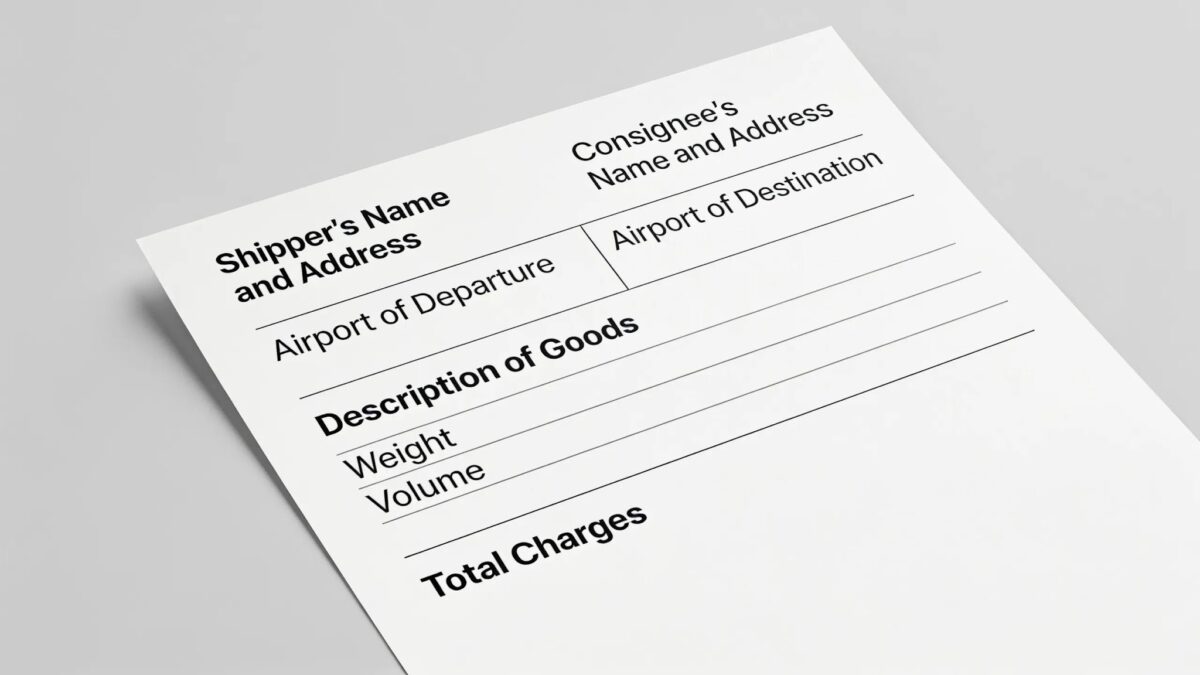
An air waybill (AWB) is a non-negotiable contract of carriage between you. The carrier, issued for every air freight shipment. Its unique AWB number tracks your cargo from origin airport to destination and confirms shipment details for customs. Cargo release requires matching that number, verifying consignee identity, and clearing all outstanding carrier charges first.
Key Takeaways
- An air waybill serves as a non-negotiable contract of carriage between shipper and carrier.
- AWB numbers enable tracking of air freight shipments across international routes and destinations.
- The document contains all critical shipment details necessary for managing and transporting parcels globally.
- Air waybills function as receipts of goods in international air freight and express courier shipping.
What Is an Air Waybill in Air Cargo?
An air waybill is a required document in international air freight that confirms your shipment details and sets the terms of transport. You’ll encounter this paperwork on every airport-to-airport transfer, whether you’re moving electronics, pharmaceuticals, or time-critical parts. Without it, your cargo simply doesn’t move.
The document does two jobs at once. First, it works as a contract of carriage between you as the shipper and the carrier moving your freight. Second, it serves as a receipt confirming the carrier has accepted your goods for transport. Losing sight of either function creates real exposure for your supply chain — disputed liability, unclear delivery terms, and no proof of tender if cargo goes missing.
One detail catches many shippers off guard.
Can Anyone Pick Up Cargo With an Air Waybill?
No — an air waybill is non-negotiable, and only the named consignee can claim the cargo. Unlike a bill of lading used in ocean freight, you cannot transfer or endorse this document to a third party. That restriction protects your shipment but also means your consignee information must be exact before the freight ever leaves the ground.
Here’s what the document typically locks in place:
- Contract terms between you and the carrier
- Consignee identity, restricting pickup rights
- Shipment receipt, confirming the carrier took custody of your goods
- Transport conditions governing liability and handling
For DFW Air Cargo Trucking operations, matching your ground carrier’s paperwork to the air waybill on file prevents mismatched pickups and clearance delays at the ramp. Based in Hallandale Beach, Florida, First Class Trucking works directly with AWB documentation as part of coordinating air-cargo transfers, keeping your freight moving from tarmac to final destination without a paperwork gap.
What Is an Air Waybill Number, Exactly?
A unique air waybill number identifies a single air cargo shipment from origin airport to destination. Every consignment gets its own number, separating your freight from every other shipment moving through the same carrier network at the same time. That distinction matters when hundreds of pallets pass through a single hub in a matter of hours.
Airlines issue this number with an international prefix tied directly to the carrier handling the shipment. The prefix tells you and every party in the chain which airline and flight are responsible for the cargo. For a logistics manager juggling multiple carriers across multiple lanes, that prefix becomes a fast reference point rather than a guessing game.
Why does the AWB number matter for your shipment?
You rely on this number to trace cargo status, confirm carrier accountability, and resolve discrepancies before they become costly delays. Without it, tracking a shipment across interline transfers turns into a manual, error-prone process. Freight forwarders and shippers who understand what is AWB in shipping terms use the number as their primary tracking anchor, not a secondary detail.
How does this connect to ground handling?
Accurate numbers prevent freight from landing on the wrong truck or the wrong dock. First Class Trucking’s 22-person team cross-checks AWB numbers against manifest data before airport pickup, catching mismatches before they turn into misrouted freight. That verification step protects your delivery timeline and keeps airport-to-airport transfers accountable from the moment cargo touches the tarmac.
- Unique per shipment: separates your cargo from every other consignment in transit
- Carrier-coded: international prefix identifies the responsible airline
- Verification point: cross-checked against manifests before pickup, reducing misrouting risk
What Is AWB in Shipping Documentation?
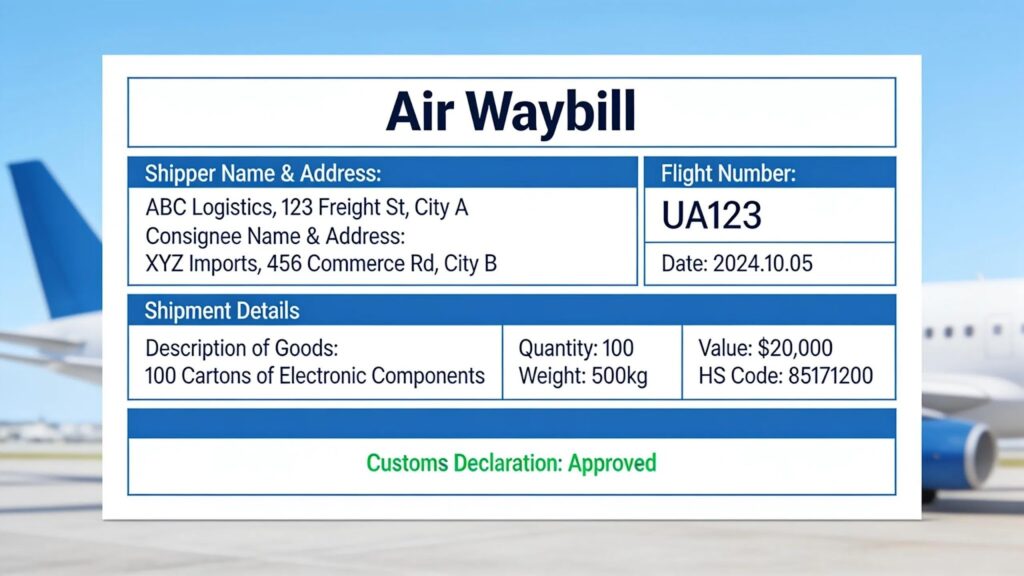
An air waybill in shipping functions as a binding contract of carriage and a receipt for cargo moving between airports. You’ll encounter this document at nearly every stage of an air freight shipment, from booking through final customs release. Understanding its role protects your shipment schedule and your compliance record.
Customs authorities depend on the air waybill for clearance decisions. The document supplies inspectors with detailed information on the shipment’s contents, its origin point, and its destination airport. Missing or inaccurate entries slow clearance and can trigger costly holds at the border.
Does an Air Waybill Prove Ownership of Goods?
No. An air waybill is not a document of title. You cannot transfer it to change ownership of the cargo, unlike a bill of lading used in ocean freight. This distinction matters when structuring payment terms or financing arrangements tied to a shipment.
Key functions of an air waybill include:
- Serving as a receipt confirming the carrier accepted the cargo
- Establishing contract terms between shipper and carrier
- Supplying customs officials with shipment details for clearance
- Tracking cargo movement from origin to destination
Why Does Documentation Accuracy Matter for Ground Transfers?
Air waybill accuracy directly affects how smoothly cargo transitions from aircraft to ground transport. Errors ripple downstream, delaying pickup and complicating airport cargo trucking coordination. First Class Trucking remains committed to delivering reliable trucking services built around the specific needs of shippers nationwide. Accurate documentation paired with dependable ground execution keeps your freight moving without unnecessary delay.
How Does Cargo Release Work With PayCargo?
Cargo release through PayCargo hinges on matching a digital payment to a specific shipment before the freight ever leaves the terminal. First Class Trucking implements PayCargo, the leading online platform for cargo payments, to remove the delays common with traditional check or wire processing. Paying through this system unlocks next-day cargo release rather than the multi-day wait shippers often face with legacy billing.
Speed comes from the platform’s design. Through PayCargo’s Ship & Pay platform, you submit a one-time payment and receive cargo in hours, not days. A meaningful difference when a flight connection or delivery window is on the line.
Payment flexibility matters too. You can select from several methods depending on your cash flow and operational preferences:
- Direct ACH debits from a business bank account
- Pre-funded accounts for high-volume or recurring shippers
- Credit card payments for one-off or urgent releases
What is an air waybill number in the PayCargo release process?
The air waybill number functions as the reference point that ties your payment to the correct shipment record. Airlines and handling agents use this number to confirm funds have cleared before releasing freight. Accurate entry at payment time prevents mismatched or delayed releases.
How does AWB documentation affect DFW Air Cargo Trucking pickups?
For DFW Air Cargo Trucking operations, cargo can’t move off the ramp until the AWB is settled through the payment system. Once PayCargo confirms the transaction, drivers proceed directly to pickup without waiting on manual billing reconciliation, keeping ground transfers on schedule.
Why Choose First Class Trucking for DFW?
Certified logistics coordinators set First Class Trucking apart for DFW Air Cargo Trucking, managing every stage from booking through final delivery. Airport-to-airport transfers demand precision. Your cargo moves through a single point of accountability rather than a patchwork of subcontractors. That structure matters when your shipment’s air waybill number ties directly to a delivery window you can’t afford to miss.
Freight handled without dedicated oversight risks missed pickups, delayed customs releases, and gaps in communication between warehouse and tarmac. First Class Trucking’s staff, drawn from seasoned transportation professionals, oversee each phase of the process to guarantee safe, timely movement from pickup to final delivery. You get one team accountable for the entire chain, not a series of handoffs.
What does DFW air cargo trucking actually involve?
DFW air cargo trucking covers ground transport connecting Dallas Fort Worth’s cargo terminals to warehouses, distribution centers, and final consignees. Coordinators track your shipment against its air waybill, confirming the receipt-of-goods details match what arrives at the dock. Timing is tight around flight schedules, so drivers work against firm windows rather than flexible ones.
How does payment processing affect your DFW shipments?
Payment friction slows cargo release and eats staff hours you’d rather spend elsewhere. First Class Trucking runs cargo payments through PayCargo, an established platform built for air waybill in shipping transactions, saving you time and reducing administrative cost.
Consider what this structure delivers for your operation:
- Single-team accountability from booking to delivery
- Trained coordinators tracking your air waybill through pickup and drop-off
- Streamlined payment processing that shortens release times
FAQ
What is an air waybill number?
An air waybill (AWB) number is a unique identifier assigned to a single air cargo shipment, tracking it from the origin airport to the destination. Airlines issue it with an international prefix tied to the carrier handling the shipment.
What does cargo release require?
Cargo release requires matching the AWB number to the shipment, verifying consignee identity, and clearing all outstanding carrier charges first. Only the named consignee can claim the cargo, since the document is non-negotiable.
Who can pick up cargo using an air waybill?
Only the named consignee can pick up cargo under an air waybill. The document is non-negotiable and cannot be transferred or endorsed to a third party. This makes exact consignee information essential before freight leaves the ground.
Conclusion
In closing, understanding air waybills, AWB numbers, and cargo release procedures forms the foundation of efficient air freight operations. These critical documentation and tracking mechanisms ensure accountability, regulatory compliance, and seamless coordination throughout the supply chain. Mastery of these processes enables logistics professionals to maintain the precision. Reliability that modern air cargo demands, ultimately supporting faster delivery times and reduced operational friction for shippers and carriers alike.