What Is a Bonded Carrier? In-Bond Freight Requirements
A bonded carrier moves in-bond freight past the port of entry without immediate customs release, operating under a financial security bond of pricing varies to $25,000 posted with agencies like the Canada Border Services Agency. Your shipment reaches an authorized location before duties clear, so bonded status keeps cross-border cargo compliant, secure, and moving without customs delays.
Key Takeaways
- Bonded carriers post financial assurance bonds with U.S. Customs and Border Protection to transport in-bond merchandise.
- Bonded status allows carriers to move goods across ports of entry without immediate customs release requirements.
- Compliance with 19 CFR 18.2 regulations governs the transport of in-bond merchandise between U.S. ports.
- First Class Trucking’s bonded carrier status enables efficient cross-border logistics operations from our Hallandale Beach location.
What Is a Bonded Carrier, Exactly?
Special customs authorization defines a bonded carrier. Customs authorities grant this status so a transportation company can move freight across international borders without immediate clearance at the port of entry. For your cross-border shipments, that authorization changes everything about how quickly cargo actually moves.
The bonded carrier meaning goes beyond a label. Behind the authorization sits a surety bond, a financial guarantee that goods reach their destination securely and under customs oversight the entire way. Think of it as collateral for compliance. If freight strays from its authorized route or documentation falls short, the bond backs the government’s interest in that shipment.
What Does a Bonded Trucker Actually Do?
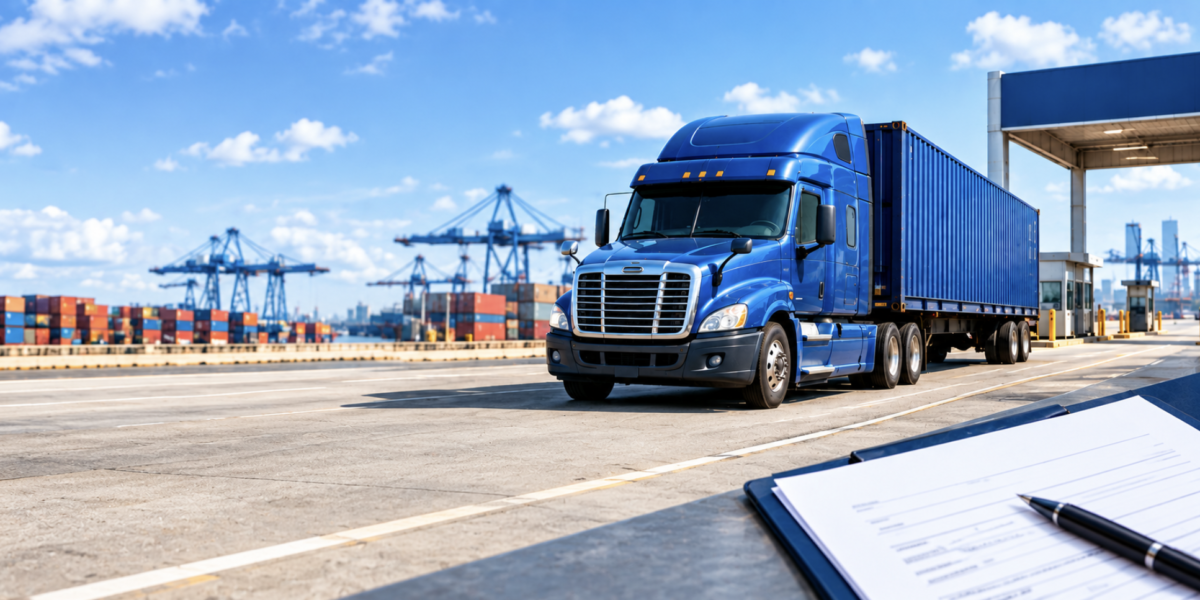
A bonded trucker carries in-bond freight from the border or airport to an inland customs facility without triggering duties at the first point of entry. Your goods stay under continuous customs control until final release. This matters for import/export teams juggling tight production schedules. It separates physical transport from the clearance paperwork that can otherwise stall a shipment for days.
Bonded status also draws a hard line between carrier types:
- Non-bonded carriers can only move freight that has already cleared customs.
- Bonded carriers move freight before clearance, under continuous customs oversight.
- Only bonded carriers can legally handle in-bond shipments destined for inland ports.
First Class Trucking operates from Hallandale Beach, Florida, and coordinates bonded, compliance-driven freight movement from that base. A focused 22-person team keeps oversight direct, avoiding the layered subcontracting that often clouds accountability on sensitive cross-border loads.

How Does In-Bond Freight Actually Move?
Customs holds in-bond freight at the border, releasing nothing until documentation clears. Goods sit in a legal gray zone: physically inside the country, but not yet cleared for domestic sale or use. Your shipment cannot leave the port of entry on a standard truck driven by an unbonded operator.
That’s where a bonded carrier enters the picture. Understanding the bonded carrier meaning starts with one job: moving customs-controlled cargo further inland while that cargo remains under continued government oversight. Customs authorities retain control over the freight the entire time it travels. Final release or transfer to another destination happens only after regulatory clearance.
What Does a Bonded Trucker Actually Do During Transit?
A bonded trucker doesn’t just haul freight from point A to point B. Every mile of that inland move happens under a compliance framework that tracks the cargo, the route, and the delivery point. Deviating from the approved plan risks penalties, delays, or worse.
Think of in-bond movement as a chain of controlled handoffs:
- Cargo arrives at the port of entry, undocumented for release.
- A bonded carrier takes custody and transports it inland under continued customs authority.
- Customs either releases the goods at the new location or authorizes onward transfer.
This process mirrors permit-driven heavy haul logistics, where oversized loads move through multiple regulatory checkpoints before reaching their destination. Sound planning at each transfer point reduces delay risk. Managed poorly, either process stalls freight and erodes trust with your import partners.
What Requirements Must a Bonded Trucker Meet?
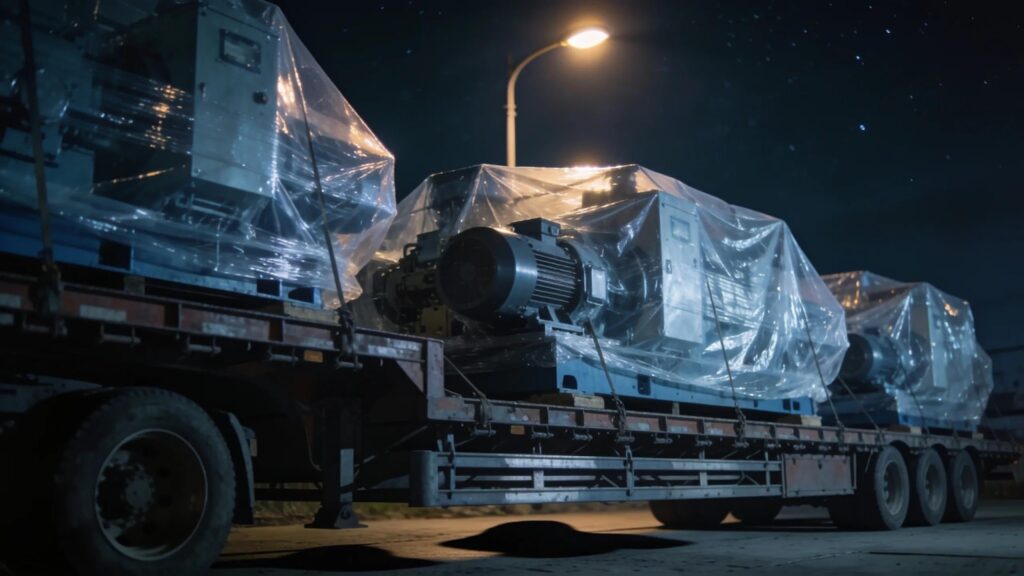
A bonded trucker must post the appropriate customs bond with U.S. Customs and Border Protection before hauling in-bond merchandise on American highways. That single requirement separates a standard carrier from one authorized to move goods still under federal customs control. For your supply chain, this distinction determines which carriers you can legally use for shipments that haven’t cleared customs yet.
Federal regulation backs this up directly. Under 19 CFR 18.2, merchandise moving between U.S. ports in-bond must be delivered to a carrier properly bonded for that purpose. Skip this step and your freight can’t legally move — no exceptions, no workarounds.
What Does the Bond Actually Guarantee?
The customs bond functions as a binding contract, not a formality. It ensures the trucker complies with CBP laws and regulations while guaranteeing payment of applicable duties, taxes, and fees. Think of it as financial accountability built into the carrier relationship — CBP has recourse if compliance fails.
How Does TSA Certification Fit Into This Picture?
TSA certification confirms a carrier has met federal transportation security standards. That discipline mirrors what CBP expects from a bonded operation. Both frameworks demand documented compliance, security protocols, and accountability at every handoff.
A carrier that holds both credentials signals a deeper operational commitment. Consider what each layer of oversight actually requires:
- Bonded status: Financial guarantee posted with CBP covering duties, taxes, and regulatory compliance
- TSA certification: Verified conformity with federal security requirements for cargo handling
- Combined effect: Reduced risk of delays, holds, or compliance failures across the shipment lifecycle
For logistics managers coordinating cross-border or in-bond freight, confirming both credentials before booking protects your timeline and your compliance record.
Why Does Compliance Matter for Air Cargo Freight?
Compliance protects your cargo from delays, security holds, and regulatory penalties before it ever leaves the tarmac. Air cargo moves through more checkpoints than standard ground freight. Every checkpoint carries a chance to stop your shipment cold. Skip a background check or a security clearance, and you risk losing your delivery window entirely.
TSA certification confirms a carrier has cleared background checks, security threat assessments, and operational reviews required for handling sensitive freight. This standard applies directly to DFW Air Cargo Trucking operations. Cargo often connects to time-critical flights and cross-border movements. A carrier without this clearance simply cannot be trusted with high-value or government-linked freight.
First Class Trucking builds its air cargo model around 24/7 operations and TSA-approved drivers. That approach, proven at major gateways, extends to the demands of Dallas-Fort Worth’s air cargo corridor. Security and speed work together here — not against each other.
What Happens When Air Cargo Isn’t Bonded?
Bonded status becomes essential the moment merchandise moves through an inland airport, rail yard, seaport, or CBP office before final clearance or export. Without it, your shipment stalls at the point of entry, waiting on documentation or an authorized carrier to take over. Understanding bonded carrier meaning matters here: it defines who is legally authorized to move goods under customs control without triggering immediate duties or delays.
Why Choose a Bonded Trucker Over a Standard Carrier?
A bonded trucker carries the financial guarantee and regulatory standing needed to transport in-bond freight legally. Government and defense-linked freight — much like bonded air cargo — imposes elevated security and compliance requirements that standard carriers often cannot satisfy. For shippers working against tight connection windows, that gap isn’t theoretical. It’s the difference between freight that clears on schedule and freight that sits.
How Should You Vet a Bonded Freight Partner?
Vetting a bonded freight partner starts with pricing transparency and staffing depth, not just equipment lists. Weak vetting exposes your shipments to delayed handoffs, unclear costs, and coordination gaps at exactly the moments customs control matters most. A structured review protects your bonded cargo from these risks before you sign a contract.
Cost structure deserves scrutiny first. First Class Trucking offers price match and price beat options paired with flexible payment terms. No down payment required, giving you room to secure transport without upfront capital strain. Compare any prospective partner’s payment flexibility against this standard.
Staffing structure matters just as much as pricing. Ask how a carrier assigns responsibility across the shipment lifecycle.
What Should a Bonded Carrier’s Support Team Look Like?
A dependable bonded freight operation runs on certified logistics coordinators who manage booking, warehouse logistics, and final delivery as one connected process. This reduces the handoff errors that occur when responsibility shifts between disconnected teams. Ask prospective partners who owns each stage of your shipment, from dock to destination.
Does Staff Experience Actually Affect Bonded Shipments?
Yes. Seasoned professionals overseeing pickup through delivery directly reduce delays and mishandling risk in bonded freight movement. Confirm your carrier’s staff — not just its fleet — has the transportation experience to guarantee safe, timely execution at every step.
FAQ
What is a bonded carrier?
A bonded carrier is a transportation company authorized by customs to move in-bond freight across ports of entry without immediate clearance. This status rests on a financial security bond posted with agencies like the Canada Border Services Agency, ranging from pricing varies to $25,000.
How does a bonded carrier differ from a non-bonded carrier?
Non-bonded carriers only move freight that has already cleared customs, while bonded carriers transport freight before clearance under continuous customs oversight. Only bonded carriers legally handle in-bond shipments destined for inland ports.
Where does First Class Trucking operate its bonded carrier services?
First Class Trucking operates from Hallandale Beach, Florida, coordinating bonded, compliance-driven freight movement with a focused 22-person team. This direct oversight avoids the layered subcontracting that often clouds accountability on cross-border loads.
Conclusion
In closing, bonded carriers represent a critical infrastructure for regulated freight movement, ensuring compliance with customs and government requirements while maintaining the security and integrity of sensitive shipments. Understanding these requirements—from proper documentation to secure handling protocols—enables businesses to navigate complex supply chains with confidence. Whether managing international goods or domestic regulated freight, partnering with carriers who maintain bonded authority and demonstrate unwavering commitment to compliance standards protects your operations and strengthens your competitive position in today’s demanding logistics environment.