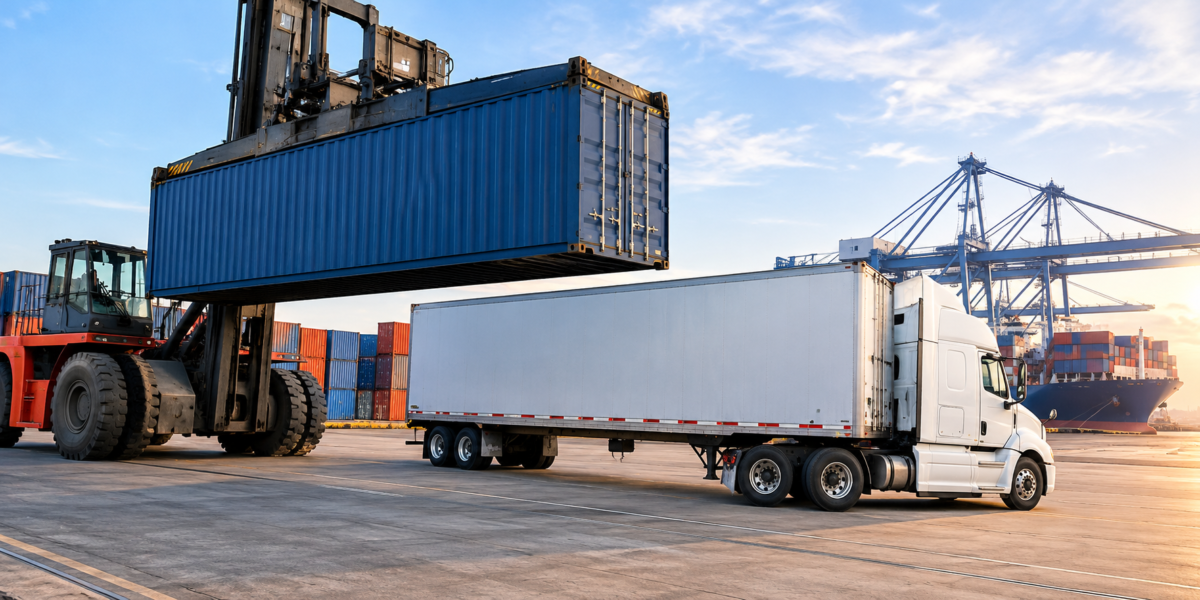
When Should You Transload Port Houston Containers Into 53-Foot Trailers?
Transload Port Houston containers into 53-foot trailers when your freight is moving inland beyond the Gulf Coast, when you want to return ocean containers quickly to avoid per-diem fees, or when three containers can consolidate into two cheaper domestic trailers.
The Question That Comes Up at the Port Gates
Your container just cleared Barbours Cut or Bayport. Now what? You can keep the ocean box on a chassis and run it to its final destination, or you can pull it a few miles to a warehouse, move the freight into a 53-foot domestic trailer, and send the empty container straight back to the port. That decision, made at the gate, changes what you pay for the whole inland leg.
Houston importers face this choice on every single container, and the right answer depends on distance, volume, and how fast you can turn the box. Get it wrong and you’re paying per-diem fees on containers you didn’t return, or paying chassis and overweight surcharges to drag an ocean container somewhere it was never designed to go. This guide walks through the math so you can make the call with numbers instead of habit.
What Transloading Actually Is
Transloading is the transfer of freight from one mode or container type to another mid-journey. In the Port Houston context, it means unloading a 20 or 40-foot ocean container at a nearby warehouse and reloading that freight into a 53-foot domestic trailer for the inland leg.
Transloading services exist because ocean containers and domestic trucking are two different worlds. The ocean box belongs to a steamship line, rides on a rented chassis, accrues per-diem fees every day it’s out of the port, and in many states runs into weight limits well below what a domestic trailer can legally carry. The 53-foot trailer is the workhorse of U.S. highways: no per-diem, no chassis rental, no steamship line asking for its box back. A transload swaps one world for the other, usually within a few miles of the terminal, and usually within a day of the container clearing customs.
The physical work is straightforward: the container backs up to a dock, crews unload and sort the freight (often floor-loaded cartons that have never seen a pallet), palletize or reconfigure it to the consignee’s specs, and load the outbound trailer. What you’re really buying isn’t labor, though. You’re buying the freedom to use the cheapest, most available domestic capacity for the longest part of the journey.
The Math: Why a 53-Foot Domestic Trailer Usually Wins Inland
A 53-foot domestic trailer holds roughly a third more pallets than a 40-foot ocean container, costs nothing in per-diem, needs no chassis, and pulls from the deepest capacity pool in trucking. That’s why the standard rule says three ocean containers become two domestic trailers.
Run the consolidation math on a typical import: three 40-foot containers carry about 60 pallets between them. Two 53-foot trailers carry the same 60. You’ve just cut a third of your inland linehaul, plus the chassis rentals, plus the per-diem clock ticking on three boxes. On a Houston to Chicago run, that’s not a rounding error. That’s the difference between a lane that works and a lane that bleeds.
| Factor | 40-Foot Ocean Container | 53-Foot Domestic Trailer |
|---|---|---|
| Pallet capacity | About 20 to 21 standard pallets | 26 or more standard pallets |
| Per-diem fees | Daily charges past free time until returned | None; it’s the carrier’s equipment |
| Chassis | Rented chassis required, with daily fees | None needed |
| Road weight limits | Often capped lower on a chassis | Full legal payload on standard equipment |
| Inland capacity | Limited to drayage carriers with chassis | The entire U.S. truckload market |
| Best use | Short moves near the port | Any inland run beyond the Gulf Coast |
When Transloading at Port Houston Makes Sense
Transload when your freight is heading inland past the Gulf Coast, when multiple containers can consolidate, when the consignee needs domestic-trailer delivery, or when per-diem risk outweighs the handling cost.
- The destination is more than a few hundred miles out. The longer the inland leg, the more the domestic trailer’s cost advantage compounds.
- You’re importing multiple containers on the same vessel. Consolidating three boxes into two trailers is where the biggest single saving lives.
- The consignee is a retail DC or big-box facility. Many of them require 53-foot trailers, palletized freight, and appointment delivery, none of which an ocean container on a chassis provides.
- Your freight is heavy. Ocean containers on chassis hit legal road weight limits early; transloading lets you rebalance weight across trailers and stay legal.
- You can’t guarantee a fast container return. Every day past free time is per-diem, and port-area congestion makes delays a when, not an if.
A transload in Houston also buys you scheduling flexibility. The freight sits in a warehouse near the port, and the outbound leg ships when your consignee is ready, not when the steamship line’s clock says so. For importers feeding multiple destinations, one container can split into several outbound loads, which is nearly impossible to do efficiently while the freight is still locked in the box.
When to Skip the Transload and Keep the Box
Skip transloading when the delivery is local to the Houston metro, when the freight is too fragile or high-value for an extra handling touch, or when volumes are too small for consolidation math to matter.
Every touch is risk and cost. If your container is going to a warehouse in Pasadena or a plant in Baytown, dragging it through a transload adds handling fees to save on per-diem you were never going to pay. Fragile electronics or high-value freight that survived the ocean untouched often shouldn’t be opened, sorted, and restacked unless the economics demand it. And a single palletized container going to one consignee rarely justifies the swap. In those cases, book a straightforward full truckload service or drayage move, deliver the box, and return it empty on the same trip.
How a Port Houston Transload Works, Step by Step
A transload runs in four steps: drayage pulls the container from the terminal, the warehouse unloads and palletizes the freight, crews reload it into 53-foot trailers, and the empty container returns to the port, usually the same day.
- 1. Drayage. A TWIC-certified driver pulls your container from Barbours Cut or Bayport to the transload facility, a few miles from the gate.
- 2. Unload and sort. Crews break down floor-loaded cartons, sort by SKU or destination, and palletize to your consignee’s requirements.
- 3. Reload. Freight moves into 53-foot trailers, consolidated or split by destination, secured and sealed for the inland run.
- 4. Return. The empty container goes back to the terminal inside free time, and the per-diem clock stops.
The whole cycle typically turns in 24 to 72 hours from terminal availability to outbound departure, which is why the warehouse piece matters as much as the trucking. We run both sides, drayage and warehousing services near Port Houston, so the container never waits on a third party’s schedule.
One more option for shippers with their own equipment staged at the facility: the outbound leg can run as power-only trucking in Houston, where our tractor and driver pull your loaded trailer. It pairs naturally with a transload program once your volumes settle into a rhythm.
Transloading With First Class Trucking
First Class Trucking runs the full transload chain under one roof: port drayage with TWIC-certified drivers, warehouse handling, and outbound FTL across 48 states, with zero down payment and a price beat guarantee.
Most transload setups force you to coordinate three vendors: a drayage carrier, a warehouse, and an outbound truckload carrier. Every handoff is where containers get stuck and per-diem accumulates. As a trucking company in Houston with warehousing and a nationwide network of 12,000+ TSA-approved drivers behind our own fleet, we hold the whole chain: the box comes off the terminal, the freight gets handled, the 53-foot trailer leaves on schedule, and the empty goes back inside free time. One dispatch team, live 24/7, tracks the entire move with the same 95%+ on-time standard we run on every load.
Request a transload + FTL quote with your container count and destination, and we’ll price the full chain, drayage through inland delivery, with zero down payment to start.
Frequently Asked Questions
Q: How much does transloading at Port Houston cost?
A: Expect a per-container handling fee plus the drayage leg and the outbound linehaul, with the handling fee varying by whether freight is floor-loaded or palletized. The honest way to evaluate it is against what you’d otherwise pay in per-diem, chassis rental, and running three boxes inland instead of two trailers. Ask for the full chain priced as one quote.
Q: How long does a transload take?
A: Typically 24 to 72 hours from the container becoming available at the terminal to the outbound trailer departing. Floor-loaded containers take longer to break down than palletized ones. The empty container usually returns to the port the same day the freight is out.
Q: Is transloading the same as cross-docking?
A: They’re cousins, not twins. Cross-docking moves freight inbound to outbound with minimal storage, often same-day. Transloading specifically changes the equipment type, ocean container to domestic trailer, and may include palletizing, sorting, or short-term storage. Most port transloads include a cross-dock step inside them.
Q: Can you transload hazmat or food-grade freight?
A: Yes, with the right facility and drivers. Hazmat requires certified drivers and compliant handling; food-grade requires a sanitary facility and trailer washout documentation. Flag either at booking so the right equipment and certifications are assigned from the start.
Q: What happens to my empty ocean container after transloading?
A: The drayage carrier returns it to the terminal or a designated depot, ideally within the steamship line’s free time so no per-diem accrues. When one provider runs both drayage and transload, the empty return is scheduled as part of the same move instead of becoming a separate problem.
Q: Do I need to palletize my freight before it reaches Houston?
A: No. Floor-loaded containers are the norm for imports, and palletizing is part of the transload service. Tell us your consignee’s pallet specs, height limits, and labeling requirements, and the outbound freight arrives exactly the way their dock expects it.
Get the Box Back Before the Clock Runs Out
Every day your container sits is money, and every inland mile in an ocean box costs more than it should. Send us your container count, freight description, and destination, and First Class Trucking will price the full chain: drayage, transload, and the 53-foot trailer inland, zero down payment, price beat guarantee, and a team that answers 24/7.
| TRANSLOAD + FTL, ONE QUOTE Call (954) 228-2441 or email sales@truckfirstclass.com. Live dispatch answers 24/7, 365 days a year. |