Full Truckload Shipping Documentation: Bill of Lading and Proof of Delivery Explained
Full truckload shipments require two core documents: the Bill of Lading (BOL) and Proof of Delivery (POD), both filled out, executed, and countersigned for every load. First Class Trucking’s certified logistics coordinators manage this documentation from booking through final delivery, protecting your shipment records and reducing dispute risk across nationwide freight moves.
Key Takeaways
- Bill of Lading (BOL) and Proof of Delivery (POD) serve as essential documents for nearly every freight shipment.
- First Class Trucking, based in Hallandale Beach, Florida, manages full truckload documentation with its 22-person team.
- Shippers must properly fill out, execute, and countersign both BOL and POD forms for each shipment.
- IMPARGO TMP® enables companies to send Bill of Lading and Proof of Delivery documents online efficiently.
Why Does FTL Documentation Prevent Costly Disputes?
Accurate paperwork closes the gap between what a shipper expects and what a carrier actually delivers. Missing or mismatched documents create the openings where liability claims, payment delays, and blame-shifting take root. Nearly every full truckload shipment relies on two core records, and skipping either one leaves your freight exposed.
The FTL bill of lading and FTL proof of delivery function as companions, not duplicates. Both appear on nearly every shipment, making them foundational to how freight moves and how disputes get resolved. Treating them as routine paperwork is a mistake. They exist specifically to protect your company from liability when a shipment goes wrong.
What Happens If FTL Paperwork Is Incomplete?
Incomplete truckload shipping paperwork shifts risk squarely onto your operation. Without a signed record confirming condition and quantity at pickup. Delivery, you lose your defense against damage claims or shortage disputes. That gap turns a minor discrepancy into a costly, drawn-out negotiation.
Who Should Manage FTL Documentation?
Documentation works best when one team owns it start to finish. First Class Trucking assigns certified logistics coordinators to manage your paperwork from booking through final delivery, including warehouse handoffs along the way. That continuity reduces the errors that surface when responsibility gets passed between multiple parties.
Seasoned professionals oversee each stage of your shipment, not just the paperwork itself:
- Booking and scheduling coordination
- Warehouse logistics and handoff verification
- Pickup and in-transit tracking
- Delivery confirmation and signature capture
This oversight guarantees safe, timely movement from pickup to delivery while keeping your documentation defensible if a dispute ever arises.
What Exactly Is an FTL Bill of Lading?
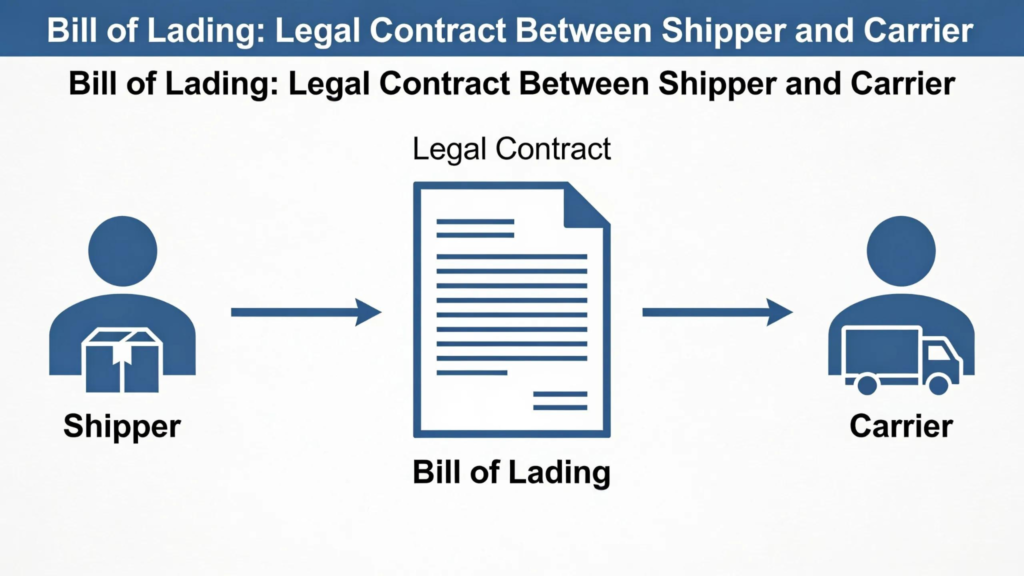
A legal contract between shipper and carrier, issued the moment a full truckload shipment departs, defines the FTL bill of lading. Freight coordinators rely on this single document to establish who owns the freight, who moves it, and under what terms. Miss a line item on it, and you risk a delivery dispute with no paper trail to fall back on.
Think of the bill of lading as more than paperwork — it’s a written receipt. The carrier signs it to confirm possession of your goods for transport. The document also serves as evidence that your cargo left the dock in a specific condition, at a specific time, under a specific carrier’s care.
What information does an FTL bill of lading include?
Your truckload shipping paperwork typically confirms:
- Shipper and consignee names and addresses
- A description of the freight, including weight and class
- Special handling instructions (hazmat, temperature control, oversized loads)
- Carrier signature confirming receipt of goods
Why does the carrier network matter for accurate documentation?
Accuracy on this document depends heavily on who’s handling your freight. First Class Trucking operates as a non-asset-based carrier, applying a vetted network of more than 12,000 TSA-approved drivers to full truckload and specialized moves nationwide. That scale matters for corporate shippers moving freight through major hubs. A nationwide logistics provider with disciplined paperwork practices reduces the risk of mismatched or incomplete bills of lading before goods ever leave the yard.
What Does FTL Proof of Delivery Confirm?
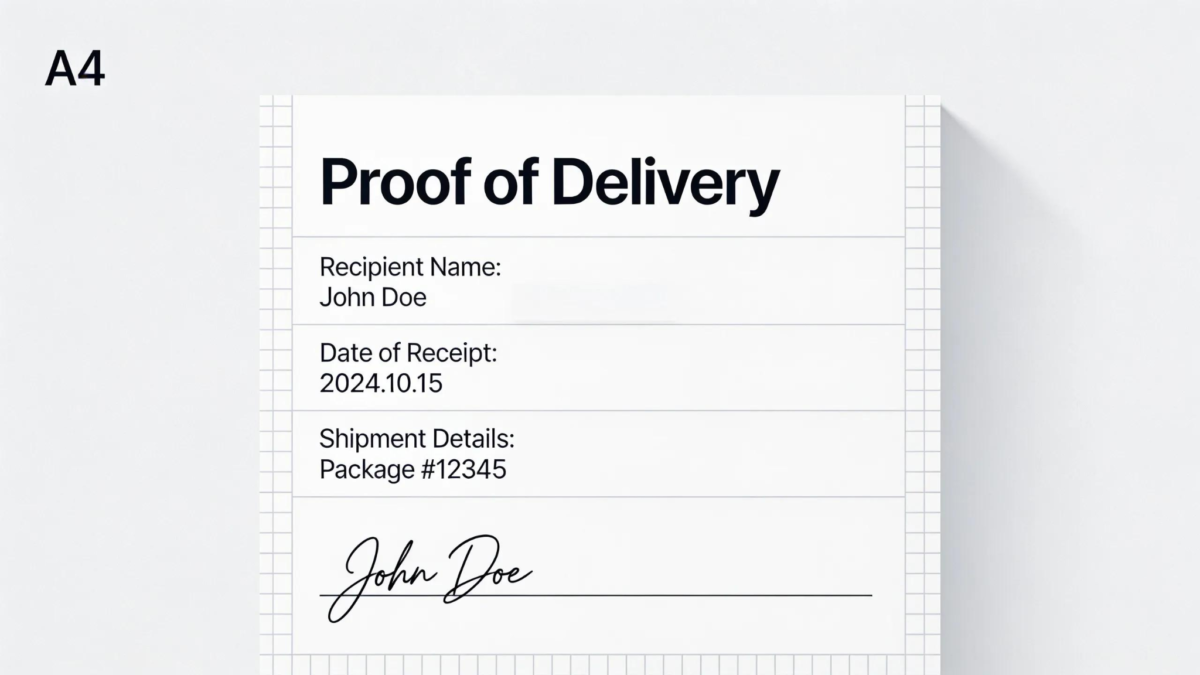
Confirmation of receipt closes the loop on every truckload shipment. The consignee, or receiving party, signs this document once cargo arrives at its final destination. Without that signature, your shipment technically remains open — an unresolved liability sitting on your books.
An FTL proof of delivery works differently from a bill of lading. Where a bill of lading opens the transaction, proof of delivery ends it. The recipient signs at the delivery point to certify that goods arrived as described, matching quantity, condition, and any noted exceptions against what was originally shipped.
For logistics managers, this signed record does more than mark a shipment complete. It becomes your evidence file if a dispute arises over damage, shortage, or delivery timing. Missing or incomplete proof of delivery paperwork weakens your position in any claim, no matter how strong your case otherwise is.
Why does proof of delivery matter for shippers?
Proof of delivery protects you when disagreements surface after freight changes hands. A signed, dated record shows exactly what the consignee received and when, removing guesswork from disputed claims. Without it, you have no leverage to counter a customer’s damage or shortage complaint.
What should you check on a proof of delivery form?
Review the signature, date, and any handwritten exceptions before filing the document. Look for:
- Consignee signature and printed name
- Delivery date and time
- Condition notes or damage exceptions
- Quantity received versus quantity shipped
First Class Trucking builds this discipline into every load through structured communication, careful planning, and organized dispatch coordination, helping your truckload shipping paperwork stay accurate from pickup through final signature.
How Can Digital Tools Simplify Truckload Paperwork?
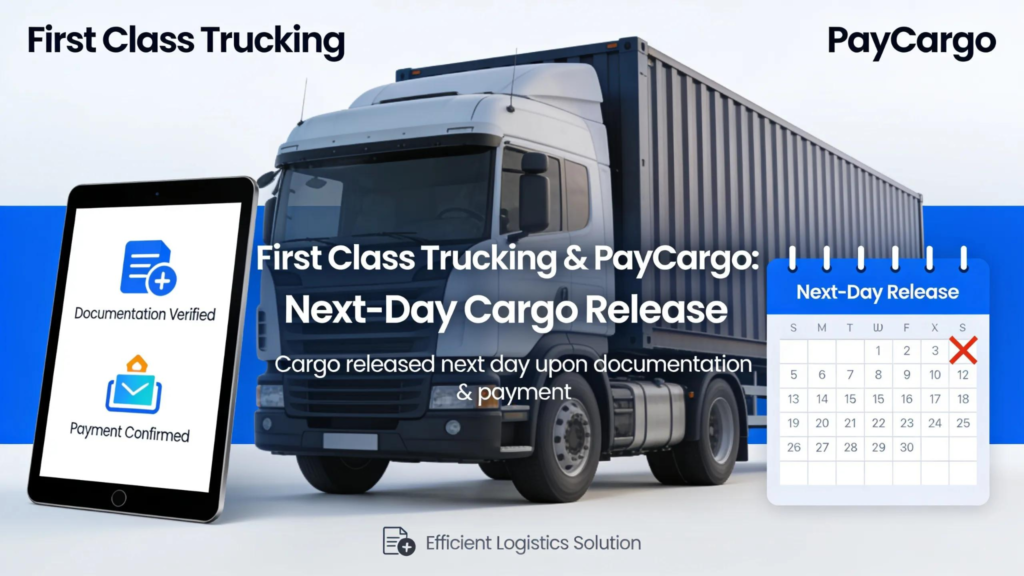
Digital payment platforms cut the delay between paperwork completion and cargo release from days to hours. First Class Trucking uses PayCargo, a leading online cargo payment system, so your shipment moves the moment documentation and payment clear. That speed matters when a delayed release means a missed delivery window or a warehouse slot lost.
How does PayCargo speed up cargo release?
PayCargo’s Ship & Pay platform replaces manual invoice handling with a single digital payment step. You submit payment once, and the system confirms it against your truckload shipping paperwork, triggering next-day cargo release instead of the multi-day wait typical of paper-based processing.
Payment flexibility matters as much as speed. You can select from:
- Direct ACH debits for straightforward account-to-account transfers
- Pre-funded accounts for shippers who process high volumes
- Credit card payments for one-off or urgent shipments
- PayCargo Credit, offering 15- or 30-day terms for qualifying accounts
That range lets you match payment timing to your cash-flow schedule without slowing down document processing.
Why does digital document exchange reduce shipping disputes?
Paper trails get lost, delayed, or damaged. Exchanging your FTL bill of lading and FTL proof of delivery digitally keeps both documents accessible, timestamped, and tied directly to the payment record. That pairing is central to running a logistics operation without gaps between what was shipped, what was paid, and what was received.
For corporate shippers managing frequent freight movement, digital tools eliminate the guesswork of tracking down signed paperwork after the fact. Everything ties back to one confirmed transaction record, reducing the risk of disputes over delivery timing or payment status.
How Do Shippers Avoid FTL Documentation Errors?
Accurate paperwork prevents disputes before they start. Effective management of freight operations improves efficiency and strengthens client service outcomes. That starts with disciplined document control at every handoff. A missing signature or an incomplete weight entry on a truckload shipping paperwork packet can delay payment, trigger claims, or stall a shipment at the dock.
What role does a carrier play in reducing paperwork errors?
A carrier such as First Class Trucking streamlines compliance and planning to reduce operational friction across your documentation chain. That means fewer mismatched entries between your FTL bill of lading and delivery records. Faster resolution when questions arise. First Class Trucking operates from Hallandale Beach, Florida, giving your team a direct point of contact rather than a call center queue.
Who actually checks the documents before dispatch?
Coordination doesn’t happen by accident. First Class Trucking runs compliance support through a team of 22 employees who oversee documentation review before freight moves. That staffing structure matters for corporate shippers managing multiple lanes at once. Consistent oversight catches errors that a single dispatcher might miss.
Practical steps that reduce documentation risk include:
- Confirming the FTL proof of delivery form matches the original bill of lading before signing
- Verifying weight, count, and commodity descriptions against the purchase order
- Routing exceptions to a dedicated coordinator instead of email chains
- Keeping payment terms flexible so administrative delays don’t stall pickup
First Class Trucking supports that last point directly, offering flexible payment options with no down payment required to secure transport. Simplifying the financial side removes one more variable that commonly derails documentation timelines for busy freight coordinators.
Full truckload shipping documentation—from bill of lading through proof of delivery—forms the backbone of transparent, compliant freight operations. These records establish accountability at every stage, protect all parties involved, and create the audit trail that regulatory bodies and business partners require. By maintaining rigorous documentation standards, shippers and carriers alike ensure that high-value freight reaches its destination with complete visibility and verifiable proof of service completion.
FAQ
What documents does full truckload shipping require?
Full truckload shipments require a Bill of Lading (BOL) and Proof of Delivery (POD), both filled out, executed, and countersigned for every load. These documents protect shipment records and reduce dispute risk across nationwide freight moves.
Who handles FTL documentation at First Class Trucking?
First Class Trucking’s certified logistics coordinators manage documentation from booking through final delivery. The Hallandale Beach, Florida-based company relies on its 22-person team to oversee booking, warehouse handoffs, tracking, and delivery confirmation.
What does an FTL bill of lading actually do?
The bill of lading acts as a legal contract between shipper and carrier, issued when a full truckload shipment departs. It also serves as a written receipt, confirming the carrier’s possession of goods at a specific time and condition.
Conclusion
Accurate FTL documentation is what stands between a smooth delivery and a costly dispute. The bill of lading and proof of delivery work together to record what shipped, how it moved, and how it arrived — and when either document is incomplete, your business carries the risk. Partnering with a carrier that assigns dedicated coordinators, verifies paperwork at every handoff, and pairs documentation with fast, flexible payment processing keeps your freight moving and your records defensible. First Class Trucking builds this discipline into every full truckload shipment, giving logistics managers and corporate shippers a documentation process they can rely on from booking through final signature.