Transporting hazardous materials across the United States involves a complex web of safety protocols, strict regulations, and rigorous training standards that go far beyond standard freight logistics. Companies that handle dangerous goods must adhere to specific federal and state laws designed to protect the public, the environment, and the infrastructure of our nation’s highways. Whether you are a shipper looking to move industrial chemicals or a carrier ensuring your fleet is up to code, understanding the nuances of these rules is non-negotiable for success in this sector. When dealing with trucking services usa, compliance is the cornerstone that ensures dangerous cargoes reach their destinations without incident or legal penalty.
What Are the Essential Requirements for Hazmat Hauling?
The requirements for hauling hazardous materials are multifaceted, beginning with the driver and extending to the carrier’s operational protocols. A driver must possess a Commercial Driver’s License (CDL) with a specific Hazardous Materials endorsement, commonly known as the H endorsement. Obtaining this endorsement requires passing a written knowledge test that covers regulations, safety procedures, and emergency responses. Additionally, drivers must undergo a thorough background check conducted by the Transportation Security Administration (TSA) to assess any potential security risks.
Carriers themselves must hold specific permits and registrations to operate legally within the hazmat sector. The Federal Motor Carrier Safety Administration (FMCSA) requires companies to obtain a Hazardous Materials Safety Permit (HMSP) for certain highly volatile or radioactive loads. This permit is not granted lightly and requires the carrier to maintain a satisfactory safety rating. Without these foundational certifications, a trucking company cannot legally transport regulated hazardous substances on public roads.
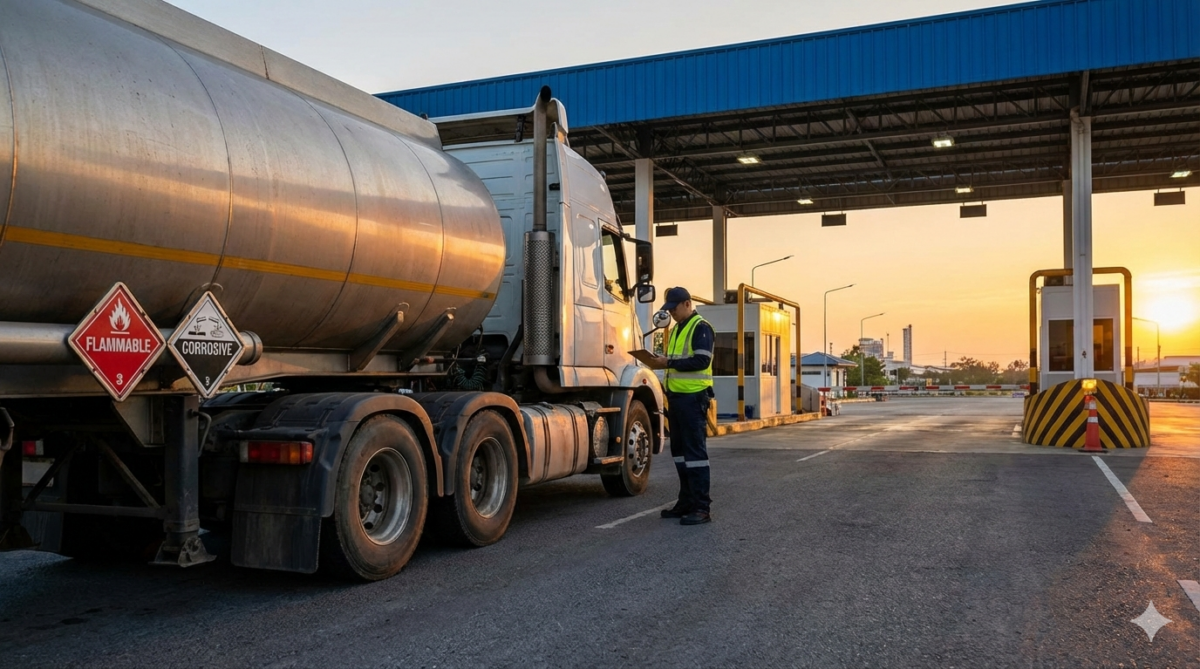
Beyond individual licenses and company permits, the vehicles used for transport must meet rigorous maintenance and safety standards. Every truck and trailer must be equipped with proper placards that clearly identify the class of hazardous material being transported. These diamond-shaped signs provide critical information to emergency responders in the event of an accident. Ensuring that the correct placard is visible on all four sides of the vehicle is a strict requirement that carries heavy fines if overlooked.
Ensuring Safety With Professional Trucking Services USA
Safety in the transportation of hazardous goods is not just about following rules but about creating a culture of vigilance and responsibility. Professional trucking services usa providers invest heavily in safety management systems that monitor every aspect of a shipment from pickup to delivery. This includes real-time tracking of sensitive cargo and automated alerts for any route deviations or unauthorized stops. Such measures are critical when transporting high-consequence dangerous goods that could pose a security threat.
Route planning is another critical component of safety compliance for hazmat carriers in the United States. Not all roads are open to vehicles carrying hazardous materials, as many tunnels, bridges, and urban centers have strict prohibitions. Dispatchers must carefully plan routes that avoid these restricted areas while still ensuring timely delivery. Advanced navigation software specifically designed for commercial trucking helps carriers identify compliant routes and avoid costly detours or legal violations.
Vehicle inspections for hazmat loads are significantly more detailed than standard commercial vehicle inspections. Drivers are required to check their tires, brakes, and cargo securement devices with increased frequency during their trips. For example, tires on a vehicle transporting hazardous materials must be checked at the beginning of each trip and every time the vehicle is parked. These operational safeguards are essential for preventing mechanical failures that could lead to catastrophic spills.
Understanding the 9 Classes of Hazardous Materials
The Department of Transportation (DOT) categorizes hazardous materials into nine distinct classes based on the specific risks they pose. Understanding these classes is fundamental for anyone involved in shipping or logistics, as each class dictates specific packaging, labeling, and handling requirements. Class 1 covers explosives, which range from mass explosion hazards like dynamite to minor fire hazards like ammunition. Transporting these items requires extreme caution and often involves route restrictions to avoid heavily populated areas.
Class 2 includes gases, which can be flammable, non-flammable, or toxic. Common examples include propane, oxygen, and chlorine gas, all of which require specialized pressurized tanks for transport. Class 3 encompasses flammable liquids, such as gasoline and paint thinners, which are among the most frequently transported hazmat items on the road. These liquids have low flash points, meaning they can ignite easily, necessitating the use of grounded tanks to prevent static discharge.
Classes 4 through 9 cover a wide spectrum of other dangers, including flammable solids, oxidizers, poisons, radioactive materials, and corrosives. Class 9 is a miscellaneous category for materials that present a hazard during transport but do not fit the definitions of the other classes, such as lithium batteries or environmentally hazardous substances. Correctly classifying a shipment is the first step in ensuring DOT hazmat requirements are met throughout the logistics chain.
| Hazard Class | Description | Examples |
| Class 1 | Explosives | Dynamite, Fireworks, Ammunition |
| Class 2 | Gases | Propane, Oxygen, Chlorine |
| Class 3 | Flammable Liquids | Gasoline, Acetone, Paint |
| Class 4 | Flammable Solids | Matches, Sulfur, Magnesium |
| Class 5 | Oxidizers & Organic Peroxides | Hydrogen Peroxide, Ammonium Nitrate |
| Class 6 | Toxic & Infectious Substances | Cyanide, Medical Waste, Pesticides |
| Class 7 | Radioactive Material | Uranium, Medical Isotopes |
| Class 8 | Corrosives | Sulfuric Acid, Sodium Hydroxide |
| Class 9 | Miscellaneous | Lithium Batteries, Dry Ice |
Navigating Hazmat Shipping Regulations and Documentation
Accurate documentation is the backbone of hazmat compliance and serves as the primary communication tool between the shipper, the carrier, and emergency responders. The most critical document is the shipping paper, often referred to as the Bill of Lading, which must contain a precise description of the hazardous material. This description must follow a specific sequence: the identification number (UN number), the proper shipping name, the hazard class, and the packing group. Any deviation from this order violates hazmat shipping regulations and can result in the shipment being rejected or the carrier being fined.
In addition to the shipping papers, a Safety Data Sheet (SDS) must accompany the shipment or be immediately accessible. The SDS provides detailed technical information about the material, including its physical properties, health hazards, and first aid measures. Carriers must ensure that this document is within the driver’s reach at all times while the vehicle is in motion, typically stored in a pocket on the driver’s door or on the seat. This accessibility ensures that in an emergency, first responders can instantly identify the risks they are facing.
For businesses that need to transport smaller quantities of dangerous goods, utilising LTL Shipping Services can be a cost-effective solution while maintaining full compliance. Less-than-truckload carriers that specialize in hazmat have consolidated networks designed to handle dangerous goods safely alongside other freight. They understand the complexities of segregation, ensuring that incompatible materials, such as oxidizers and flammable liquids, are never loaded next to each other in the same trailer.
The Importance of Comprehensive Hazardous Materials Training
Federal law mandates that all “hazmat employees” must receive adequate training to perform their job functions safely and in compliance with regulations. This definition is broad and includes anyone who loads, unloads, handles, or prepares hazardous materials for transportation. The training is not a one-time event; it must be completed within 90 days of employment and repeated at least every three years. This recurring schedule ensures that the workforce stays updated on any changes to the law or safety protocols.
The required hazardous materials training covers four distinct areas: general awareness, function-specific training, safety training, and security awareness. General awareness provides a broad overview of the hazard classes and labeling requirements, ensuring employees can recognize dangerous goods. Function-specific training drills down into the exact tasks an employee performs, such as how to properly seal a specific type of drum or how to apply placards to a trailer correctly.
Security awareness training has become increasingly important in recent years. It teaches employees to recognize security risks, such as unauthorized access to cargo areas or suspicious activities around hazmat vehicles. For companies that transport high-risk materials, an in-depth security plan is also required. When moving large volumes of chemicals or volatile substances, dedicated Full Truckload Services are often the safest option, as they minimize handling and reduce the risk of cross-contamination or security breaches during transit.
Critical Placarding and Marking Rules
Placarding is the visual language of hazmat transport, providing an immediate warning to anyone near the vehicle. The shipper is responsible for offering the correct placards to the carrier, but the carrier must ensure they are affixed properly before the truck moves. These diamond-shaped signs must be durable, weather-resistant, and visible from all four directions. The regulations specify the exact size, color, and design for each hazard class, leaving no room for artistic interpretation.
There are specific rules regarding when placards are required based on the weight and type of material. For some “Table 1” materials, such as explosives or poison gas, a placard is required for any amount, no matter how small. For “Table 2” materials, such as flammable liquids or corrosives, placards are generally required only when the total weight of the hazardous material exceeds 1,001 pounds. Understanding these weight thresholds is crucial for compliance and avoiding unnecessary stops by DOT inspectors.
Improper placarding is one of the most common violations found during roadside inspections. A missing or damaged placard might seem like a minor oversight, but it constitutes a serious safety violation. For extremely large or heavy components that may contain hazardous elements, such as industrial machinery with internal fluids, specialized Heavy Haul Transportation providers can assist in ensuring that even oversized loads are marked and transported according to federal standards.
Managing Insurance and Financial Responsibility
Carrying hazardous materials introduces a level of financial risk that far exceeds standard freight operations. Consequently, the FMCSA mandates significantly higher insurance coverage minimums for hazmat carriers. While a standard freight carrier might carry $750,000 in liability insurance, a hazmat carrier is often required to carry between $1,000,000 and $5,000,000 depending on the type of material. This financial assurance is designed to cover the potentially astronomical costs of environmental cleanup and public liability in the event of a spill.
This increased insurance cost is a major factor in the pricing of hazmat transport services. Shippers should be wary of carriers offering rates that seem too good to be true, as this may indicate a lack of proper insurance coverage. Verifying a carrier’s insurance certificate is a standard due diligence step for any logistics manager. It protects the shipper from being held vicariously liable should an accident occur involving an under-insured carrier.
Maintaining these high levels of coverage requires a carrier to have an impeccable safety record. Insurance providers audit trucking companies regularly, reviewing their driver logs, maintenance records, and violation history. If you are unsure about the specific insurance requirements for your hazardous cargo, please contact us to speak with a compliance expert who can guide you through the necessary financial protections.
Frequently Asked Questions About Hazmat Compliance
What is the difference between a Class 3 and a Combustible Liquid?
A Class 3 flammable liquid has a flash point of not more than 140°F (60°C). A combustible liquid has a flash point above 140°F but below 200°F (93°C). While both are fire hazards, combustible liquids generally have fewer regulatory requirements for domestic transport in non-bulk packaging compared to flammable liquids, which are strictly regulated in all quantities.
Do all drivers need a hazmat endorsement to transport dangerous goods?
Not all drivers need the endorsement; it depends on the quantity and type of material. A driver only requires a hazmat endorsement if the shipment requires placards. For example, a driver transporting a small quantity of cleaning supplies that does not meet the 1,001-pound threshold for placarding would not legally require a hazmat endorsement on their CDL.
How often must hazmat training be renewed?
In the United States, DOT certification training must be renewed every three years. However, if regulations change substantially before the three-year period is up, employees must be retrained on the new rules immediately. It is the employer’s responsibility to keep detailed records of this training for every employee involved in the hazmat shipping process.
What is a UN number and why is it important?
A UN number is a four-digit code assigned by the United Nations to identify hazardous materials in international and domestic transport. For example, UN1203 designates gasoline. This number is critical because it is a universal standard that allows emergency responders to quickly identify the specific chemical involved in an incident, regardless of the language spoken.
Can hazardous materials be transported through tunnels?
Most tunnels in the United States have strict restrictions or total bans on hazardous materials. These restrictions are categorized by tunnel codes which dictate which hazard classes are prohibited. Carriers must plan their routes meticulously to bypass these restricted tunnels, often adding mileage to the trip but ensuring legal compliance and public safety.
Conclusion
Successfully navigating the landscape of hazardous materials transportation requires a deep commitment to education, vigilance, and safety. From the initial classification of goods to the final delivery, every step is governed by precise trucking services usa regulations that leave no room for error. Whether it is ensuring drivers have the correct endorsements, maintaining rigorous training schedules, or securing the proper insurance, compliance is the only way to protect your business and the community. At Truck First Class, we understand these complexities and are dedicated to providing reliable, compliant, and safe transportation solutions for all your hazardous freight needs.