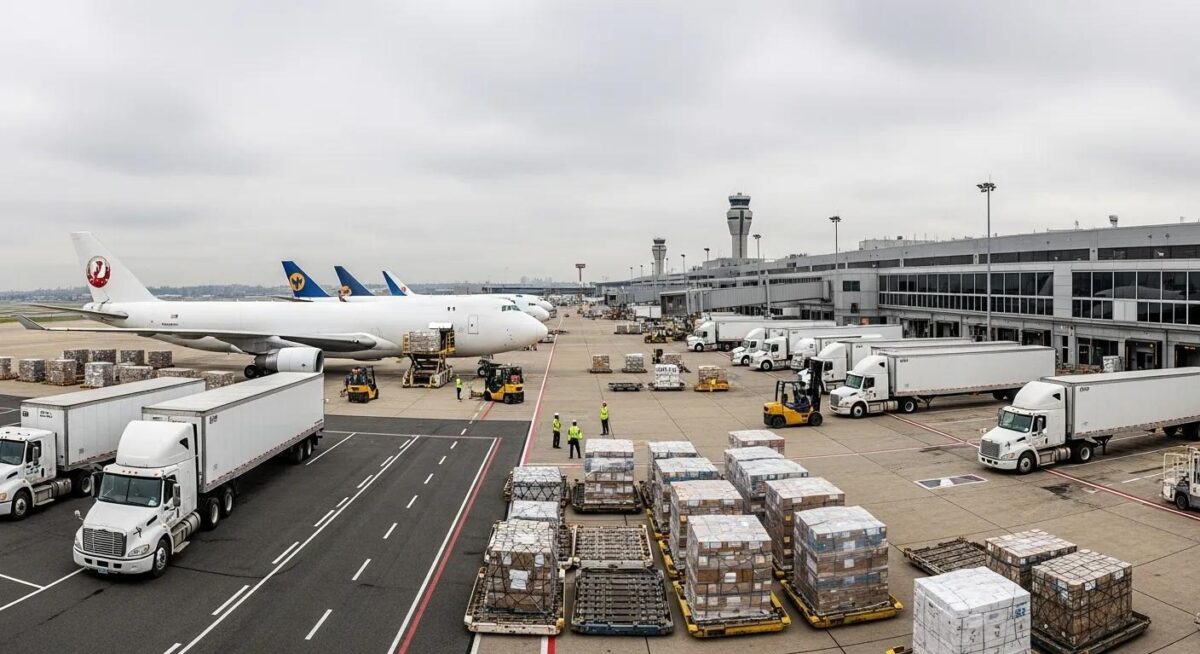
How Do Businesses Choose the Right JFK Air Cargo Trucking Service in New York?
Choosing a JFK air cargo trucking service requires evaluating reliability, regulatory compliance, and pricing to match operational needs. This guide summarizes the core selection factors and how customer evidence and JFK-specific constraints shape procurement decisions.
What Are the Key Criteria for Selecting a JFK Air Cargo Trucking Provider?
Focus on a few objective criteria to find a dependable partner.
- Reliability Metrics: Review on-time rates, past performance, and any service level agreements (SLAs).
- Compliance with Regulations: Confirm adherence to TSA, FAA, and airport-specific rules for secure, lawful operations.
- Pricing Transparency: Seek clear fee structures and disclosure of potential surcharges to avoid surprises.
Prioritizing these points streamlines provider evaluation and reduces procurement risk.
How Does Reliability Impact JFK Air Freight Trucking Choices?

Reliable trucking reduces delays, customer disruption, and the financial costs of missed connections. Reliable trucking
Providers that offer strong communication and real-time tracking help teams respond quickly to issues and limit delay-related expenses.
Research further outlines strategic models for selecting freight forwarders to mitigate supply disruptions.
Selecting Reliable Air Cargo Freight Forwarders
Airlines select a set of strategic freight forwarders to maintain an information advantage and secure stable sources of air cargo. Cargo supply disruption is a critical factor in forwarder selection. The study proposes a distributionally robust model that accounts for correlated supply disruptions. The authors analyze the model’s structural properties and reformulate it into a tractable form. In a real-world case study covering six flights and dozens of forwarders, the decision model is applied within the air cargo service chain. The case illustrates how the approach assists an airline in identifying reliable forwarders and in developing comprehensive forwarder selection strategies.
Robust approach for air cargo freight forwarder selection under disruption, F Lai, 2020
Why Is Compliance with JFK Airport Regulations Essential?
Compliance is mandatory at JFK and protects cargo, staff, and operations while preventing fines and interruptions.
Key elements are a secure chain of custody, trained personnel, and consistent procedural adherence to preserve supply-chain integrity.
How Do Pricing Models Influence Air Cargo Trucking Decisions at JFK?

Pricing formats (flat rates, per-mile, weight-based) should align with shipment profiles and budget constraints.
Transparent rates and flexible payment terms make it easier to compare total costs and select providers that meet financial and operational goals.
What Are Common Pricing Options for JFK Air Freight Trucking?
Typical pricing approaches include:
- Less Than Truckload (LTL) Pricing: Pay for the space your shipment occupies.
- Full Truckload (FTL) Pricing: A dedicated truck for large shipments, often more cost-effective for volume loads.
- Flatbed Transportation Rates: For oversized or heavy cargo requiring special handling.
Match pricing type to shipment size, handling needs, and frequency to control costs.
How Can Businesses Evaluate Cost-Effectiveness in Cargo Trucking?
Use a few practical methods to judge value:
- Comparative Analysis of Carriers: Compare pricing, service levels, and reliability across multiple providers.
- Cost Breakdown Analysis: Include base rates, accessorials, and ancillary fees to understand true shipping costs.
- Performance Metrics Monitoring: Track KPIs like on-time delivery and claims to validate carrier performance.
Combining cost and performance data identifies carriers that deliver the best overall value.
What Role Do Customer Testimonials and Case Studies Play in Choosing JFK Cargo Transport?
Testimonials and case studies provide real-world evidence of a provider’s performance and problem-solving capabilities.
They reveal outcomes and processes that help assess operational integrity and whether a provider fits specific needs.
How Do Case Studies Demonstrate Freight Logistics Reliability?
Case studies record challenges faced and the provider actions that resolved them, giving concrete reliability evidence.
Effective case studies emphasize:
- Operational Integrity: Maintaining quality under pressure.
- Attention to Detail: Planning and execution that prevent issues.
- Customer-Centric Approach: Tailoring solutions to client requirements.
These factors help prospects evaluate a carrier’s real capabilities.
What Insights Do Customer Reviews Provide About JFK Air Cargo Services?
Reviews reveal consistency, responsiveness, and specialist handling competence important to procurement.
Common themes include: less than truckload.
- Reliability and Efficiency: On-time performance and operational effectiveness.
- Customer Service Feedback: Responsiveness and problem resolution quality.
- Specialized Services Satisfaction: Handling of perishables, pharma, or oversized items.
Review analysis can highlight strengths and weaknesses that matter for your shipments.
How Does Understanding JFK Air Cargo Logistics Enhance Provider Selection?
Knowing JFK operations—terminal access rules, TSA-approved workflows, and specialized handling—lets buyers evaluate whether a provider can meet airport-specific demands.
Assess providers’ tracking and visibility tools to ensure effective shipment monitoring and exception management.
What Are the Operational Challenges of Cargo Trucking at JFK Airport?
Key challenges include:
- Terminal Delays: Airport congestion can delay cargo handling.
- Security Protocols: Strict measures add time and documentation requirements.
- High Urgency Demands: Fast turnarounds increase pressure on carriers.
Plan contingencies and select carriers experienced with JFK’s specific operational constraints.
How Do Tailored Freight Solutions Meet Diverse Business Needs?
Tailored solutions address industry requirements, cost optimization, and compliance needs.
- Industry-Specific Services: Options for pharmaceuticals, perishables, and other sectors.
- Cost Efficiency: Custom routing and consolidation to lower unit costs.
- Compliance and Safety: Procedures tuned to regulatory and product-specific demands.
Tailored approaches help businesses control costs while meeting handling and regulatory needs.
For tailored logistics solutions, contact Truck First Class.
When evaluating providers, assess their full truckload capabilities.
For specialized transport requirements, consider flatbed transportation options.
Businesses seeking a reliable regional partner should evaluate Truck First Class for their JFK air cargo trucking needs.
Frequently Asked Questions
What types of cargo are best suited for JFK air cargo trucking services?
JFK trucking supports perishables, pharmaceuticals, electronics, oversized freight, and other categories; certain cargo demands temperature control, specialized equipment, or unique handling procedures.
How can businesses ensure their cargo is secure during transport?
Choose providers with GPS tracking, a secure chain of custody, vetted staff, and documented TSA/FAA compliance and written security procedures.
What are the benefits of using a freight forwarder in conjunction with trucking services?
Forwarders offer documentation handling, shipment consolidation, rate negotiation, and logistics expertise that simplify complex moves and reduce compliance risk.
How do seasonal fluctuations affect air cargo trucking services at JFK?
Seasonality affects capacity, pricing, and lead times; plan inventory and shipping schedules to mitigate peak-period congestion and higher rates.
What role does technology play in enhancing air cargo trucking services?
Advanced tracking, automated documentation, and carrier-system integration improve transparency, reduce manual errors, and support reliable deliveries.
How can businesses assess the environmental impact of their air cargo trucking choices?
Ask carriers about fuel efficiency, emissions reporting, and sustainability initiatives to align transport decisions with corporate environmental goals.
What should businesses do if they experience delays in cargo delivery?
Contact the provider to determine cause and ETA, use tracking data, and activate contingency plans such as alternate transport or inventory adjustments.
Conclusion
Choosing the right JFK air cargo trucking provider improves reliability, compliance, and cost outcomes; combine objective criteria, customer evidence, and airport-specific knowledge to make informed decisions. Contact Truck First Class to explore tailored support for your air cargo needs.