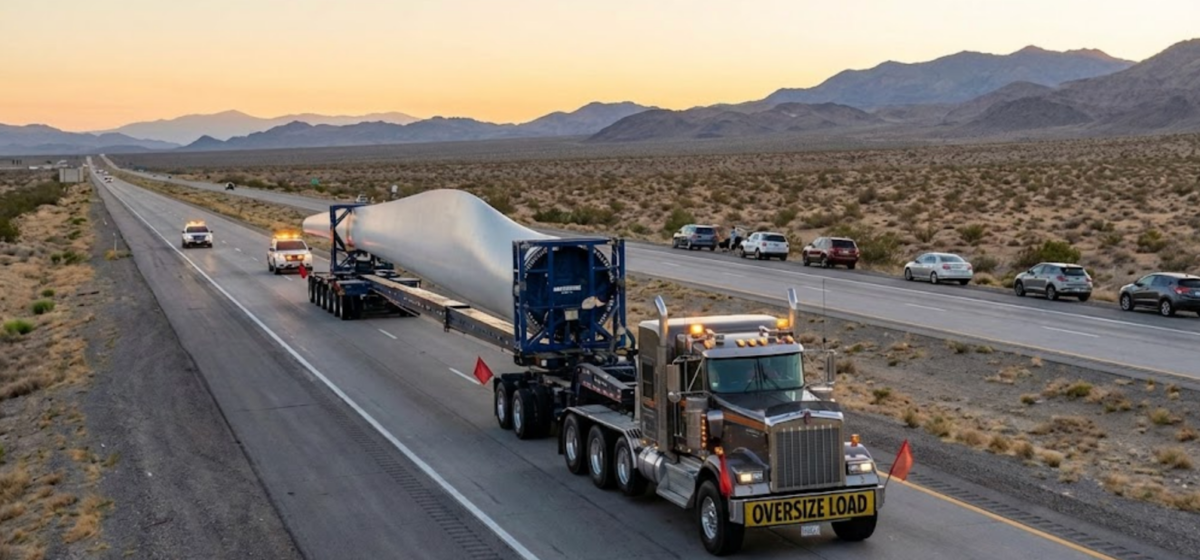
Moving standard freight is a straightforward process, but transporting massive industrial equipment or prefabricated structures requires a completely different level of expertise and precision. When cargo exceeds standard legal dimensions, it transforms from a simple shipment into a complex logistical project that demands specialized knowledge and rigorous planning. Businesses relying on heavy machinery know that finding reliable trucking services is the cornerstone of keeping their operations running smoothly without costly delays. This guide provides a deep dive into the intricacies of oversize load transportation to help you navigate regulations, equipment choices, and safety protocols.
What Exactly Qualifies as an Oversize Load?
Before planning a shipment, it is essential to determine if your freight legally falls into the oversize or over-dimensional category. While federal guidelines provide a baseline, individual states often have their own specific criteria that can complicate cross-country travel. Generally, a load is considered oversize if it exceeds the standard legal limits for width, height, length, or weight set by the Department of Transportation (DOT), making Oversized Load Trucking Services a critical solution for safe and compliant transport.
In most of the United States, a vehicle or load is classified as oversize if it is wider than 8.5 feet or taller than 13.5 feet. Length restrictions can vary more significantly, but anything exceeding 48 to 53 feet typically triggers the need for special permits. Weight is another critical factor, with the federal gross vehicle weight (GVW) limit set at 80,000 pounds. Exceeding any of these metrics shifts your shipment into the heavy haul category, requiring specialized trailers and strict adherence to safety regulations.
Comprehensive Guide to Regulatory Requirements and Permits
Navigating the regulatory landscape is one of the most challenging aspects of heavy haul transportation. Unlike standard freight that moves freely across state lines, oversize loads require specific permits for every jurisdiction they enter. Each state Department of Transportation has unique rules regarding travel times, route restrictions, and safety equipment, making compliance a moving target for inexperienced shippers.
Securing the right permits involves submitting detailed information about the load’s dimensions, weight, and intended route. Some states restrict travel to daylight hours, while others ban heavy haul movement during weekends or holidays to reduce traffic congestion. For extremely large shipments, known as superloads, the approval process is even more rigorous and may require engineering surveys to ensure bridges and overpasses can handle the weight.
It is also crucial to consider the varying rules for safety banners, lights, and flags. A setup that is legal in one state might result in fines or delays in another. Partnering with experienced professionals who understand these nuances ensures that your Trucking Services are executed without legal hiccups. This attention to detail protects your cargo and prevents costly impoundments or fines that can derail a project’s timeline.
Specialized Equipment Used in Heavy Haul Trucking Services
Transporting over-dimensional cargo is impossible without the right combination of tractors and trailers. Standard dry vans or flatbeds are often insufficient for the height and weight of industrial machinery, necessitating the use of specialized equipment designed to distribute weight and lower the center of gravity. Selecting the correct trailer is vital for safety and for clearing overhead obstacles like bridges and power lines.
The most common trailers used in this sector include Removable Gooseneck (RGN) trailers, lowboys, and step deck trailers. RGNs are particularly valuable for self-propelled equipment because the front detaches, allowing machinery to be driven directly onto the deck. Lowboys are designed to carry tall items by riding extremely low to the ground, maximizing vertical clearance.
Below is a comparison of common trailer types used for oversize loads:
| Trailer Type | Typical Deck Height | Primary Use Case | Key Advantage |
| Flatbed | 5 feet | Building materials, steel, lumber | Versatile for side and rear loading |
| Step Deck | 3.5 feet (lower deck) | Taller equipment, tractors | Accommodates higher loads than flatbeds |
| Lowboy | 18 – 24 inches | Heavy construction machinery | Maximizes overhead clearance |
| RGN (Removable Gooseneck) | 18 – 24 inches | Cranes, excavators, dozers | Drive-on capability for heavy equipment |
Choosing the wrong equipment can lead to route restrictions or safety hazards. For instance, a load that is legal on a lowboy might be over-height on a step deck, forcing a long detour to avoid a low bridge. Expert providers assess the specific dimensions of your cargo to deploy the most efficient trailer configuration available.
The Critical Role of Pilot Cars and Escort Vehicles
Safety is paramount when moving wide or heavy loads, and pilot cars play an indispensable role in protecting the motoring public and the cargo itself. These escort vehicles act as a buffer, warning other drivers of the approaching oversize load and ensuring that the truck has sufficient clearance to maneuver through tight spaces.
Trucking services for oversize loads often mandate the use of one or more pilot cars depending on the shipment’s dimensions. For example, a load exceeding 12 feet in width may require a front escort on two-lane roads to warn oncoming traffic. If the height is a concern, a lead pole car equipped with a height pole will drive ahead to physically check bridge clearances, ensuring the truck can pass safely without striking infrastructure.
The coordination between the truck driver and the pilot car operators must be flawless. They communicate constantly via radio to navigate turns, manage lane changes, and handle traffic flow around the load. This teamwork reduces the risk of accidents and helps maintain a steady pace. If you are also looking to move standard freight alongside your project cargo, our Full Truckload Services can provide a seamless solution for your general shipping needs.
Understanding the Costs and Logistics of Heavy Haul Transport
Pricing for oversize load transportation is far more variable than standard shipping rates due to the multitude of factors involved. The base rate per mile is just the starting point; the final cost is influenced by the complexity of the permit process, the number of escort vehicles required, and the specific equipment needed for the job.
Fuel costs are higher for heavy haul trucks because they consume more diesel pulling massive weights, often at lower speeds. Additionally, route complexity plays a significant role. The shortest distance between two points is rarely the route a heavy haul truck can take. They must often follow circuitous paths to avoid weak bridges, low overpasses, or construction zones, adding billable miles to the trip.
Urgency also impacts the price. Expediting a superload is difficult due to the time required for permit approval and route surveys. Planning well in advance allows for better optimization of resources and can help keep costs manageable. If you need a detailed quote for your specific project, please Contact us to discuss your requirements with our logistics experts.
Best Practices for a Successful Oversize Shipment
Successful heavy haul projects are the result of meticulous planning and communication. The process begins long before the truck arrives to pick up the load. Accurate measurement of the cargo is the single most important step. Even a discrepancy of a few inches can invalidate a permit, leading to expensive fines and days of delay while new permits are issued.
Route surveys are another best practice that should not be overlooked for particularly large or high loads. A physical drive-through of the intended route helps identify potential hazards that GPS systems or maps might miss, such as low-hanging tree branches, new construction, or tight intersections. This proactive approach allows the logistics team to plan alternative routes or arrange for utility companies to lift wires if necessary.
Communication between the shipper, the carrier, and the receiver is vital. The receiving site must be prepared with the necessary cranes or forklifts to unload the cargo immediately upon arrival. Delays at the delivery site can result in detention charges and disrupt the driver’s schedule. Ensuring the site is accessible and that the ground is stable enough to support the heavy truck and trailer is a key responsibility of the receiver.
Frequently Asked Questions About Heavy Haul Transport
What is the difference between an oversize load and a wide load?
The terms are often used interchangeably, but “oversize” is a broader category. A wide load specifically refers to a shipment that exceeds the legal width limit (usually 8.5 feet). An oversize load can be wide, tall, long, heavy, or a combination of these factors. All wide loads are oversize, but not all oversize loads are wide; some might just be over-height or overweight.
How much does it cost to transport an oversize load?
The cost varies significantly based on dimensions, weight, distance, and route complexity. Rates can range from $2 to over $10 per mile, excluding permit fees and escort costs. Because every load is unique, it is impossible to give a flat rate without analyzing the specific details of the shipment — a key consideration in any Full Trucking Budget Guide.
Do I need a special permit for every state the load travels through?
Yes, permits are issued at the state level, and there is no single federal permit for oversize loads. If your shipment travels through five states, the carrier must obtain five separate permits. Each state has its own application process, fees, and safety requirements, which is why working with an experienced logistics provider is essential.
Can oversize loads travel at night?
In many cases, no. Most states restrict the movement of oversize loads to daylight hours, typically from 30 minutes before sunrise to 30 minutes after sunset. However, this varies by state and the size of the load. Some states may allow travel at night for loads that are only slightly over-dimensional, provided they have proper lighting, while others strictly forbid it for safety reasons.
What is a superload?
A superload is a shipment that exceeds the routine permit limits for oversize loads. These dimensions vary by state but typically involve gross weights over 150,000 pounds or widths exceeding 16 feet. Superloads require much more extensive planning, including bridge engineering studies, utility line coordination, and often police escorts, making them the most complex logistical challenges on the road.
Conclusion
Transporting oversize loads is a specialized field that demands precision, safety, and a deep understanding of logistics. From selecting the right trailer to navigating complex state regulations, every step requires careful attention to detail. By understanding the definitions, equipment, and planning required, shippers can ensure their valuable heavy machinery arrives safely and on time.
Whether you are moving construction equipment, industrial boilers, or prefabricated structures, partnering with the right carrier makes all the difference. At First Class Trucking Corp, we specialize in handling the complexities of heavy haul logistics. We provide the reliable Trucking Services you need to move your biggest challenges, ensuring your freight is delivered efficiently and legally, no matter the size.