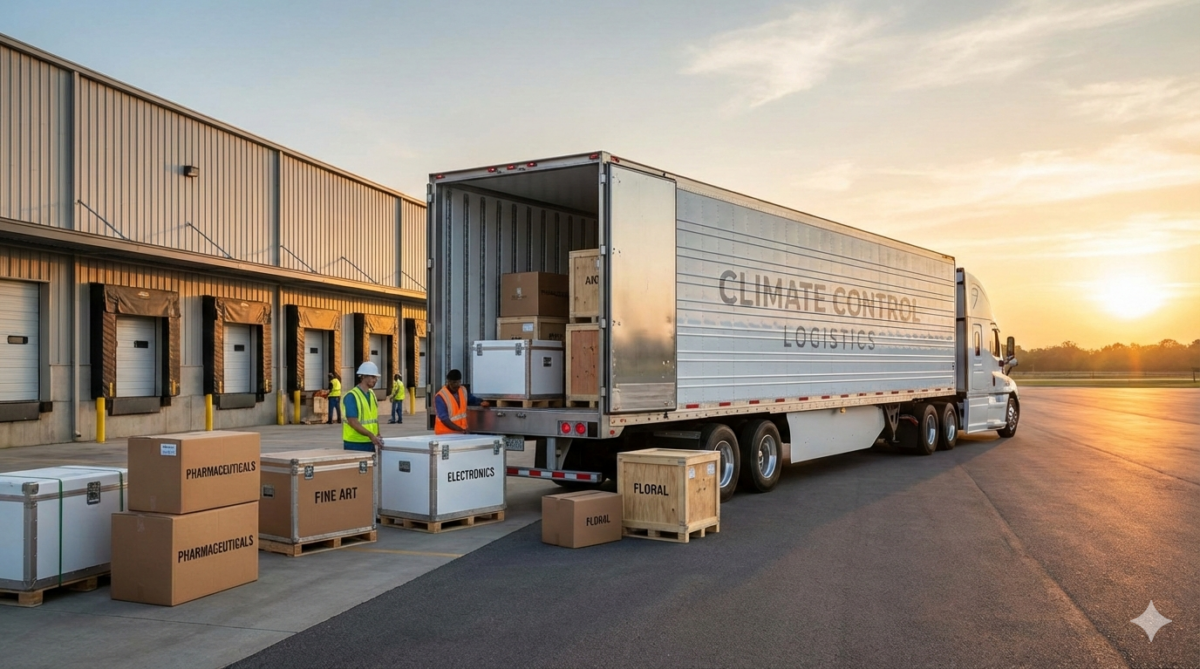
Temperature-controlled logistics, often referred to as “reefer” transport, is far more than simply moving chilled produce or frozen dinners across state lines; it is the fundamental infrastructure that upholds the integrity of America’s most sensitive, high-value, and critical goods. The core purpose of these specialized trucking services usa is to maintain a precise, pre-defined climate environment, ensuring that pharmaceutical ingredients, delicate electronics, or specialized chemicals remain efficacious and stable from the point of origin to the final destination. This sophisticated process involves rigorous controls and technology, extending the necessity of precise temperature management well beyond the grocery aisle and into highly regulated industrial and medical supply chains across the country.
What Industries Rely on Temperature-Controlled Trucking Services USA Besides the Food Industry?
While food and beverage transport dominates much of the public perception, the most demanding and financially significant applications of temperature-controlled freight lie in non-food sectors where cargo integrity is absolutely non-negotiable. These specialized industries require not just cooling, but precise climate stability, often encompassing control over humidity and vibration as well as temperature fluctuations. The failure to maintain the correct climate can result in catastrophic financial losses and, in the case of medical shipments, serious public health consequences, which is why specialized carriers are essential.
The Pharmaceutical and Life Sciences Sector
The pharmaceuticals and life sciences sector represents one of the most critical users of specialized temperature control. Vaccines, biologics, blood plasma, and specialized research samples all require specific cold environments, ranging from typical refrigerated ranges (2°C to 8°C) to ultra-low frozen temperatures (-20°C or colder). Maintaining this strict regimen is vital for drug efficacy, as temperature excursions can quickly render expensive, life-saving medicines inert or dangerous for use.
Transporting these sensitive materials necessitates meticulous documentation and adherence to global standards, such as Good Distribution Practice (GDP) guidelines, which emphasize traceability and accountability throughout the journey. This level of precision often requires dedicated teams and vehicles, ensuring that regulatory compliance is met at every handover point within the chain. Specialized pharmaceutical refrigerated freight solutions are often the backbone of rapid drug distribution.
High-Value Chemicals and Industrial Materials
A lesser-known but equally important application is the transportation of high-value industrial chemicals and raw materials. These substances might be used in manufacturing, scientific research, or advanced material production, and their stability is highly sensitive to temperature. If allowed to overheat or freeze, these chemicals can degrade, separate, or, in hazardous cases, become volatile, posing significant risk.
This category includes liquid resins, adhesives, certain polymers, and photo-reactive substances used in sophisticated manufacturing processes, which require stable ambient or moderately chilled temperatures. Carriers specializing in this niche must possess expertise not only in temperature management but also in handling Dangerous Goods (Hazmat) classifications, adding another layer of complexity to the logistics planning. This blend of precise climate control and safety protocol elevates the service far beyond standard freight hauling.
Electronics and Advanced Technology
Modern high-tech components, particularly lithium-ion batteries, delicate sensors, and precision robotics, can also require climate control, though often for protection against heat and humidity rather than outright refrigeration. Excessive heat can shorten battery lifespan or damage sensitive internal circuitry, leading to operational failure of the final product.
The goal in this context is often to prevent condensation and thermal shock, ensuring that the components are not subjected to rapid temperature changes that could cause physical damage or moisture infiltration. Using specialized trailers, especially those offering multi-zone climate capabilities, helps manufacturers safeguard their significant investments in sensitive technological hardware during transit.
The Critical Role of Cold Chain Logistics in Modern Transportation
Cold chain logistics is not merely a feature of the vehicle, but a holistic, end-to-end supply chain strategy that encompasses temperature management at every stage: preparation, storage, loading, transit, and final delivery. This discipline is essential for maximizing the shelf life and maintaining the quality of temperature-sensitive products. The success of a cold chain depends on meticulous planning that integrates specialized equipment with trained personnel and robust monitoring systems.
These comprehensive, professional trucking services usa ensure that the chain is never broken, guaranteeing product efficacy and compliance across the entire route. A successful cold chain involves pre-cooling trailers to the exact required temperature, monitoring ambient temperatures during loading, and using best-in-class insulation to mitigate external thermal risks. The ultimate objective is predictability and consistency.
Temperature Control and Humidity Management
The level of temperature control demanded by specialized cargo necessitates specialized processes. Unlike dry van shipping, temperature-controlled transport often requires maintenance within narrow, defined ranges, such as “deep-frozen,” “chilled,” or “ambient.” In addition to simple temperature, many chemical and pharmaceutical products are also sensitive to humidity. Carriers can offer climate control features to maintain specific relative humidity levels within the trailer, preventing moisture damage or ingredient agglomeration, which is crucial for powder-based and dry chemical goods.
A reliable logistics provider understands that environmental control is a multi-faceted requirement, ensuring they manage heat, cold, and moisture simultaneously. This comprehensive approach is particularly vital when traversing the United States, where a single cross-country run can expose the trailer to extreme weather variations, such as desert heat or northern deep freezes. The provider must have contingencies for all possible scenarios.
Technology that Guarantees Product Integrity
Modern temperature-controlled transport relies heavily on advanced technology to provide transparency, preemptive maintenance, and precise environmental management. The days of relying solely on manual driver checks are long gone; today’s standard involves digital integration and real-time data streaming.
Real-Time Temperature Monitoring Systems
The cornerstone of modern cold chain integrity is the sophisticated suite of temperature monitoring systems installed in every specialized trailer. These systems use internal sensors, often placed strategically within the cargo area, to continuously record and transmit temperature data back to a centralized logistics hub. This real-time data feed allows dispatchers and customers alike to see exactly what conditions the cargo is experiencing at any moment during transit.
If a temperature deviation occurs, the system triggers immediate alerts to the driver and operations team, allowing for prompt intervention before the cargo is compromised. This proactive approach—often coupled with GPS tracking—transforms temperature control from a reactive measurement into a continuous, managed process, vastly reducing the risk of product loss and improving overall service reliability.
Specialized Trailer and Packaging Solutions
The equipment itself is purpose-built to isolate the cargo from the external environment. Standard refrigerated trailers, or reefers, are heavily insulated and equipped with powerful Refrigeration Units (TRUs) that can cool and, critically, heat the interior space. This bi-directional capability is essential for ensuring temperatures do not dip too low in freezing climates.
For ultra-sensitive or high-value small shipments, specialized active and passive packaging solutions are frequently used. Active containers are essentially mobile, self-powered mini-reefers with their own internal batteries and monitoring systems, providing an extra layer of protection during handling and transfer points. Passive packaging relies on highly effective insulation and phase-change materials (PCM) or dry ice to maintain a stable temperature for a defined duration without requiring external power.
Service Options: Matching Temperature Freight to the Right Capacity
Selecting the correct transportation mode is essential for both cost-efficiency and supply chain risk management. Temperature-sensitive goods can be moved via several service types depending on volume, urgency, and destination. Logistics planning must carefully consider the required temperature stability against the total transit time and capacity needs.
For shipments that do not require an entire trailer, but still demand precise climate control, Less-than-Truckload (LTL) solutions are often employed. In these cases, freight from multiple shippers is combined onto one truck. Providers specializing in these pooled loads must utilize multi-zone or partitioned reefer trailers to accommodate different temperature requirements simultaneously. By consolidating cargo, LTL offers a cost-effective option for smaller businesses. To find out more about the efficiencies of shared space, please review our guide on LTL Shipping Services. This option is ideal for routine, smaller-volume shipments that are not time-critical.
Conversely, Full Truckload (FTL) services dedicate an entire trailer to a single shipper’s cargo, providing maximum security, flexibility, and the fastest transit times. This option is mandatory for large volume shipments, highly valuable goods, or cargo with extremely strict and specific temperature set points that cannot be co-mingled with other products. FTL minimizes handling risk and is the gold standard for long-haul temperature-sensitive shipping. For details on dedicating a vehicle to your temperature-sensitive freight, explore our Full Truckload Services offerings.
For non-standard, climate-sensitive items that are also unusually large or heavy, such as specialized machinery destined for a manufacturing plant or massive storage tanks for liquid gases, unique solutions are necessary. These projects blend the requirements of climate control with the challenges of dimensional freight. These oversized, temperature-sensitive moves require specialized planning, permits, and equipment capable of controlling the environment while accommodating exceptional dimensions. When your temperature-controlled shipment exceeds standard size limits, specialized expertise is required; learn more about transporting unique loads through our section on Heavy Haul Transportation.
Navigating Compliance and Regulatory Frameworks
The regulatory landscape for temperature-controlled transport in the USA is comprehensive, particularly concerning goods that directly impact public health or the environment. Shippers and carriers must adhere to multiple federal and state mandates to ensure accountability and safety.
| Regulatory Body | Key Area of Focus | Compliance Requirement Example |
| FDA (Food and Drug Administration) | Food Safety Modernization Act (FSMA) | Strict sanitary controls, driver training, precise temperature documentation. |
| USDA (U.S. Department of Agriculture) | Plant/Animal Products, Imports | Ensuring temperature stability to prevent pest infestation or disease spread. |
| CARB (California Air Resources Board) | Environmental Emissions | Regulating the diesel-powered Transport Refrigeration Units (TRUs) for emissions control. |
| DOT (Department of Transportation) | Hazmat and Vehicle Safety | Specific placarding, routing, and packaging for temperature-sensitive hazardous chemicals. |
Compliance is a continuous process that involves more than just equipment checks. It requires detailed record-keeping, validated systems, and clear Standard Operating Procedures (SOPs) for handling temperature excursions or equipment failures. Carriers must be able to produce audit trails proving that the specified temperature profile was maintained throughout the entire logistics process, safeguarding the product and protecting the shipper from liability.
Frequently Asked Questions About Temperature-Controlled Freight
What is the main difference between refrigerated and temperature-controlled shipping?
The primary difference lies in the range of control. Refrigerated shipping typically implies maintaining temperatures in the chilled or frozen range, such as 34°F to 40°F. In contrast, temperature-controlled shipping is a broader term that includes refrigeration but also covers specialized ranges like deep-frozen, warm-ambient (e.g., 55°F to 75°F to prevent overheating), or multi-zone environments requiring two different temperatures in one trailer. The latter often includes humidity control.
How are temperature-sensitive loads protected during loading and unloading?
Protection during handling is achieved through strict Standard Operating Procedures and specialized infrastructure. This includes using insulated loading docks, employing temperature-controlled staging areas, and utilizing “strip curtains” on trailer doors to minimize heat exchange during the short time the doors are open. The process is often called “dock-to-dock” cold chain integrity, emphasizing minimal exposure to external conditions.
What is a temperature excursion and how is it addressed?
A temperature excursion occurs when the cargo temperature deviates outside the predetermined, acceptable range for a specified period of time. Modern monitoring systems trigger immediate alerts to prevent damage. When an excursion happens, the carrier’s protocol mandates an immediate investigation, often involving driver intervention to manually check the refrigeration unit, and notification to the shipper to determine if the integrity of the product has been compromised, requiring corrective action or quality assessment.
Are temperature-controlled services more expensive than standard dry freight?
Yes, they are generally more expensive due to the complexity and operational costs involved. The premium covers the highly specialized equipment (reefer units are costly to purchase and maintain), the additional fuel required to run the cooling/heating unit, the necessity of redundant backup systems, and the increased labor cost associated with specialized driver training and 24/7 monitoring teams. This added cost, however, is significantly lower than the cost of losing an entire high-value, temperature-sensitive shipment.
How long can a product maintain its temperature if the refrigeration unit fails?
The duration depends heavily on the trailer’s insulation, the external ambient temperature, and the thermal mass of the cargo itself. In a well-insulated trailer carrying dense, already-cold cargo, the temperature may hold for several hours. However, in extreme summer conditions, the temperature can rise rapidly. This is why carriers prioritize proactive maintenance and rapid response to monitoring alerts, rather than relying on the trailer’s passive holding capability.
Conclusion: Ensuring Product Efficacy Coast to Coast
The scope and sophistication of temperature-controlled logistics continue to evolve, moving far beyond the simple chilling of perishables into complex, high-stakes supply chain management. For industries ranging from biotechnology and specialized chemicals to high-end manufacturing, the integrity of a product is directly tied to the consistency of its transit environment. Utilizing advanced technology, meticulous compliance practices, and a vast network of dedicated vehicles is non-negotiable for success in these fields.
For critical, climate-sensitive movements across the United States, you need a partner that treats every shipment as if it were their own. Truck First Class offers comprehensive and reliable temperature-controlled trucking services usa, providing end-to-end oversight and advanced tracking for all your delicate cargo requirements. If you require expert consultation on tailoring a cold chain solution for your unique non-food products, we invite you to contact us directly to discuss your specific logistical needs. We are ready to help you ensure product efficacy and compliance from warehouse to final delivery.