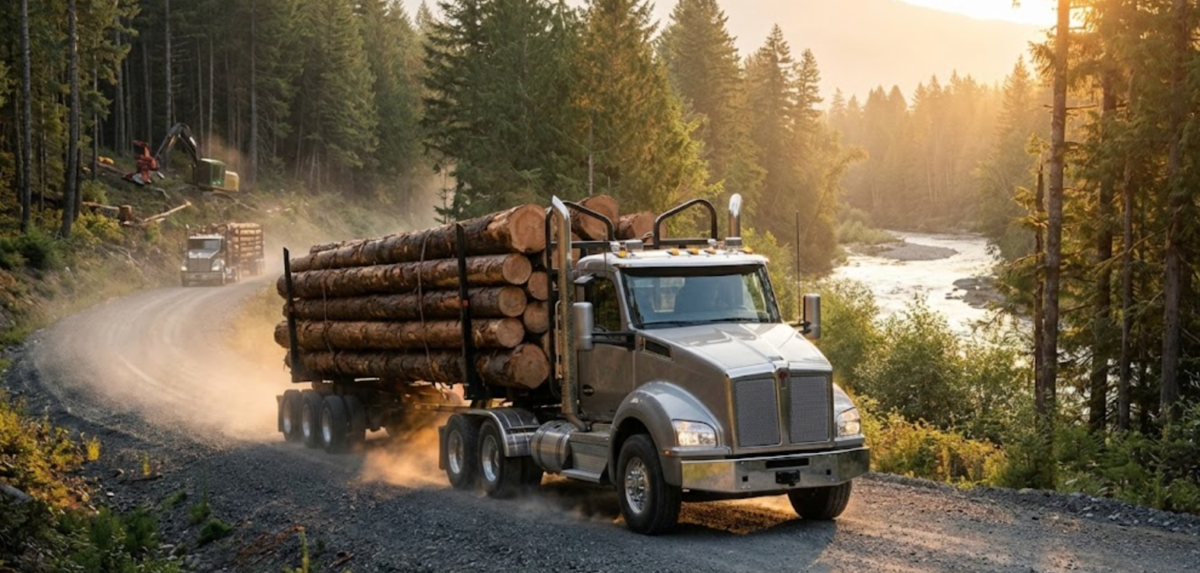
Transporting raw timber and processed wood products requires more than just a standard vehicle and a driver. It demands a deep understanding of the forestry industry, specialized equipment, and the ability to navigate challenging terrains that most standard logistics providers never encounter. Whether moving raw logs from a remote harvest site to a sawmill or delivering finished lumber to a construction zone, reliable Trucking Services are the backbone of the wood supply chain. This industry operates on tight schedules where delays can degrade product quality, making the choice of a transportation partner critical for operational success.
What Distinguishes Log Trucking Services from General Freight?
Moving forest products presents a unique set of challenges that sets it apart from typical highway transport. Unlike standard freight that travels from dock to dock on paved highways, log hauling often begins on narrow, unpaved gravel roads deep within mountainous or rural areas. These routes require drivers who possess exceptional skill in maneuvering heavy loads on unstable ground, often during inclement weather conditions that would ground lesser vehicles.
The nature of the cargo itself dictates specific handling protocols that general carriers may not understand. Logs are irregular in shape, incredibly heavy, and can shift during transit if not secured with precision. A dedicated service provider understands the center of gravity issues and the specific tensioning requirements for chains and straps to prevent accidents. This specialized knowledge prevents damage to the product and ensures the safety of everyone on the road.
Furthermore, the equipment used in this sector is purpose-built to handle the extreme weight and abrasive nature of raw wood. Standard dry vans are rarely suitable for this work; instead, the industry relies on rugged flatbeds and log bunks designed to withstand the impact of loading heavy timber. This distinction in fleet capability is the primary reason why forestry businesses must partner with carriers who specialize in this demanding niche.
Essential Equipment for Efficient Wood Transportation
The efficiency of any logging operation depends heavily on utilizing the right trailer for the specific type of wood product being moved. For raw logs, log trailers with bunks are essential as they cradle the round timber securely while allowing for the immense weight of fresh wood. These trailers are built with high-ground clearance to navigate the ruts and bumps of forest access roads without getting hung up or damaging the undercarriage.
Flatbeds and Step Deck Trailers
For processed lumber, plywood, and other finished wood products, flatbed trailers are the industry standard. They allow for side-loading via forklifts, which significantly speeds up the turnaround time at mills and construction sites. In scenarios where the equipment or lumber stacks are taller than average, step deck trailers provide the necessary vertical clearance to remain within legal height limits while still maximizing the payload capacity.
By utilizing diverse fleet options, companies can ensure that every load is matched with the most appropriate vehicle. This optimization reduces the number of trips required and minimizes fuel consumption. When you select a provider with a versatile fleet, you ensure that your Trucking Services are tailored to the specific dimensions and weight of your cargo, rather than forcing a square peg into a round hole.
Navigating Safety and Compliance in the Timber Industry
Trucking Services in the logging sector must adhere to a strict framework of safety regulations and weight restrictions that vary by state and region. Overweight loads are a constant concern in this industry, as fresh timber holds a significant amount of water weight that can fluctuate based on the season and weather. Professional carriers utilize onboard scales and meticulous planning to ensure every load complies with federal bridge formulas and axle weight limits.
Safety extends beyond just legal compliance; it involves proactive measures to protect the driver and the public. This includes regular equipment inspections to check for fatigue in tie-down chains and cracks in trailer frames caused by the stress of heavy hauling. Drivers in this sector are trained in defensive driving techniques specific to top-heavy loads, ensuring stability even when navigating sharp curves or sudden stops.
Securement is another critical aspect where there is no room for error. The use of high-strength wrappers and chains, checked periodically throughout the trip, ensures that logs remain immobile. For businesses looking to move large volumes of timber without compromising on safety protocols, utilizing Full Truckload Services guarantees that the entire capacity of the truck is dedicated to your shipment, allowing for direct and secure transport from origin to destination.
The Role of Technology in Modern Forestry Logistics
The days of relying solely on paper maps and radio dispatch are fading as technology reshapes how wood is transported. Modern fleet management systems now allow for real-time tracking of shipments, giving mill managers and construction site supervisors precise arrival times. This visibility helps facilities schedule their unloading crews more effectively, reducing idle time and preventing bottlenecks in the yard.
Route optimization software also plays a pivotal role in reducing operational costs. By analyzing traffic patterns, road restrictions, and terrain data, these systems calculate the most efficient path for heavy trucks. This is particularly important for avoiding low bridges or weight-restricted roads that could result in costly fines or lengthy detours, helping businesses better manage Trucking Services Rates.
Digital documentation has streamlined the administrative side of wood transportation. Electronic bills of lading and proof of delivery systems reduce the risk of lost paperwork and ensure faster invoicing. This digital integration creates a seamless flow of information between the forest, the hauler, and the mill, creating a transparent supply chain that benefits all stakeholders.
| Feature | Traditional Log Hauling | Tech-Enabled Logistics |
| Tracking | Phone updates, often delayed | Real-time GPS visibility |
| Routing | Driver knowledge, static maps | Dynamic, data-driven optimization |
| Documentation | Paper-based, prone to loss | Instant digital proof of delivery |
| Communication | Radio/Cell dependent | Integrated fleet management apps |
Why Partnering with a Dedicated Carrier Matters
Choosing a dedicated transportation partner allows forestry companies to focus on their core competencies—harvesting and processing—while leaving the logistics to the experts. A dedicated carrier acts as an extension of your business, learning your specific loading preferences and delivery schedules. This relationship fosters a level of reliability that spot-market trucks simply cannot match.
Scalability is another significant advantage of working with an established transport company. The timber industry is cyclical, with demand fluctuating based on housing starts and seasonal harvest windows. A robust logistics partner can scale their fleet up or down to match your volume needs, ensuring you have capacity during peak seasons without bearing the overhead of maintaining idle trucks during slower periods.
Cost consistency is the final piece of the puzzle. Dedicated partners often provide stable contract pricing, insulating your business from the volatility of the daily spot market. If you are ready to streamline your log transport operations and ensure consistent delivery performance, Contact us to discuss how we can support your supply chain goals.
Frequently Asked Questions
What are the biggest challenges in transporting logs?
The primary challenges include navigating remote and unpaved forest roads, managing the extreme and often variable weight of raw logs, and securing irregular loads to prevent shifting. Additionally, weather conditions can make access roads impassable, requiring experienced drivers who know how to handle heavy equipment in mud, snow, or ice.
How is the cost of log transport calculated?
Transport costs are typically calculated based on weight (per ton) or distance (per mile). Factors such as the type of terrain, fuel prices, and the specific equipment required (like self-loaders vs. standard bunks) also influence the final rate. Specialized permits for overweight or oversized loads can add to the total cost.
Do you handle interstate wood transportation?
Yes, professional trucking companies are licensed to operate across state lines. However, interstate transport requires adherence to federal regulations regarding hours of service and weight limits, as well as specific state-level permits for hauling timber. It is essential to choose a carrier with the appropriate authority and insurance for interstate commerce.
What types of trailers are best for finished lumber?
Flatbed trailers are the most common and efficient choice for finished lumber. They allow for easy side-loading and unloading with forklifts. For weather-sensitive products like high-grade kiln-dried lumber or plywood, Conestoga trailers (flatbeds with a retractable tarp system) offer protection from rain and road spray without sacrificing loading speed.
How do you ensure the load doesn’t shift during transit?
Load securement involves using heavy-duty chains, straps, and binders tightened to specific tension standards. Drivers are required to stop and check the securement shortly after starting the trip and periodically throughout the journey. For logs, bunks and stakes provide structural containment, while wrappers apply downward pressure to keep the wood bundled tightly.
Conclusion
Efficient and safe transportation is the linchpin of the forestry industry. From the rugged demands of the harvest site to the precision required for mill deliveries, every step of the journey requires professional oversight and specialized equipment. By understanding the nuances of Trucking Services, businesses can ensure their products arrive on time and in prime condition. At First Class Trucking Corp, we are committed to providing the reliable, authentic, and heavy-duty solutions your timber operations require to thrive in a competitive market.