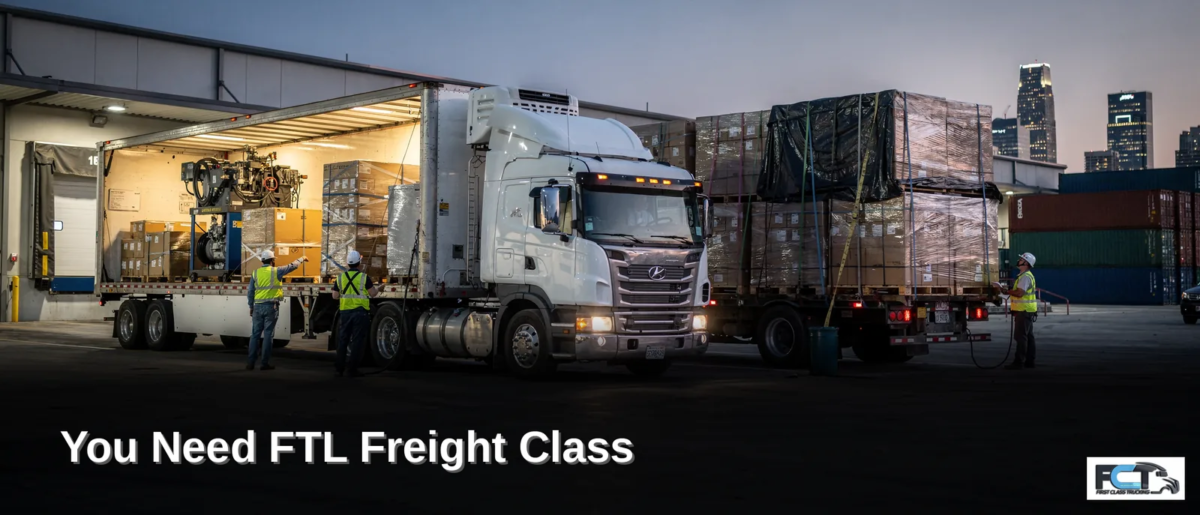
Do You Need a Freight Class for Full Truckload Shipping?
Full truckload shipments require no NMFC freight class, unlike less-than-truckload (LTL) freight, which relies on National Motor Freight Classification codes to set pricing. Full truckload pricing depends on distance, weight, and equipment type instead. Skip classification paperwork and dispatch your bulk shipment through First Class Trucking’s non-asset-based network for direct, class-free transport.
Key Takeaways
- Freight class applies to LTL shipments only; full truckload shipments do not require freight classification.
- Incorrect LTL freight class triggers reclassification fees, re-weigh charges, and significantly higher invoices at terminals.
- Freight class determines LTL shipping costs based on density, stowability, and handling requirements of cargo.
- First Class Trucking, located in Hallandale Beach, Florida, employs 22 people serving freight transportation needs.
Does Full Truckload Shipping Require a Freight Class?
Full truckload shipping generally skips freight classification entirely. Does full truckload use freight class the same way LTL does? No — you’re paying for exclusive use of the trailer, not a slice of shared capacity priced by commodity type.
Freight class exists to solve a specific pricing problem. LTL carriers move tens of thousands of different commodity types on the same truck. They need a standardized system to price all of it fairly. Freight classification for FTL doesn’t carry the same burden, because you’re not sharing space with other shippers’ freight.
Why does LTL rely on freight class but FTL doesn’t?
LTL and FTL shipments get quoted differently, and that difference explains everything. LTL rates depend on density, stowability, handling, and liability — the inputs that determine class. FTL rates depend on mileage, equipment type, and market capacity instead. Since you’re booking the whole trailer, there’s no need to standardize pricing across mixed cargo.
What does First Class Trucking offer for bulk freight moves?
First Class Trucking’s service lineup covers both FTL freight class scenarios. Standard LTL, giving shippers a direct comparison point for how each mode prices and books freight. Coverage includes:
- Full Truckload (FTL) and LTL transport
- Flatbed, oversized, and hazmat capacity
- Refrigerated and bonded freight handling
- Government and defense-cleared moves
FCT operates as a non-asset-based carrier, drawing on a vetted network of TSA-approved drivers to support these services nationwide. That structure delivers ground transportation with aviation-grade precision and speed. A standard built for volume freight moving without the classification overhead LTL requires. For logistics managers weighing mode selection, understanding that FTL sidesteps class calculations simplifies budgeting and reduces disputes at pickup.
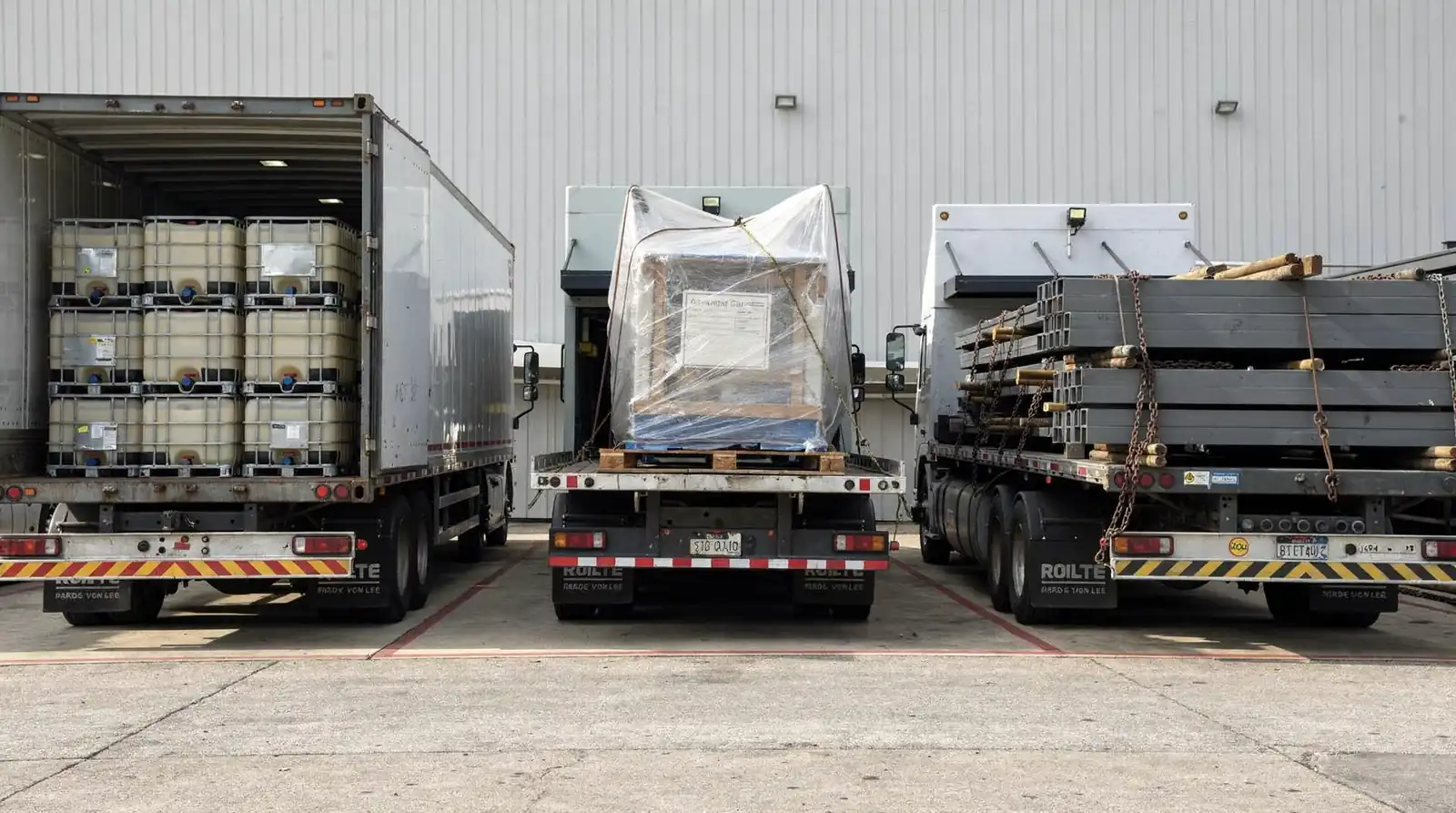
How Is LTL Freight Class Actually Calculated?
The National Motor Freight Classification (NMFC) assigns every less-than-truckload shipment a number, and that number governs your rate. This system, known as freight classification for FTL shippers as well when comparing modes, exists to standardize pricing across carriers nationwide. Skip this step or misjudge it, and you risk paying far more than your freight actually warrants.
Weight alone doesn’t set your class. Carriers weigh how difficult a commodity is to handle. How much liability sits on their books if it’s damaged or lost in transit. A pallet of steel brackets and a pallet of glass fixtures might weigh the same. Carry wildly different classes because one breaks and one doesn’t.
What determines the actual class number?
Classes run from 50 to 500 across 18 total tiers, and each tier changes your rate. Denser, sturdier freight sits near the low end; fragile, bulky, or high-value cargo climbs toward 500. Getting this number wrong isn’t a minor paperwork issue — it directly inflates or deflates what you owe.
Does this classification system apply to full truckload shipping?
Does full truckload use freight class? No. FTL freight class simply doesn’t exist as a concept, since full truckload pricing runs on distance, equipment type, and market rates instead of NMFC tiers. You’re paying for the whole trailer, not a classified fraction of it.
That distinction matters when you’re deciding between modes. First Class Trucking’s price match and price beat policies, paired with flexible payment options and no down payment required, let you weigh LTL classification costs against FTL pricing before committing your budget.
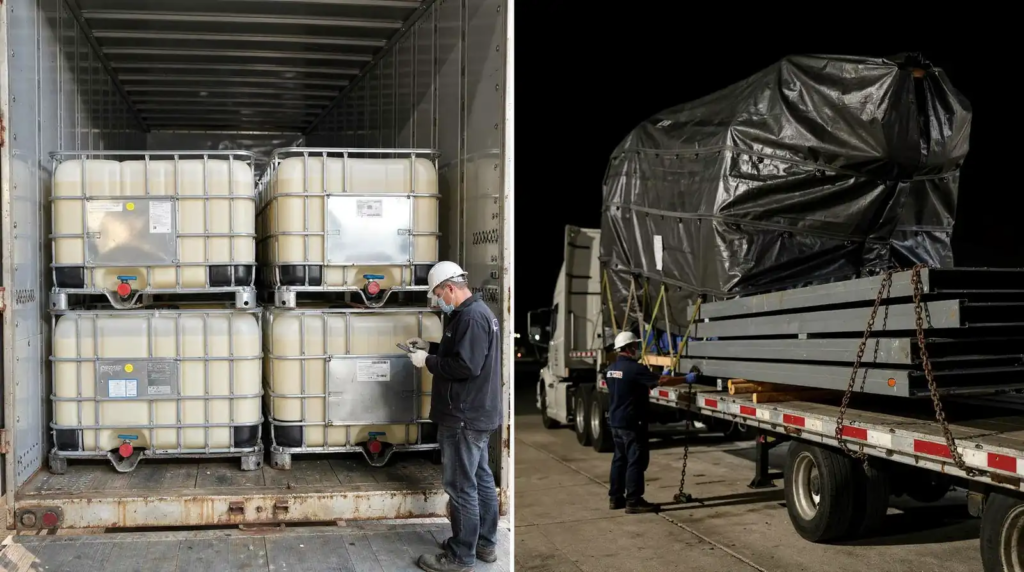
Why Does Volume LTL Complicate Freight Classification?
Volume LTL sits in a gray zone between standard less-than-truckload and dedicated FTL freight class shipping. That middle ground creates classification headaches. Built for shippers whose loads exceed typical LTL volume. Don’t quite justify a full truck, volume LTL forces carriers to apply density-based rules to shipments that behave more like partial truckloads. You end up navigating a pricing structure designed for pallets, applied to freight that acts like bulk cargo.
Classification in this space isn’t about how much space your shipment takes up. Density, stowability, and handling requirements drive the freight class assignment, and getting any one of them wrong skews your rate. That matters directly to your bottom line: freight class determines shipping cost and dictates how efficiently your goods fill available truck space.
Does Full Truckload Use Freight Class the Same Way?
Full truckload shipping generally sidesteps traditional class-based pricing since you’re paying for the entire trailer. Volume LTL, by contrast, still leans on freight classification for FTL-adjacent loads because carriers need a consistent method to price partial capacity. That distinction is exactly why volume LTL shipments require closer scrutiny than a straightforward truckload booking.
What Should Shippers Watch For With Bulk Freight Deadlines?
Time-sensitive bulk shipments demand more than accurate classification. Rapid transit capabilities and dedicated support help you hit tight windows when volume LTL or bulk FTL freight is on the line. Without responsive carrier support, misclassified freight can stall your supply chain right when speed matters most.
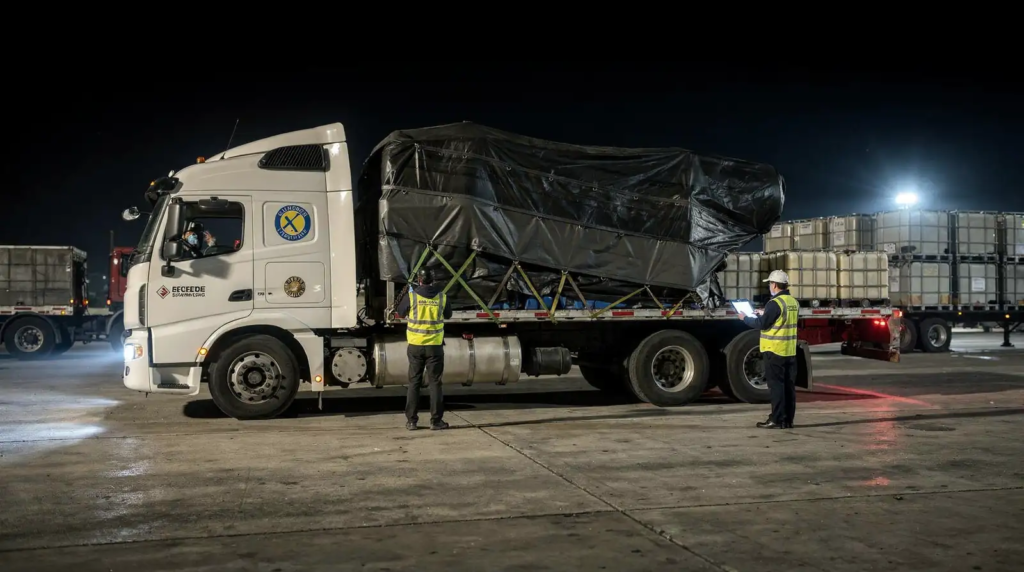
When Does FTL Freight Class Still Matter?
Full truckload contracts skip per-class pricing. Classification questions resurface the moment your bulk shipment involves security screening, hazmat handling, or oversized cargo. Freight classification for FTL loads doesn’t set your rate, but it still shapes paperwork, driver vetting, and inspection risk. Ignore it, and you risk delays that a full-container booking was supposed to prevent.
Can misclassification still cost you on a full truckload shipment?
Yes. A terminal inspection can flag a mismatched declaration, and that triggers reclassification fees, re-weigh charges, and a sharply higher invoice. Often discovered only after your freight is already moving through the network. FTL freight class disputes are rarer than LTL disputes, but they aren’t impossible when documentation is sloppy.
Does full truckload use freight class the same way LTL does?
Not exactly. LTL carriers combine multiple shippers’ freight, so density and stowability determine your cost per pallet. Full truckload freight moves as a single dedicated load. Classification matters less for pricing and more for compliance documentation on regulated or government-bound freight.
Classification-adjacent details still carry weight when your load requires:
- TSA certification verification, confirming the carrier meets Transportation Security Administration requirements, including background checks and threat assessments
- Government or defense contract compliance, where regulatory scrutiny exceeds standard commercial freight
- Hazmat or oversized cargo handling, where declared characteristics affect driver assignment and routing
First Class Trucking’s staff of seasoned professionals oversees every stage of your shipment, guaranteeing safe, timely handling from pickup through delivery. Around-the-clock operations, TSA-approved drivers, real-time visibility, and strict compliance management close the reliability gaps that complicate hazmat, oversized, or government-bound freight. Even when per-class pricing doesn’t apply to your load.
How Should Shippers Prepare Bulk FTL Freight?
Preparation starts with accurate paperwork, precise weights, and a carrier who treats your load as more than a number. Bulk shippers who skip these steps risk delays, misquotes, and freight sitting idle on a dock. First Class Trucking operates out of Hallandale Beach, Florida, coordinating nationwide bulk freight moves from that headquarters, giving shippers one point of contact for multi-state routes.
Does full truckload freight need the same classification steps as LTL?
Does full truckload use freight class the way less-than-truckload shipments do? Generally, no — FTL freight fills an entire trailer, so freight classification for FTL carries far less weight in pricing than density-based NMFC codes do for shared-space LTL loads. Even so, accurate weight and commodity details still matter for equipment selection and compliance documentation.
What paperwork and payment steps speed up bulk FTL delivery?
Certified logistics coordinators at First Class Trucking manage everything from booking. Warehouse logistics through final delivery, cutting the guesswork out of bulk moves. Bulk shippers waiting on cargo release benefit from PayCargo’s Ship & Pay platform, which allows a one-time payment and delivery within hours instead of days.
FTL freight class planning also includes storage and border logistics. First Class Trucking provides secure warehousing, order fulfillment, inventory management, and cross-border trucking into Canada and Mexico. Backed by a 22-person team, every shipment receives hands-on coordination instead of generic handling.
While freight classification primarily applies to less-than-truckload shipments, understanding its relevance to full truckload operations reinforces best practices in logistics planning. Shippers benefit from recognizing how freight characteristics influence carrier selection, routing decisions, and compliance requirements. First Class Trucking’s comprehensive FTL solutions address these operational nuances, ensuring your shipment receives appropriate handling regardless of classification considerations. Partnering with experienced carriers who understand the full spectrum of freight logistics positions your business for reliable, efficient transportation outcomes.
FAQ
Do you need a freight class for full truckload shipments?
No. Full truckload shipments require no NMFC freight class, unlike LTL freight. FTL pricing depends on distance, weight, and equipment type instead of classification codes.
What determines full truckload pricing instead of freight class?
FTL rates depend on mileage, equipment type, and market capacity. Since shippers book the entire trailer, carriers don’t need to standardize pricing across mixed cargo like they do with LTL.
What happens if LTL freight class gets miscalculated?
Carriers assess class based on density, stowability, and handling requirements, not weight alone.
Facts
- First Class Trucking is located in Hallandale Beach, Florida, US.
- First Class Trucking has 22 employees.
Conclusion
Full truckload shipping and LTL freight follow fundamentally different pricing logic. FTL rates come from distance, weight, and equipment type, while LTL rates hinge on NMFC freight class — a number built from density, stowability, and handling requirements. That distinction is why full truckload shipments skip classification paperwork entirely, even though classification-adjacent details like TSA certification, hazmat handling, and government compliance can still shape a bulk move’s paperwork and routing.
For shippers weighing LTL against FTL, understanding this split simplifies budgeting and helps you avoid the reclassification fees, re-weigh charges, and inflated invoices that come from a misjudged freight class. First Class Trucking’s non-asset-based network, TSA-approved drivers, and Hallandale Beach-based team give you a direct comparison point for both modes, so you can choose the right one for your bulk freight with confidence.