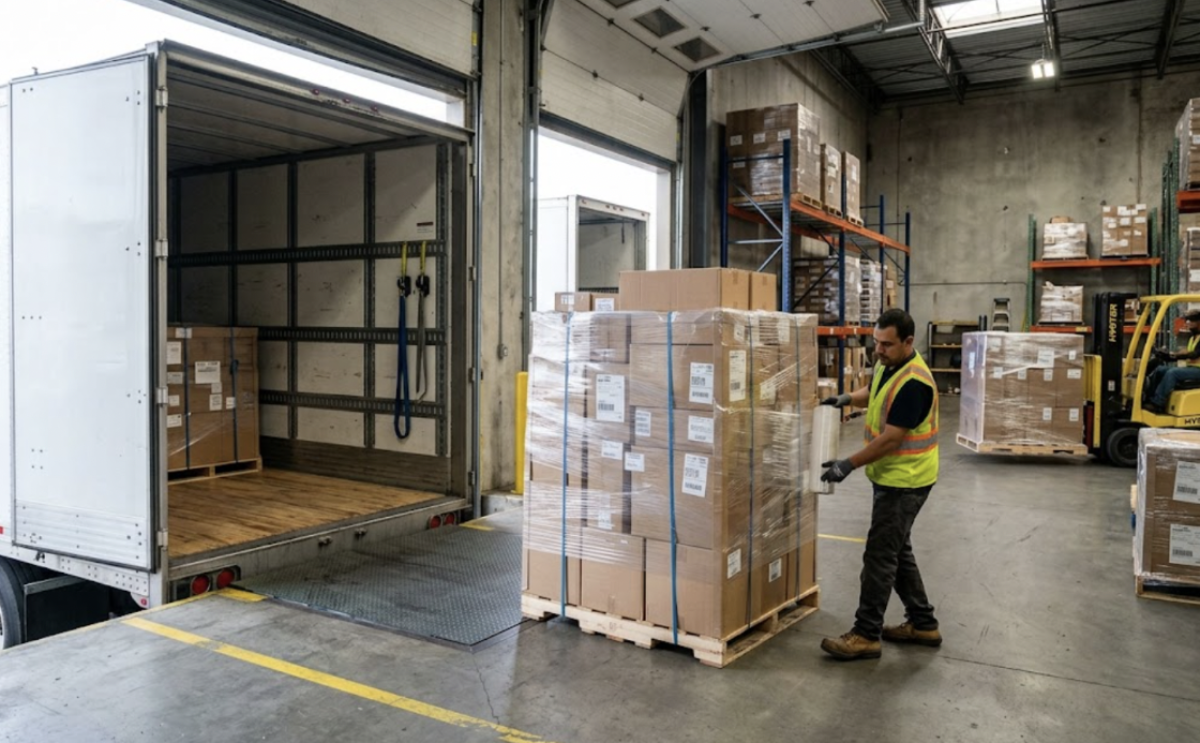
FTL Freight Preparation: Preparing FTL Freight for Full Truckload
Proper preparation requires securing freight to a standard 48-foot or 53-foot pallet, wrapping items in stretch film, and labeling each unit clearly. First Class Trucking’s 22-employee team in Hallandale Beach, Florida inspects loads for weight distribution, confirms accurate documentation, and verifies dock accessibility before dispatching drivers for pickup.
Freight preparation for full truckload shipping requires securing cargo on a dedicated trailer that travels directly from pickup to delivery without transfers, reducing damage risk. First Class Trucking, based in Hallandale Beach, Florida with 22 employees, ensures shipments are properly loaded and stabilized to withstand the single, direct transit journey.
Proper freight preparation prevents the loading delays and damage claims that erode full truckload efficiency. Palletize shipments securely, weigh and measure cargo accurately, and label freight clearly before pickup. Dedicated-trailer FTL service, which moves goods from origin to destination without transfers, rewards precise documentation and stable, block-and-braced loads with faster transit and reduced damage risk.
Key Takeaways
- Full truckload shipping uses dedicated trailers that travel directly from pickup to delivery without transfers.
- FTL freight eliminates shared handling, reducing damage risk compared to less-than-truckload shipping options.
- Dedicated trailers reward volume with pricing that reflects the full cargo capacity utilization.
- First Class Trucking, based in Hallandale Beach, Florida, specializes in full truckload freight services.
What Do You Need Before Preparing an FTL Shipment?
Readiness starts with three questions: is your freight too big, too heavy, or too time-sensitive to share trailer space? Full truckload freight exists precisely for that scenario, moving your cargo on a dedicated trailer with no transfers and no shared handling. Before you touch a pallet or book a carrier, confirm your shipment actually meets full truckload shipping requirements rather than fitting a shared-trailer model.
Once you’ve confirmed FTL is the right fit, work through preparation in order:
- Assess freight dimensions, weight, and delivery deadline to verify FTL fits your needs.
- Confirm loading dock access, equipment availability, and staff scheduling for pickup day.
- Select a freight partner capable of guaranteeing reliable, efficient service from the first planning call.
- Coordinate warehouse logistics and documentation before the truck arrives.
FTL freight preparation depends on getting these steps sequenced correctly, since skipping the assessment stage creates loading delays later.
Why does carrier selection matter this early?
Time-sensitive shipments demand partners who commit to reliability from booking through delivery, not just at pickup. First Class Trucking assigns certified logistics coordinators to manage every stage, including strategic warehouse logistics and final delivery oversight. A 22-person team coordinates dispatch and preparation, giving you a single point of accountability instead of fragmented handoffs.
What role does palletizing play in FTL readiness?
Palletizing freight for FTL shipment isn’t optional once you’ve confirmed dedicated-trailer transport; loose or improperly staged freight slows dock operations and increases handling risk. Build pallets to standard dimensions before your scheduled pickup window, and keep documentation ready so your coordinator can verify load specifications against the truck assigned to your shipment.
How Do You Palletize Freight for FTL Shipping?
Correct pallet building follows a defined sequence: stack, wrap, weigh, and secure. Skipping any step raises the odds of shifted cargo, trailer damage, or a rejected load at pickup. Follow the steps below whenever you prepare goods for a dedicated trailer.
- Sort freight by weight and fragility. Place heavier cartons on the bottom of each pallet and lighter, fragile items on top to prevent crushing during transit.
- Square the load to the pallet edges. Overhanging boxes catch on dock equipment and increase the risk of tearing during loading.
- Confirm weight limits with your carrier before building. Maximum pallet weight isn’t universal — it varies by carrier, so verify limits ahead of time rather than after freight arrives at the dock.
- Wrap and strap for stability. Shrink wrap and banding keep cartons from separating once the trailer starts moving.
- Label each pallet clearly with destination, weight, and handling instructions so dock staff and drivers can move it without guesswork.
Palletizing freight for FTL shipping isn’t just about tidy stacking — it protects the shipment, prevents wasted trailer space, and lets carriers secure loads correctly once they’re on board. Poorly built pallets cost you twice: in damaged goods and in trailer space that could’ve carried more freight.
What Happens If a Pallet Exceeds the Weight Limit?
Carriers may refuse the load, delay pickup, or require repalletizing on-site, all of which push back your delivery window. Confirming limits during FTL freight preparation avoids these last-minute disruptions entirely.
Who Manages Palletizing Standards on an FTL Shipment?
First Class Trucking’s staff oversee every stage of the freight process, from pickup through delivery, to confirm loads are handled safely and on schedule. Meeting full truckload shipping requirements depends on this kind of detailed planning. Organizational discipline, ensuring your cargo arrives intact and on time.
What Compliance and Documentation Steps Are Required?
Compliance for full truckload freight starts with carrier verification, not paperwork. Full truckload shipping requirements include confirming that your carrier holds valid TSA certification before a single pallet moves. Skipping this step exposes your shipment to delays, failed audits, or rejected freight at secure facilities.
Follow these steps to document and verify compliance before booking your FTL move:
- Confirm TSA certification status. Ask your carrier for proof that it meets Transportation Security Administration requirements for secure freight handling.
- Verify background screening records. Certified carriers have passed background checks, security threat assessments, and operational reviews before handling sensitive or government-related freight.
- Document freight classification. Record the freight type and any applicable legal requirements, since these factors determine which carrier and equipment you need.
- Confirm carrier location and accessibility. First Class Trucking operates from Hallandale Beach, Florida, placing its compliance team near major freight corridors for faster coordination.
- Retain all certification records with your shipment file for audit purposes.
Why Does TSA Certification Matter for FTL Shipments?
TSA certification proves your carrier passed rigorous security screening, not just a basic license check. You avoid liability exposure when moving high-value or regulated freight through a certified partner.
What Documentation Should You Keep on File?
Keep freight classification records, legal compliance notes, and proof of carrier certification together for every shipment. This documentation protects you during audits and speeds up dispute resolution if damage or delay occurs. Missing paperwork remains one of the most preventable causes of FTL claim denials.
How Do You Load and Dispatch an FTL Shipment?
Loading and dispatching a full truckload shipment follows a fixed sequence: prepare the freight, load it onto a dedicated trailer, and release it for direct transit. Skip a step and you risk delays, damaged cargo, or a driver waiting at the dock. Proper FTL freight preparation starts before the truck ever arrives.
- Confirm dock readiness. Verify staging areas, dock doors, and equipment are clear before the trailer arrives.
- Stage and secure pallets. Complete palletizing freight for FTL transport by shrink-wrapping, banding, and labeling each load so it survives a direct run without shared handling.
- Load the dedicated trailer. Your freight moves straight from pickup to delivery with no transfers and no shared handling, which cuts damage risk compared to multi-stop trailers.
- Verify documentation. Confirm bills of lading, weight tickets, and any compliance paperwork match the load before sign-off.
- Clear payment holds. Use a platform like PayCargo’s Ship & Pay to submit a one-time payment and receive cargo release in hours rather than days.
- Dispatch and track. Confirm driver assignment and departure time with your carrier’s support team.
What Keeps FTL Dispatch on Schedule?
Rapid transit and dedicated customer support keep your shipment moving without unplanned stops. Local operational expertise also matters. Dispatchers who know regional dock rules and traffic patterns catch problems before they cause delays.
How Do You Avoid Payment Delays at Dispatch?
Payment holds stall more FTL loads than mechanical issues do. Choose from direct ACH debits, pre-funded accounts, or credit card payments to keep cargo release on schedule and avoid a truck sitting idle at the dock.
What Mistakes Cause FTL Delays or Damage?
Missing weight figures, incomplete cargo details, and last-minute payment scrambles cause most FTL delays and damage claims. Skipping proper FTL freight preparation ranks among the top culprits, especially for shippers moving large or heavy goods who fail to plan for costs that arrive as an unwelcome shock at pickup.
Why Do Incomplete Freight Details Raise Your Rate?
Final truckload rates hinge on far more than shipment weight. Dimensions, freight class, and destination all factor into pricing, so submitting incomplete details invites costly surprises once the carrier calculates the actual rate. You avoid this trap by confirming every specification before booking.
Loading errors compound the problem. Weak palletizing freight for FTL shipments shifts cargo mid-transit, damaging goods and slowing unloading at the dock. Common mistakes include:
- Stacking mismatched pallet sizes that create unstable loads
- Skipping proper wrapping or securing before the trailer arrives
- Ignoring published full truckload shipping requirements for weight distribution and axle limits
- Failing to confirm freight details before the truck is booked
Payment timing creates another bottleneck you can’t ignore. Delayed cargo payments hold up release at the terminal, stalling your delivery schedule. First Class Trucking addresses this risk directly by implementing the PayCargo online payment platform, cutting the time and cost tied to manual payment processing.
Budget constraints stall shipments just as often as paperwork errors. First Class Trucking’s price match and price beat policies, paired with flexible payment options and no down payment requirement, keep your freight moving instead of sitting on hold while financing gets sorted out.
FAQ
How do you know if your freight qualifies for full truckload shipping?
Freight qualifies for FTL when it is too big, too heavy, or too time-sensitive to share trailer space with other shipments. Confirm dimensions, weight, and delivery deadline before booking.
What steps come before an FTL truck arrives for pickup?
Assess freight dimensions and deadlines, confirm loading dock access and staff scheduling, select a capable freight partner, and coordinate warehouse logistics and documentation in that sequence.
What sequence do you follow when palletizing freight for FTL shipment?
Palletizing follows a defined sequence: stack, wrap, weigh, and secure. Build pallets to standard dimensions before pickup and keep documentation ready for coordinator verification against the assigned truck.
Facts
- First Class Trucking is located in Hallandale Beach, Florida, US.
- First Class Trucking has 22 employees.
Conclusion
Preparing freight for full truckload shipping comes down to disciplined sequencing: confirm your shipment truly needs a dedicated trailer, palletize and secure cargo correctly, verify carrier compliance and documentation, and clear payment holds before dispatch. Each stage protects the one after it — accurate weight and dimension data prevents rate surprises, solid pallet construction prevents damage in transit, and verified TSA certification keeps your freight moving through secure facilities without delay.
Shippers who treat FTL freight preparation as a checklist rather than an afterthought avoid the loading delays, damage claims, and payment bottlenecks that erode the efficiency dedicated-trailer service is meant to deliver. With a coordinated team, clear documentation, and pallets built to standard, your shipment moves directly from pickup to delivery with minimal risk and no shared handling. First Class Trucking’s Hallandale Beach-based team applies this same discipline to every FTL shipment it coordinates, giving you a single point of accountability from the first planning call through final delivery.