How Does Cross-Border Full Truckload Shipping Work?
Cross-border truckload shipping is a domestic move with a customs exam in the middle. The trailer, pallets, and equipment are the same as any US lane; what changes is the paperwork, the handoffs, and the number of parties who must all be right on the same day. Roughly 35,000 trucks cross the Mexico-US border daily by industry estimates, and nearly all northbound truckload freight follows the same five-step cross-border freight process. First Class Trucking runs the US leg of that process daily out of the Laredo gateway, and this guide walks through every step a shipper owns.
The Cross-Border Freight Process in Five Steps
Mexico to USA freight moves through five stages: pickup and export clearance in Mexico, drayage to the border, US customs clearance, the handoff to a US carrier, and line-haul delivery. Each step has its own documents and its own failure points, and the steps run on the same full truckload equipment as any domestic lane: 53-foot dry vans and reefers, loaded to the same weight rules.
Step One: Pickup in Mexico and the Carta Porte
The shipment starts like any truckload move, with a carrier collecting sealed freight from the shipper. The difference is Mexico’s paperwork. The Carta Porte, version 3.1 since July 2024, is the mandatory digital waybill that describes the cargo, the route, and the parties; a missing or incorrect Carta Porte can stop the truck or trigger fines before it ever reaches the bridge.
The Mexican customs broker files the pedimento, Mexico’s official export declaration, and the commercial invoice, packing list, and bill of lading must all agree with it. Discrepancies between documents are the single most common cause of border delays, so brokers ask for the paperwork a full week before pickup, not the day before.
Step Two: Drayage to the Bridge
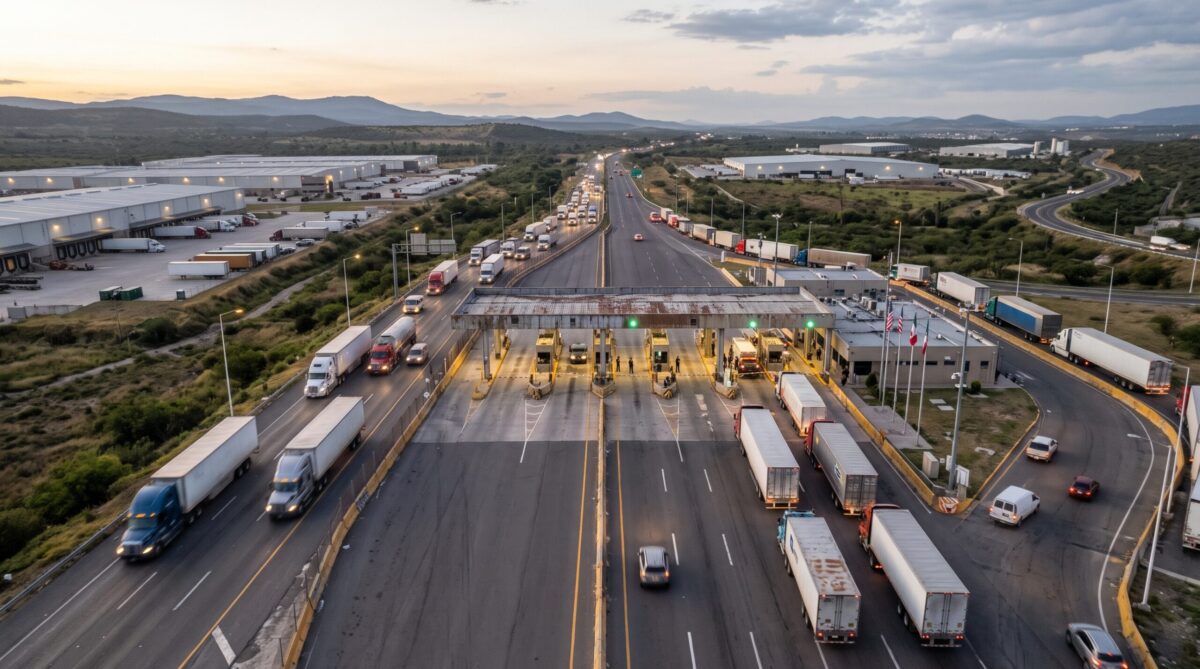
Long-haul carriers do not cross casually. Specialized drayage carriers shuttle trailers the short distance through the port of entry, operating in the commercial zone of roughly 26 kilometers on each side of the border. Most northbound truckload freight crosses at the World Trade Bridge in Laredo, Texas, the busiest land port in North America; our Laredo trucking services page covers why that gateway concentrates brokers, cross-docks, and transfer carriers the way it does.
Step Three: US Customs Clearance
Duties legally attach when the freight arrives in US customs territory, before release: under 19 CFR 141.1 (Cornell LII), liability for duties accrues at arrival for merchandise entering by land. A US licensed customs broker files the entry against the invoice and manifest data in CBP’s ACE system, pays or defers the duties, and secures release. USMCA-qualifying goods enter duty-free only when the certificate of origin supports the claim.
One alternative routing matters to larger shippers: freight can move in-bond, deferring the customs entry until the cargo reaches an inland port or bonded warehouse. That requires a bonded carrier operating under CBP bond rather than a standard carrier, because the freight is still under customs control when it leaves the border.
Step Four: The Handoff, Through-Trailer or Transload
At the border the freight changes jurisdictions, and shippers choose between two methods. Through-trailer service keeps the same sealed trailer from the Mexican shipper to the US consignee: simplest chain of custody, least handling, and usually the most expensive. Transloading moves the pallets from a Mexican trailer to a US trailer at a border cross-dock, which costs less and gives the US carrier a clean domestic trailer, at the price of one extra load and unload.
| Method | Relative cost | Border handling | Chain of custody | Best for |
|---|---|---|---|---|
| Through-trailer: same sealed trailer, origin to destination | Higher | None at the border | Strongest; seal intact the whole way | High-value, theft-prone, sealed freight |
| Transloading: cross-docked into a US trailer at the border | Lower | One load and unload | Good; freight visible at the cross-dock | Cost-driven freight, mixed pallets |
Insurance drives the choice as often as cost does. For cargo whose value makes any extra touch unacceptable, through-trailer plus sealed-trailer security is the standard pairing on our full truckload high-value freight services, with CTPAT-aligned carriers and tracking across both countries.
Step Five: US Line-Haul and Delivery
Once cleared and handed off, the move is an ordinary domestic truckload lane, and First Class Trucking runs the trailer to the consignee under the same hours-of-service and weight rules as any US freight. The border adds the customs step in the middle, so realistic transit is a domestic lane plus one to three days for clearance, drayage, and the handoff, longer when bridge congestion builds.
The Documents That Make or Break the Move
The paperwork is the process. These are the documents a northbound truckload shipment depends on, and who is responsible for each.
| Document | Purpose | Who provides it |
|---|---|---|
| Commercial invoice | Values and describes the goods for duty | Shipper; broker files against it |
| Packing list | Piece counts, weights, dimensions | Shipper |
| Bill of lading | Contract of carriage for both legs | Carriers |
| Carta Porte 3.1 | Mexico’s mandatory digital waybill | Mexican carrier and shipper |
| Pedimento | Mexico’s export declaration | Mexican customs broker |
| Certificate of origin | Supports USMCA duty-free claims | Shipper or producer |
| US entry summary | CBP entry and duty payment | US customs broker |
Frequently Asked Questions
How long does cross-border truckload shipping take?
Plan on the equivalent domestic lane plus one to three days. Clearance, drayage, and the border handoff take most of that; bridge congestion or a paperwork error can extend it, which is why documents are verified a week ahead.
What documents does a Mexico to USA truckload shipment need?
Commercial invoice, packing list, bill of lading, Carta Porte, pedimento, and, for duty-free entry under USMCA, a certificate of origin. The US broker files the entry summary on arrival.
What is drayage in cross-border shipping?
Short-haul trucking that shuttles trailers through the port of entry, within the commercial zone of roughly 26 kilometers on either side of the border, between the long-haul carriers on each side.
Do I need customs brokers in both countries?
Yes. A Mexican broker files the pedimento on the export side, and a US licensed broker files the entry and duties on the import side. Many shippers have both coordinate through one cross-border carrier.
Which border crossing handles the most freight?
The World Trade Bridge in Laredo, Texas, the busiest land port in North America. It concentrates brokers, cross-docks, and drayage capacity, which is why most northbound truckload freight routes through it.
Is through-trailer or transloading better?
Through-trailer is better for high-value or sealed freight because nothing is touched at the border. Transloading usually costs less and works well for sturdy palletized freight that tolerates one extra handling cycle.
Can freight cross the border without paying duties immediately?
Yes, in-bond. A bonded carrier moves uncleared freight under customs control to an inland port or bonded warehouse, where the entry is filed later instead of at the border.
Move Freight Across the Border With Us
First Class Trucking runs the US leg from the Laredo gateway with bonded authority, reefer and dry van capacity, and brokers we work with weekly. Send us the lane and the commodity, and we will map the cross-border freight process for your freight specifically.
Request a free quote online, or call (954) 228-2441 and we will walk the border steps with you.