Dedicated Fleet vs. Spot Market Full Truckload: What’s the Difference?
Dedicated truckload capacity locks in guaranteed trucks at a fixed contract rate, shielding your budget from volatility. Spot market full truckload buys capacity load-by-load at prevailing prices, with marginal trucking costs averaging $2.27 per mile in 2023. Your freight predictability determines which model protects your supply chain better.
Key Takeaways
- Operating a truck costs an average of $2.27 per mile, driven by equipment and labor expenses.
- Dedicated fleets lock in contract rates ahead of time versus spot market’s one-load-at-a-time pricing.
- Most shippers use both dedicated and spot capacity depending on freight predictability and rate risk tolerance.
- Private fleets continue carrying the bulk of outbound freight while expanding across the transportation industry.
What Is Dedicated FTL Trucking?
A dedicated fleet assigns trucks, drivers, and related equipment to serve one company’s shipping needs exclusively, rather than pulling capacity from an open pool of carriers. For your supply chain, that means the same drivers and equipment work your lanes on a recurring basis instead of rotating between shippers. Dedicated FTL trucking builds predictability into a market where reliability is never guaranteed.
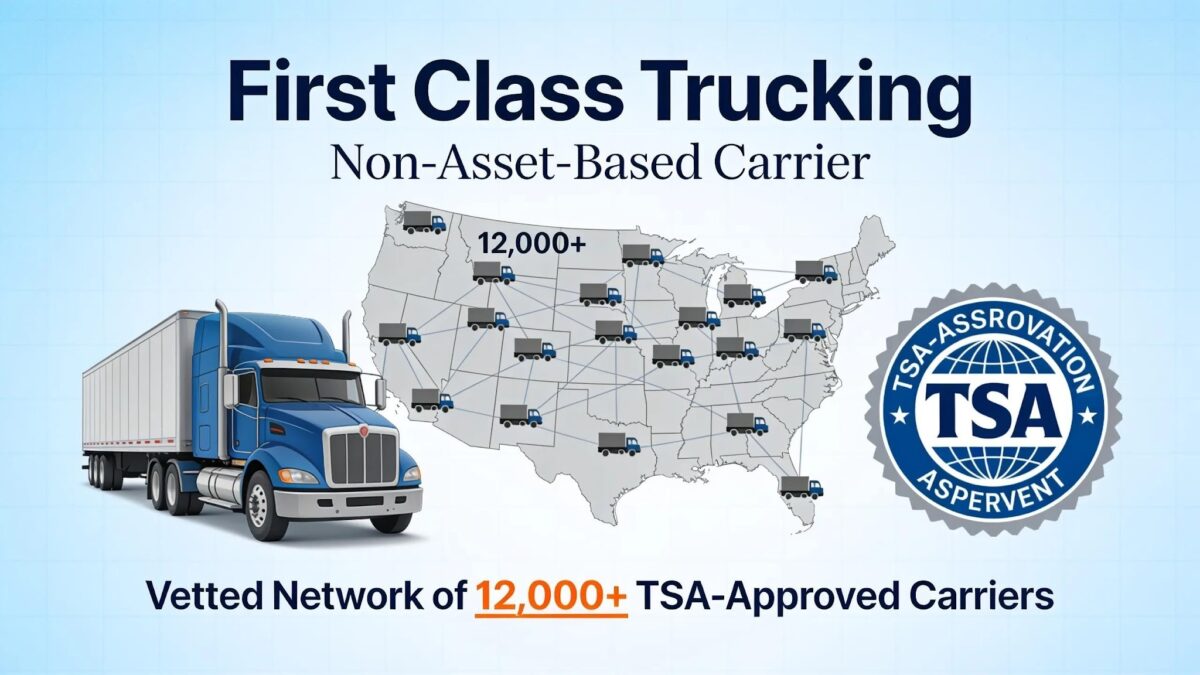
First Class Trucking structures its dedicated capacity through a non-asset-based model. Rather than owning a fixed truck fleet, First Class Trucking is a brand with 22 employees located in Hallandale Beach, Florida, US., staffing dedicated lanes and other freight solutions. That approach lets capacity scale to your volume without the overhead of maintaining owned equipment.
Precision matters as much as availability. First Class Trucking builds its nationwide air-cargo and ground transportation network around aviation-grade precision, compliance, and speed, standards drawn from airport-to-airport freight movement and applied across dedicated ground lanes.
How does dedicated FTL trucking stay accountable to a single shipper?
Certified logistics coordinators oversee the relationship from initial booking through final delivery, managing warehouse logistics and routing along the way. You get one point of accountability instead of a fragmented handoff between multiple parties.
Dedicated FTL trucking differs from ad hoc capacity in three practical ways:
- Assigned assets — trucks and drivers committed to your lanes, not shared across a general pool
- Consistent coordination — the same logistics team manages your account from pickup to delivery
- Compliance-driven execution — TSA-approved drivers and aviation-grade standards applied to ground freight
For enterprise shippers managing complex networks, that consistency reduces the guesswork built into transactional freight buying.
How Do Spot Market Truckload Rates Work?
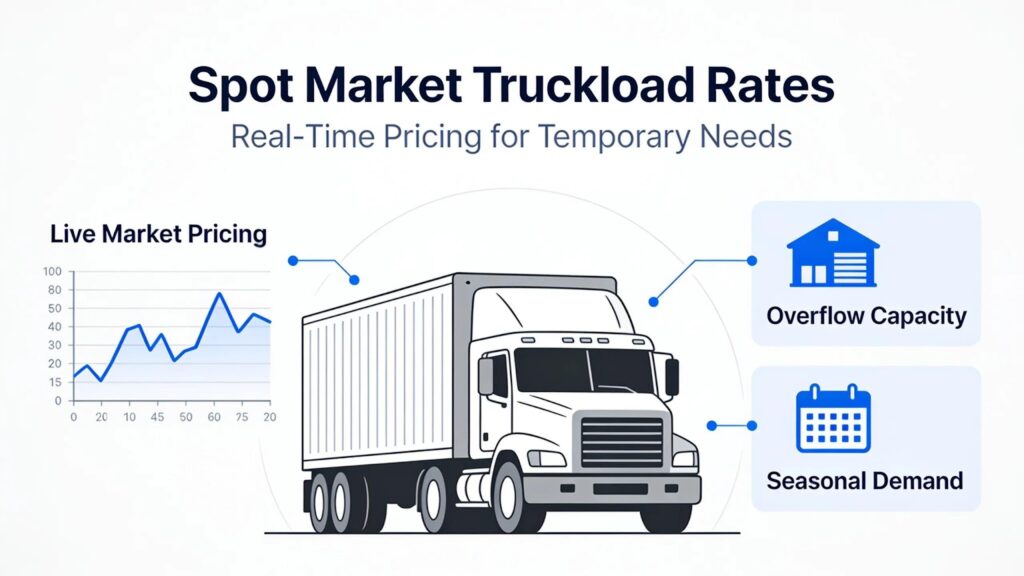
Spot market truckload rates move with live market conditions, priced load by load rather than locked into a contract. Supply and demand set the number on any given day, sometimes any given hour. That structure suits overflow freight, seasonal surges, or one-off shipments — not the recurring lanes your network depends on week after week.
The truckload market itself swings hard. Every few quarters, capacity tightens and rates climb; then conditions flip toward a shipper-favorable market with softer pricing. For a logistics director trying to forecast quarterly freight spend, that volatility turns budgeting into guesswork.
Why does spot pricing swing so much?
Carrier capacity and freight demand rarely move in sync. When trucks are scarce relative to available loads, rates spike fast. When demand cools, rates drop just as quickly, leaving shippers exposed in either direction if they lean on spot capacity for core volume.
Can you protect your budget while still using the spot market?
Yes, with the right partner managing the exposure. First Class Trucking applies 24/7 dispatch. Real-time shipment visibility to help you navigate open-market swings without losing sight of your freight. That operational layer closes the reliability gaps that make spot buying risky at scale.
Beyond visibility, cost protection matters just as much:
- Price match and price beat policies help offset unpredictable rate swings
- Flexible payment options ease cash-flow pressure during volatile pricing cycles
- No down payment required to secure transport capacity
Used selectively, spot capacity fills real gaps. Used as your primary strategy, it leaves budgets and service levels exposed to a market that rarely stays calm for long.
Dedicated Or Spot: Which Fits Your Freight?
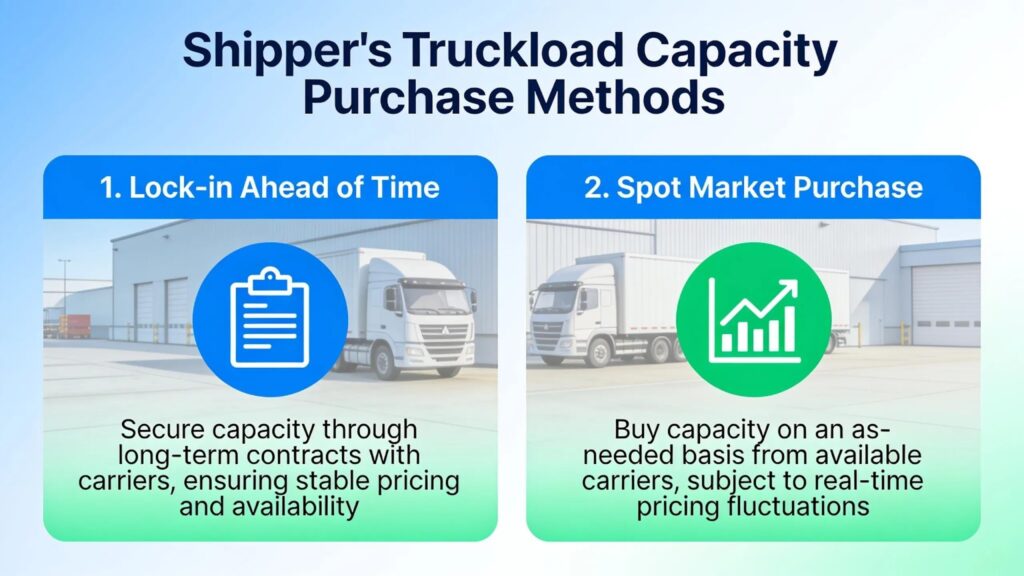
Two procurement paths determine how you secure truckload capacity: locking in a fixed contract rate ahead of time, or buying capacity load by load on the open market. Choosing wrong costs you money and reliability. A mismatched strategy leaves you exposed to rate spikes during peak season or stuck paying for empty capacity you don’t need.
Dedicated FTL trucking guarantees you fixed-rate capacity built around consistent, high-volume lanes. If your shipping volume follows a predictable pattern week after week, this model removes the guesswork from your budget and your capacity planning.
Is dedicated freight better than spot market rates?
Neither model wins outright — the right choice depends on your freight profile. Dedicated arrangements suit shippers with steady, repeatable lane volume. spot market truckload rates fit irregular, seasonal, or overflow freight where flexibility outweighs price certainty.
| Factor | Dedicated FTL | Spot Market |
| Rate structure | Fixed, contracted | Variable, market-driven |
| Best for | Consistent, high-volume lanes | Irregular or overflow freight |
| Capacity certainty | Guaranteed | Subject to availability |
How do you evaluate FTL capacity sourcing options?
Start by mapping your lane volume and shipment frequency over the past year. Consistent patterns point toward dedicated capacity; unpredictable spikes favor a spot-market approach or a blend of both.
Whichever model you choose, execution quality still determines your outcome. Your logistics partner’s staff should oversee every stage of the freight process — from pickup through final delivery — to guarantee safe, on-time performance. Strong operational management strengthens efficiency and client service outcomes, regardless of which procurement strategy you select.
When Does A Dedicated Fleet Pay Off?
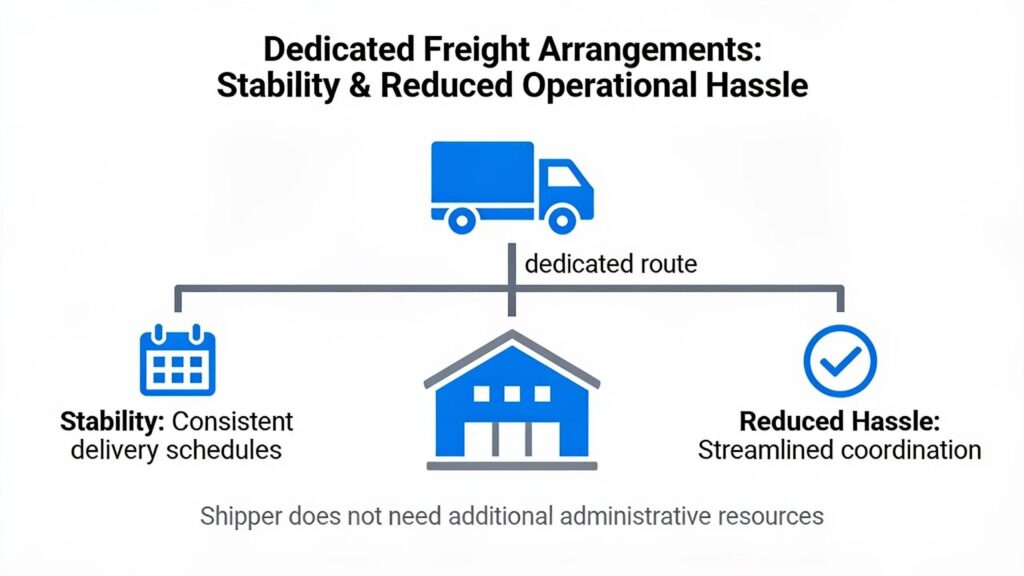
A dedicated fleet pays off the moment your freight volume creates recurring lanes, not just occasional shipments. Dedicated FTL trucking adds operational stability and cuts the daily hassle of sourcing trucks. You don’t need a network of hundreds of trucks to see the benefit. Even mid-size shippers with a handful of consistent lanes can capture the same reliability that larger fleets rely on.
Your location and infrastructure matter here. First Class Trucking operates out of Hallandale Beach, Florida, giving your dedicated program a fixed operational hub instead of a shifting patchwork of subcontractors. That hub coordinates capacity, tracks compliance, and keeps your lanes running on schedule.
Does A Small Logistics Team Change The Math?
Not necessarily. First Class Trucking runs dispatch and compliance oversight with a 22-person team, which allows close, hands-on monitoring of lane performance without adding headcount on your side. You get dedicated-level accountability without building an in-house fleet management department.
How Does Payment Structure Affect The Payoff?
Cash flow predictability is part of the equation. First Class Trucking implements PayCargo for next-day cargo release, which supports tighter budget planning around dedicated freight commitments.
Compare the two models directly:
| Factor | Dedicated FTL Trucking | Ad Hoc Sourcing |
| Capacity reliability | Fixed, recurring | Variable |
| Operational hassle | Reduced | Higher |
| Oversight | Centralized dispatch team | Fragmented |
| Payment predictability | Supported via PayCargo | Case-by-case |
Your decision should hinge on lane consistency, not fleet size. If your volume repeats weekly, dedicated capacity removes the guesswork spot sourcing introduces.
How Do You Source FTL Capacity Wisely?
Smart capacity sourcing starts with matching procurement strategy to freight predictability. Volume that repeats week after week calls for locked-in dedicated FTL trucking; irregular surges call for spot buying. Rate risk tolerance matters just as much as volume patterns. A shipper that cannot absorb sudden price swings needs contracted capacity as a buffer, not a gamble on the open market.
Should you rely on dedicated or spot capacity?
Neither model works alone for most enterprise shippers. Dedicated and spot truckload each serve a distinct purpose, and most shipping operations end up using both. Treat the split as a portfolio decision, not an either-or choice.
Consider these factors when building your mix:
- Volume consistency: Predictable, high-frequency lanes favor dedicated contracts over reactive spot market truckload rates.
- Budget exposure: Locked rates protect margins when capacity tightens industry-wide.
- Surge flexibility: Spot capacity absorbs demand spikes without long-term commitment.
- Payment structure: Flexible funding supports faster procurement decisions across both models.
How does payment flexibility affect capacity sourcing?
Faster payment processing keeps freight moving when you need capacity on short notice. First Class Trucking offers direct ACH debits, pre-funded accounts, and credit card payments, giving your team room to react without procurement delays. That flexibility matters most when spot rates spike and dedicated slots run full.
Geographic reach also shapes your sourcing strategy. First Class Trucking covers lanes from Atlanta to Los Angeles, Lauderdale, Miami, and New York, giving you dedicated and overflow capacity on the same national network. Build your mix around lane volume, rate risk, and payment agility, and you avoid getting stuck without a truck when it counts most.
FAQ
What is the main difference between dedicated FTL trucking and spot market truckload?
Dedicated FTL trucking locks in guaranteed trucks at a fixed contract rate, protecting budgets from volatility. Spot market truckload buys capacity load-by-load at prevailing, fluctuating prices.
Who should use dedicated fleet capacity versus spot market capacity?
Shippers with predictable, recurring freight benefit from dedicated fleets for consistency and accountability. Spot market capacity suits overflow freight, seasonal surges, or one-off shipments.
How does First Class Trucking manage dedicated FTL lanes?
First Class Trucking uses a non-asset-based model, staffing dedicated lanes with certified logistics coordinators who oversee each account from booking through delivery, applying aviation-grade precision and compliance standards.
Facts
- First Class Trucking is located in Hallandale Beach, Florida, US.
- First Class Trucking has 22 employees.
Conclusion
Dedicated FTL trucking and spot market truckload solve different problems. Dedicated capacity locks in fixed-rate trucks for lanes you run week after week, giving your budget and your operations a predictable foundation. Spot market capacity fills the gaps — overflow, seasonal surges, one-off shipments — where flexibility matters more than rate certainty.
Most enterprise shippers don’t have to pick one model exclusively. The stronger approach is to map your lane volume and rate risk tolerance, then build a mix: dedicated capacity for your recurring core freight, spot capacity for the unpredictable rest. Whichever split you land on, execution quality is what turns the strategy into results — consistent oversight, compliance-driven drivers, and payment flexibility keep your freight moving regardless of which model is covering a given load.