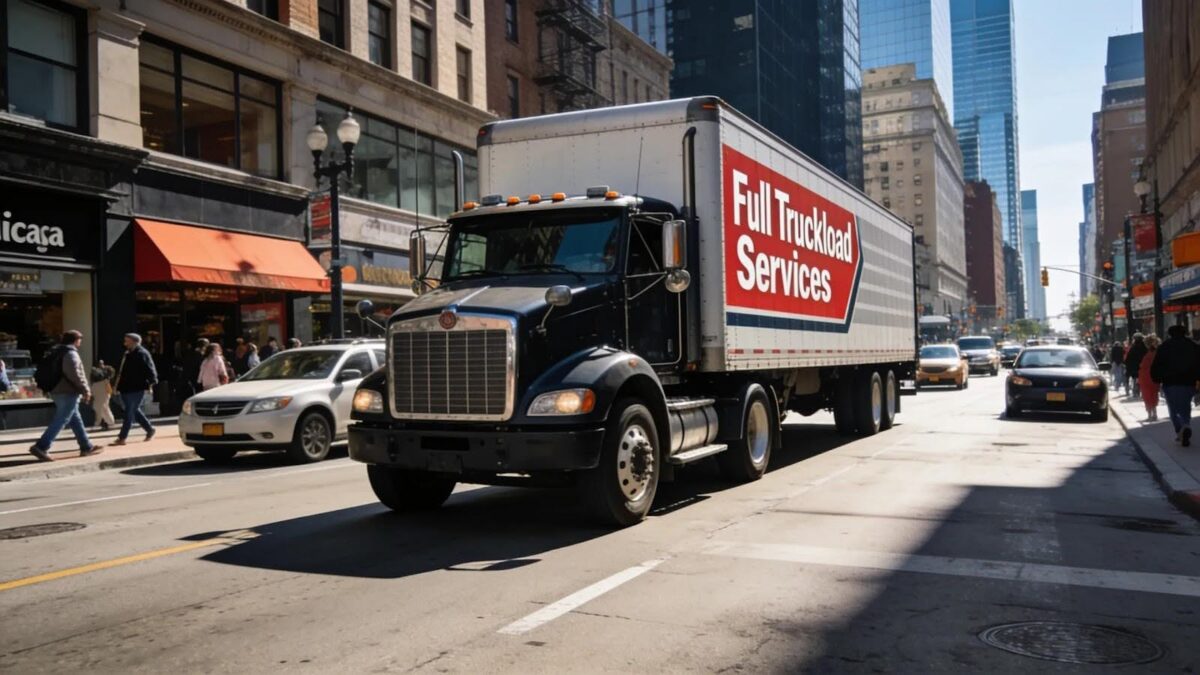
FTL Chicago Trucking Services: When Full Truckload Freight Is the Right Call
Full truckload (FTL) services are a core option in Chicago logistics for businesses that require reliable, direct transportation. This article defines FTL, contrasts it with other modes, and outlines the operational and cost considerations that determine when FTL is the optimal choice. It also references local providers such as First Class Trucking to show practical applications and decision points for companies seeking to improve freight efficiency.
What Are Full Truckload Shipping Services in Chicago?
Full truckload shipping in Chicago uses a single trailer dedicated to one shipper’s cargo, typically on 48- to 53-foot trailers. FTL reduces transit time and handling because the truck moves directly between origin and destination. The reduced transfers lower damage risk and support predictable delivery windows for time-sensitive or high-volume shipments.
How Does Full Truckload Freight Differ from Other Trucking Options?
Full truckload freight differs from less-than-truckload (LTL) in that FTL assigns the entire trailer to one shipment rather than consolidating multiple customers’ goods. This distinction affects transit time, handling requirements, and cost structure.
- Dedicated Capacity: FTL shipments utilize the entire truck space, minimizing logistical complexities.
- Handling and Transit Time Differences: Unlike LTL shipments that require multiple transfers, FTL delivers freight directly, enhancing speed and reliability.
- Cost Implications: While FTL might have higher upfront costs for smaller businesses, it can provide savings for larger shipments due to reduced handling fees and quicker delivery.
Which Industries Benefit Most from Full Truckload Shipping in Chicago?
FTL is particularly well suited to sectors that move large volumes or time-sensitive product: manufacturing for raw materials and finished goods, food and beverage for perishable items, retail for store replenishment, construction for heavy materials, and pharmaceuticals for regulated, high-value shipments.
Why Choose Full Truckload Freight Services in Chicago for Efficient Commercial Freight?
FTL offers direct routes and reduced handling, which support faster transit, consistent delivery windows, and lower damage exposure. For high-volume loads these factors translate into operational reliability and predictable logistics performance.
- Cost-effectiveness: While the price per mile may seem higher, the overall cost can decrease with larger shipments.
- Speed of Delivery: FTL shipments reach their destination more quickly, which is crucial for businesses with tight schedules.
- Reliability: With dedicated transport, companies can rest assured that their freight will arrive in the same condition it was shipped.
For businesses seeking to capitalise on these benefits, First Class Trucking offers dedicated routes designed to improve delivery reliability and scheduling within the Chicago market.
What Are the Key Benefits of Dedicated Truckload Freight for Businesses?
Dedicated truckload services increase transport capacity, enhance schedule predictability, and reduce handling stages that can cause damage. These advantages improve supply chain stability and lower the operational risks associated with multi-stop shipments.
- Capacity Benefits: Businesses can transport large quantities of goods efficiently without needing to consider shared space.
- Service Reliability: The consistent nature of FTL transit ensures businesses can predict arrival times accurately.
- Reduced Handling Risks: With fewer transfers and less movement, dedicated transport minimizes the likelihood of cargo damage.
Selecting an experienced provider such as First Class Trucking can reinforce these benefits through tailored routing, scheduled capacity, and operational expertise.
How Does First Class Trucking Ensure Service Excellence in Chicago?
First Class Trucking emphasises service consistency for FTL accounts by allocating dedicated equipment and applying standardised procedures to maintain on-time performance and cargo integrity.
- Dedicated Trucks: Each route is serviced by dedicated trucks to optimize delivery times and reduce wait periods.
- Real-time Tracking: Customers can monitor their freight’s journey, enhancing transparency and trust.
- Customer Support: A knowledgeable support team is available to address concerns and provide timely updates.
These operational practices support First Class Trucking’s reputation for dependable service among commercial customers in the region.
When Is Full Truckload Freight the Best Choice Over Other Shipping Methods?
FTL is the preferred option when shipment volume, schedule sensitivity, or cargo characteristics justify a dedicated trailer. Businesses should assess cost per shipment, lead-time requirements, and the need for minimal handling when deciding between FTL and other modes.
- Cost Considerations: When the volume justifies a dedicated shipment, FTL can be more economical.
- Delivery Urgency: Time-sensitive deliveries benefit from direct routes without delays associated with LTL.
- Suitable Cargo Types: Businesses dealing with bulk products, fragile items, or dangerous goods often prefer FTL for secure handling.
Applying these criteria enables companies to select the shipping method that aligns with their operational priorities and cost targets.
What Are the Critical Factors Influencing the Decision Between FTL and LTL?
Key decision factors include shipment size, required delivery times, and handling or security needs. Each factor shifts the balance between the higher capacity and speed of FTL and the cost flexibility of LTL.
- Shipment Size: If volume exceeds a certain threshold, FTL is generally favored.
- Delivery Urgency: For immediate needs, FTL often outperforms LTL due to less handling.
- Handling and Security: Higher-value or sensitive shipments are best protected with FTL’s direct transport.
Careful evaluation of these elements helps businesses align their transport choice with service-level and budgetary requirements.
How Do Route and Freight Volume Considerations Impact Shipping Choices in Chicago?
Route efficiency and freight volume directly affect mode selection. Well-defined, high-volume lanes favour FTL due to lower unit costs and predictable scheduling, while variable routes with smaller loads often perform better under LTL consolidation strategies. For many high-volume corridors, FTL is often the most suitable choice.
What Cost Factors Affect Full Truckload Shipping in Chicago?
Several cost drivers influence FTL pricing, including fuel prices, distance-based mileage charges, and weight-related impacts on fuel consumption and vehicle wear. These factors should be modelled when forecasting freight spend.
| Cost Factor | Description | Impact Level |
|---|---|---|
| Fuel Costs | Fluctuations in diesel prices can significantly influence shipping rates. | High |
| Distance | Longer distances naturally incur higher costs based on mileage. | Medium |
| Weight | Heavier shipments often lead to increased costs associated with fuel and wear on vehicles. | High |
These cost drivers should inform rate negotiations and budgeting to ensure logistics spend aligns with business objectives.
How Can Businesses Optimize Freight Costs with Dedicated Trucking Solutions?
Companies can reduce unit transport costs by consolidating large orders into FTL shipments, securing long-term contracts for pricing stability, and improving load planning to maximise trailer utilisation.
- Utilizing FTL for Large Shipments: Consolidating large orders into FTL shipments can lead to cost savings.
- Negotiating Contracts: Establishing long-term agreements with providers may lead to discounts.
- Optimizing Load Planning: Efficient use of available space in trucks reduces costs associated with underutilization.
Applying these measures can materially improve logistics efficiency and reduce total freight expenditures.
A recent academic paper details advanced methods for optimizing full truckload logistics, particularly focusing on complex routing and outsourcing scenarios.
Optimizing Full Truckload Logistics: Pickup and Delivery Models
1. The paper examines an industrially motivated routing variant of the full truckload pickup-and-delivery problem, addressing situations where a distributor’s owned fleet cannot meet all delivery requirements and some loads must be outsourced to third-party carriers. The authors present a mixed-integer linear programming formulation to model these routing and outsourcing decisions.Mixed-integer linear optimization for full truckload pickup and delivery, 2021
How Does First Class Trucking Facilitate Quote Requests and Service Transparency?
First Class Trucking emphasises clear, efficient quote processes and transparent cost breakdowns to help businesses assess options and compare providers.
- Efficient Quote Request Process: Businesses can quickly obtain quotes tailored to their shipping needs.
- Transparent Estimates: Clear breakdowns of costs promote trust between the provider and the business.
- Real-time Tracking: Customers can track shipments, increasing satisfaction and communication.
This commitment to transparency positions First Class Trucking competitively. Contact First Class Trucking to request an estimate and review tailored service options.
For loads that exceed standard FTL configurations, First Class Trucking also offers flatbed transport services. Flatbeds support oversized or irregular cargo on open-deck trailers while meeting secure loading and compliance requirements.
Frequently Asked Questions
What types of goods are most suitable for full truckload shipping?
FTL is best for large-volume or time-sensitive goods that can occupy a full trailer, such as bulk manufacturing materials, heavy machinery, perishable food items, and regulated pharmaceuticals. These cargo types benefit from direct transit and reduced handling, which lower damage risk and improve delivery predictability.
How do I choose between full truckload and less-than-truckload shipping?
The choice depends on shipment volume, delivery timeline, and cost. Choose FTL when your load fills a truck or when faster, direct delivery is required; select LTL for smaller, less urgent shipments where shared capacity reduces cost. Assess volume and lead-time requirements to determine the most efficient option.
What are the environmental impacts of full truckload shipping?
FTL can reduce emissions per unit transported by maximising trailer utilisation and minimising the number of trips required for a given volume. When shipments fully utilise capacity, fuel burn and carbon intensity per unit decline, making FTL a more efficient option for high-volume lanes.
How can I ensure my cargo remains secure during transport?
Improve cargo security by using industry-appropriate packaging, selecting carriers with proven reliability, and employing real-time tracking to monitor movement. Dedicated FTL service further reduces handling points, lowering the chance of damage or loss.
What should I consider when negotiating freight rates?
Key considerations include shipment size, route distance, seasonal demand, and contract terms. Present clear shipment specifications, explore volume or contract commitments for discounts, and monitor market trends to secure competitive rates.
Are there any regulations affecting full truckload shipping in Chicago?
FTL operations in Chicago must comply with local, state, and federal regulations, including vehicle size and weight limits, safety standards, and emissions requirements. Ensure compliance to avoid fines and operational delays by consulting regulatory guidance or logistics specialists.
Conclusion
Full truckload shipping in Chicago delivers measurable benefits for businesses that require speed, reliability, and secure handling. Employing FTL where appropriate can streamline supply chains and reduce handling risk. Explore First Class Trucking’s tailored FTL solutions to support operational objectives, and contact the provider to discuss how their services can meet your freight needs.