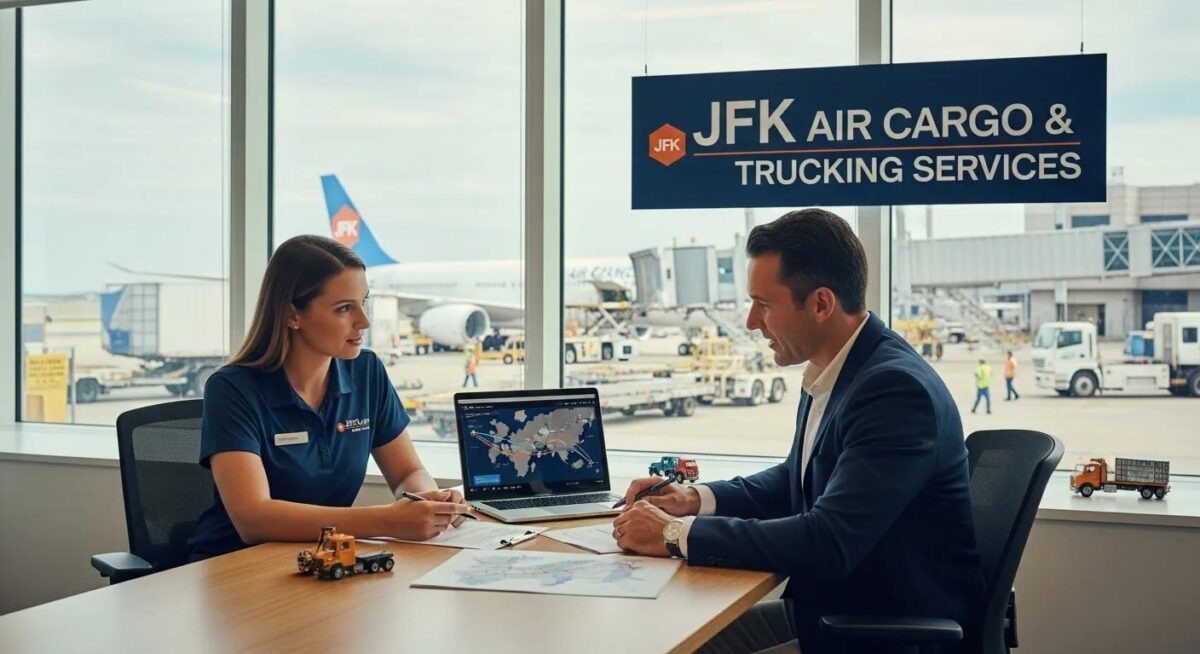
Can Small Businesses Use JFK Air Cargo Trucking Services for Import & Export?
Can Small Businesses Use JFK Air Cargo Trucking Services for Import & Export?
Import and export logistics create operational and regulatory hurdles for small businesses. JFK Air Cargo Trucking Services offer coordinated pickup, documentation handling, and airport delivery that can shorten transit times and reduce costs. This article outlines benefits, the operational process, and cost factors so businesses can evaluate providers — including First Class Trucking — for tailored support.
Efforts to optimise logistics focus on improving air cargo supply chain efficiency, which typically yields cost savings and better resource utilisation.
Air Cargo Supply Chain: Efficiency & Cost Reduction
The study aims to improve air cargo efficiency, resulting in cost reduction and resource optimisation. Optimization of the air cargo supply chain., E Larrodé Pellicer, 2012
What Are JFK Air Cargo Trucking Services and Their Benefits for Small Businesses?
JFK Air Cargo Trucking Services are specialised freight solutions that move goods through JFK Airport with routing, handling, and tracking integrated into the shipment lifecycle. Key benefits for small businesses include lower per‑shipment costs, scalable capacity to match demand, and improved visibility via tracking tools.
Reduced transit times and clearer shipment status help firms manage inventory and cash flow. Scalable LTL and short‑term capacity mean small shippers pay only for what they use while accessing airport‑grade handling and compliance support.
These operational improvements are supported by studies that demonstrate how an airport-wide system at JFK can retain and grow air cargo activity and improve truck traffic flow.
JFK Airport Air Cargo: Boosting Business & Traffic Flow
The preliminary results of this Phase I study present a business case for an airport-wide system to retain and grow air cargo business at JFK Airport. JFK Cargo View: A system to speed Truck Traffic Flow at JFK Airport, 2022
First Class Trucking is a New York‑based provider specialising in JFK airport trucking for import and export shipments, offering experience in documentation, security access, and cargo handling.
How Does JFK Air Cargo Trucking Support Small Business Freight Solutions?
Services are designed to address small‑business shipment profiles, reduce overhead, and ensure compliance.
- Less Than Truckload (LTL) Services: Share truck space to lower costs for smaller shipments.
- Flexible Payment Options: Payment plans that align with business cash flow.
- Expert Handling: Trained crews minimise damage and manage special cargo needs.
Together these features reduce per‑shipment costs and support consistent, compliant deliveries.
Access to LTL networks increases market participation for smaller enterprises, even in the absence of in‑house brokerage capabilities.
Small Business Access to Air Cargo & LTL Trucking
Large freight companies maintain in‑house brokers for freight, air cargo, and LTL services. Nevertheless, residential shippers and small businesses can access LTL carrier networks. Shipping exchange analysis of outsourced parcel shipping to LTL carriers, 2011
What Are the Advantages of Using Air Cargo Trucking at JFK for Import Export?
Air cargo trucking at JFK provides airport access, security‑cleared drivers, and services tuned for time‑sensitive or regulated goods.
- TSA Approved Drivers: Drivers with required credentials for airport access and secure handling.
- Fast Recovery and Drop-offs: Quick turnarounds reduce dwell time and speed onward transit.
- Hazmat Transportation: Certified handling and documentation for regulated hazardous materials.
For international trade, these capabilities increase reliability and reduce potential delays tied to security or handling errors.
How Does the Import and Export Process Work with JFK Air Cargo Trucking?
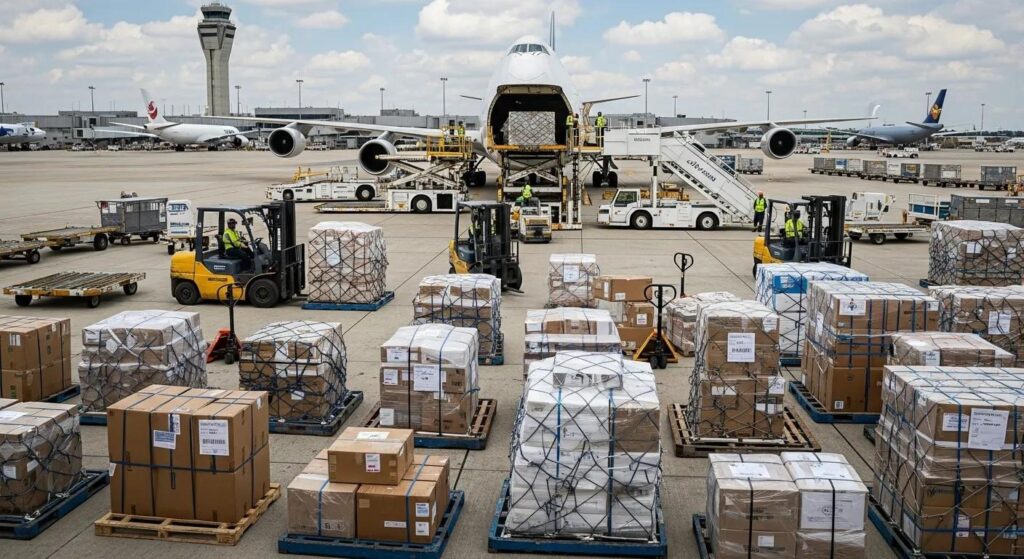
The workflow is straightforward and repeatable: collect cargo, prepare documentation, move to the airport, and complete final delivery. Clear procedures reduce customs and gate hold times.
- Cargo Pickup: Collection from warehouse or point of origin.
- Documentation Handling: Bills of lading, customs paperwork, and special permits are prepared to avoid delays.
- Final Delivery: Arrival, processing at the airport, and delivery to the consignee or forwarder.
Knowing these stages helps small firms reduce exceptions and comply with regulatory timelines.
What Are the Key Steps in Import and Export Logistics via JFK Airport?
Core steps preserve efficiency and compliance across the supply chain.
- Drayage Services: Short moves between port, yard, and airport.
- Security Compliance: Meeting TSA and airport access requirements.
- Real-time Tracking: Visibility across pickup, airport processing, and delivery.
Following these steps lowers operational risk and improves on‑time performance.
How Does Customs Clearance and Compliance Affect Small Business Shipments?
Accurate paperwork and timely filings are essential. Mistakes or missing documents lead to holds, fines, and extra handling costs. Working with experienced providers reduces errors and expedites clearance.
What Are the Cost Considerations for Small Businesses Using JFK Air Cargo Trucking?
Assess the main cost drivers before contracting services to budget effectively.
- Service Type Pricing: LTL vs FTL pricing models differ by weight, volume, and service level.
- Flexible Payment Options: Choose terms that match cash flow and volume patterns.
- Competitive Pricing: Compare providers and lanes to find the best value.
Reviewing these elements helps firms plan shipping expenses and identify savings opportunities.
| Service Type | Cost Structure | Benefits |
| Less Than Truckload (LTL) | Pay per weight/volume | Cost-effective for smaller shipments |
| Full Truckload (FTL) | Flat rate for full truck | Ideal for larger shipments needing dedicated space |
| Express Services | Premium pricing for speed | Fast delivery for urgent shipments |
The table summarises common service options and cost structures to guide selection.
How Are Air Cargo Trucking Rates Determined at JFK?
Rates reflect distance, cargo characteristics, lane density, and market demand. Weight, dimensions, and any special handling increase costs; congested lanes or peak demand can also raise rates.
What Are Typical Costs for Small Business Freight Solutions in NYC?
Costs vary by service type, distance, and cargo. Compare flat and variable pricing, choose appropriate service (LTL vs FTL), and benchmark providers for competitive rates.
- Cost Structures: Flat rates, weight‑based, or hybrid pricing exist.
- Service Options: LTL reduces unit cost for small loads; FTL suits full‑truck requirements.
- Market Comparisons: Regular benchmarking helps spot better lanes and carriers.
Careful comparisons support procurement decisions and cost control.
How Can Small Businesses Access JFK Cargo Logistics Support and Case Studies?
Practical channels include direct contact with providers, reviewing available services, and studying client experiences.
- Contacting First Class Trucking: Speak with specialists who handle JFK airport operations.
- Service Offerings: Review LTL, FTL, express, and hazmat capabilities before selecting a provider.
- Client Testimonials: Use case examples to verify performance and fit.
These steps help match a provider to your operational needs.
What Tailored Logistics Support Does First Class Trucking Provide for Small Businesses?
First Class Trucking focuses on affordability, flexible payment terms, and shipment visibility designed for small shippers operating through JFK.
- Competitive Pricing: Cost-conscious options for smaller volumes.
- Flexible Payment Options: Terms that reflect cash flow and shipment patterns.
- Real-time Tracking: Basic tracking and status updates for visibility.
These services aim to reduce supply‑chain friction and improve predictability.
What Are Examples of Small Business Success Stories Using JFK Air Cargo Trucking?
Small firms report measurable benefits from coordinated airport trucking: faster transit, fewer delays, and lower overall shipping costs when consolidation and correct documentation are used.
- Client Testimonials: Positive feedback on improved delivery times and reliability.
- Case Study Highlights: Examples showing time and cost reductions after switching to specialised JFK trucking.
- Impact on Logistics Efficiency: Better handling and tracking reduce exceptions and inventory risk.
These real‑world outcomes illustrate practical gains for comparable businesses.
Frequently Asked Questions
What types of goods are best suited for JFK Air Cargo Trucking services?
Goods needing fast transit or special handling are ideal: perishables, electronics, high‑value items, and regulated hazmat (when managed under required procedures). Match product needs to service capabilities before choosing air cargo trucking.
How can small businesses ensure compliance with air cargo regulations?
Prepare accurate bills of lading and customs forms, document TSA and permit requirements, and use experienced carriers or partners to reduce errors. Regular staff training and process checks help avoid delays.
What are the environmental impacts of using air cargo trucking?
Air freight and associated truck moves produce higher emissions than ocean transport. Choose carriers that use route optimisation, fuel‑efficient vehicles, or carbon‑offset programs to reduce impact when possible.
How can small businesses track their shipments effectively?
Use providers that offer real‑time tracking and status updates, and integrate that data into internal inventory systems to respond quickly to exceptions and maintain accurate delivery estimates.
What should small businesses consider when choosing a logistics provider?
Evaluate service range, pricing transparency, compliance expertise, tracking capabilities, and customer support. Confirm experience with your cargo type and review testimonials for reliability evidence.
Are there any hidden costs associated with air cargo trucking services?
Ask about fuel surcharges, customs clearance fees, special handling, storage, and accessorials. Request a fee schedule that specifies scenarios that trigger extra charges.
How can small businesses improve their overall logistics efficiency?
Standardise communication with carriers, use tracking and inventory tools, consolidate shipments where practical, and perform periodic audits. Partnering with experienced providers can reveal process and cost improvements.
Conclusion
JFK Air Cargo Trucking Services give small businesses a practical way to improve logistics through cost control, scalable capacity, and better shipment visibility. Understanding the import/export steps, documentation needs, and cost drivers supports compliance and reliable delivery. Working with specialised providers like First Class Trucking can further simplify operations and help businesses grow.