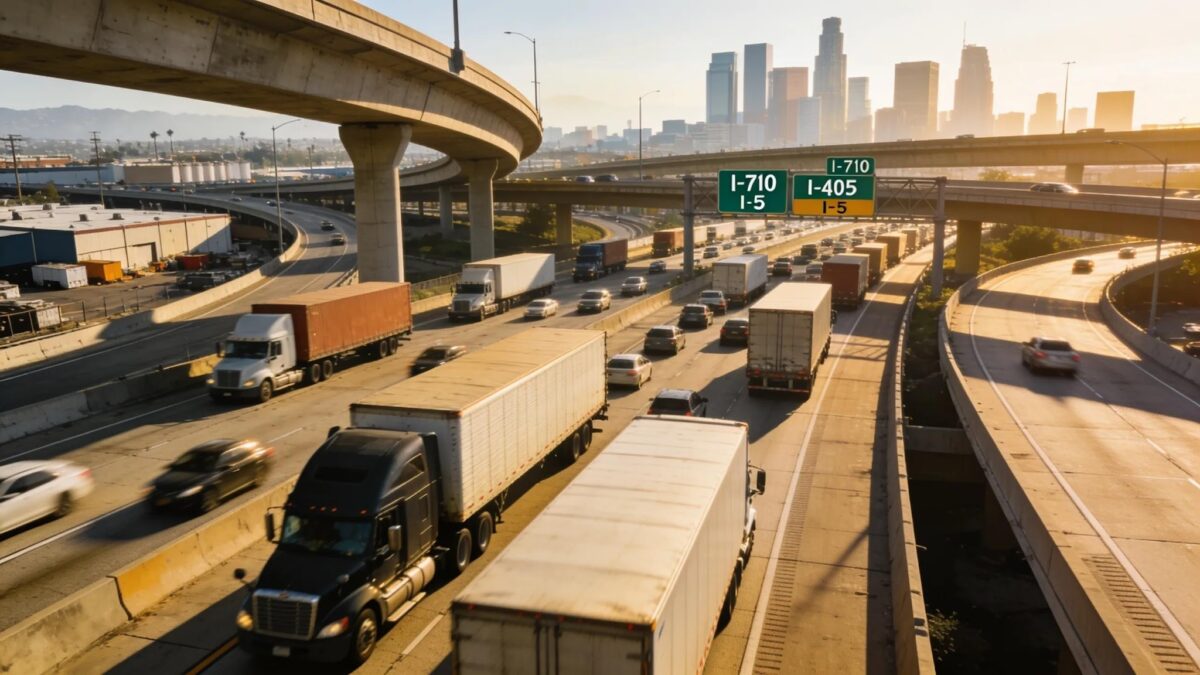
Navigating LA Freight: How a Local Trucking Company Optimizes I-710, I-405 & I-5 Freight Delivery
Freight delivery in Los Angeles presents operational complexity on corridors such as the I-710, I-405, and I-5. Traffic variability, regulatory requirements, and shifting demand can affect schedules and costs. This article examines how a Trucking Company in Los Angeles, such as First Class Trucking, addresses those factors through targeted operational practices. It outlines the corridor challenges, the firm’s tactical approaches to routing and compliance, and the role of alternative corridors in improving delivery performance and cost control.
What are the challenges of freight delivery on LA’s I-710, I-405, and I-5 corridors?
Freight operations on the I-710, I-405 and I-5 face recurring constraints that require deliberate management. Key obstacles include traffic congestion, regulatory obligations and infrastructure limitations that together increase transit time and operational expense.
- Traffic Congestion: Heavy traffic can lead to significant delays, impacting delivery schedules and operational costs.
- Regulatory Compliance: Stringent local regulations require constant monitoring and adjustment of operational practices.
- Infrastructure Limitations: Aging infrastructure and frequent road construction can complicate logistics and delay transport routes.
Recognising these constraints is the first step to developing mitigation strategies that protect schedules and control costs.
How does First Class Trucking provide optimized freight solutions in Los Angeles?
First Class Trucking applies technology and process controls to increase operational visibility and responsiveness across the LA market. The company uses predictive analytics, live tracking and strict compliance management to reduce delay risk and maintain consistent service levels.
- Predictive Traffic Modeling: By analyzing traffic patterns, First Class Trucking can anticipate potential delays and adjustments in routing beforehand.
- Real-Time Tracking: The implementation of GPS tracking enables real-time updates on shipment status, allowing for informed decision-making during transit.
- Regulatory Compliance Adherence: First Class Trucking’s commitment to compliance ensures reliability in operations, as it proactively manages the necessary certifications and vehicle standards.
These methods improve operational efficiency and delivery reliability. For comprehensive details on their offerings, explore the First Class Trucking offerings.
What route optimization strategies address I-710 corridor complexity?
Managing I-710 complexity requires planning that accounts for congestion patterns and regulatory constraints. Effective route optimization reduces exposure to delays and supports predictable delivery windows.
- Advanced Traffic Modeling: Using sophisticated modeling tools, First Class Trucking can identify optimal routes that mitigate congestion and enhance delivery speed.
- Flexible Scheduling: Adapting delivery schedules based on peak traffic times helps avoid delays and maximizes payloads during lower traffic periods.
- Custom Routing Techniques: By designing tailored routes that comply with local regulations, trucks can circumvent potential delays associated with regulatory checkpoints.
These planning measures demonstrate how proactive routing and scheduling reduce bottlenecks and preserve on-time performance. If you need assistance with your shipping needs, consider reaching out for a consultation.
How does flexible capacity improve local trucking service performance?
Flexible capacity enables trucking operations to match resources to demand, improving responsiveness and service stability. It allows fleets to expand or contract based on volume without compromising service levels.
- Rapid Scaling: The ability to scale operations in response to immediate demand ensures that capacity is available for unforeseen increases in orders.
- Service Reliability: Flexible capacity allows companies to maintain reliable service even during peak periods, improving customer satisfaction.
- Timeliness in Deliveries: By adjusting fleets based on real-time demands, local trucking operations can fulfill commitments on time and strengthen customer trust.
Maintaining flexible capacity is central to First Class Trucking’s ability to meet variable demand while protecting delivery commitments.
What are the comparative benefits of using I-405 and I-5 freight routes over I-710?
Choosing I-405 or I-5 in place of I-710 can reduce exposure to congestion and offer more routing alternatives. That choice often yields shorter transit times and improved operational predictability.
- Reduced Congestion: I-405 and I-5 generally experience less traffic than I-710, leading to faster transit times.
- Diverse Routing Options: A broader range of route options can help avoid key congestion points and regulatory challenges.
- Lower Operating Costs: Deliveries through less congested routes ultimately translate to reduced fuel and operational costs for companies.
Selecting the appropriate corridor based on load profile and schedule can materially improve efficiency and lower operating expense.
How do route choices impact delivery times for LA drayage trucking services?
Route selection is a primary determinant of transit time in drayage operations. Choices must account for peak traffic, checkpoints and road quality to preserve schedule integrity.
- Traffic Patterns: Specific routes experience variable congestion at different times, impacting overall transit duration.
- Regulatory Checkpoints: Certain routes may have more checkpoints, leading to longer delivery times due to compliance stops.
- Infrastructure Conditions: The state of road conditions along various routes can result in different delivery speeds, with well-maintained roads offering smoother and faster transit.
Deliberate route planning reduces delays and supports consistent drayage turnaround times.
What are the key service offerings of a local LA trucking company for freight delivery?
First Class Trucking offers a portfolio of services designed for diverse freight requirements, including full truckload, less-than-truckload, hazmat and temperature-controlled transport. Each service targets specific operational needs to improve cost-efficiency and delivery reliability.
| Service Type | Description | Benefits |
| Full Truckload (FTL) | Dedicated truck for full loads | Efficient for large shipments, reduced transit times. |
| Less Than Truckload (LTL) | Shared truck space for smaller loads | Cost-effective for businesses with smaller shipments. |
| Hazmat Transport | Safe transport of hazardous materials | Compliance with safety regulations, risk mitigation. |
| Refrigerated Transport | Temperature-controlled hauling | Preserves perishable goods, ensures quality delivery. |
These service options provide businesses with configurable logistics solutions that improve throughput and reduce handling risk. For specific details on FTL services, you can view their Full Truckload (FTL) options.
How do regulatory compliance and safety standards influence LA freight trucking?
Compliance and safety standards define operational procedures, from driver training to vehicle maintenance. They shape routing choices, loading practices and scheduling to protect cargo and meet legal requirements.
- Operational Practices: Compliance dictates how companies manage their fleets, ensuring adherence to local laws and safety regulations.
- Cargo Integrity: High safety standards are vital for maintaining the integrity of transported goods, especially perishable items.
- Routing and Scheduling: Regulations affect how routes are planned and delivery schedules arranged, impacting overall logistics strategy.
Consistent adherence to regulation strengthens service reliability and reduces operational risk for both carrier and client.
Frequently Asked Questions
What types of technology are utilized in modern trucking for freight efficiency?
Modern carriers deploy GPS tracking for live shipment visibility, telematics for vehicle diagnostics and fuel optimisation, and data analytics to forecast traffic and performance trends. Mobile applications streamline driver-dispatch communication and support real-time adjustments to schedules and routes.
How can local businesses benefit from working with a specialized trucking company?
Local specialists offer route knowledge, regulatory familiarity and service models tailored to regional demand. Those capabilities translate to improved on-time performance, lower transport costs and fewer compliance-related delays for business customers.
What measures can be taken to ensure safe transport of hazardous materials?
Safe hazmat transport requires strict compliance with DOT and other applicable regulations, correct packaging and labelling, and certified driver training. Emergency response plans, clear communication protocols and rigorous vehicle maintenance further mitigate risk during transit.
How do fuel prices impact freight costs for trucking companies?
Fuel is a major input cost; price increases raise operating expenses and often lead carriers to apply fuel surcharges. Conversely, lower fuel costs can reduce shipping rates. Firms monitor fuel trends and adjust pricing and routing to manage margin volatility.
What is drayage, and why is it important in freight transportation?
Drayage covers short-haul moves, typically from ports to nearby terminals or warehouses. It is essential to port logistics, affecting supply chain velocity and terminal congestion; efficient drayage preserves broader network throughput and shortens overall lead times.
How do seasonal demand fluctuations affect trucking operations?
Seasonal peaks increase volumes and require capacity scaling, while off-peak periods demand cost control and route optimisation. Effective planning and flexible capacity allow carriers to meet demand swings without compromising service.
Conclusion
Reliable freight delivery in Los Angeles depends on disciplined planning, technology-driven routing and flexible capacity. First Class Trucking uses these elements to enhance efficiency, maintain compliance and improve delivery predictability. Selecting a partner with local expertise can reduce costs and strengthen service performance; evaluate First Class Trucking for regional transportation needs.