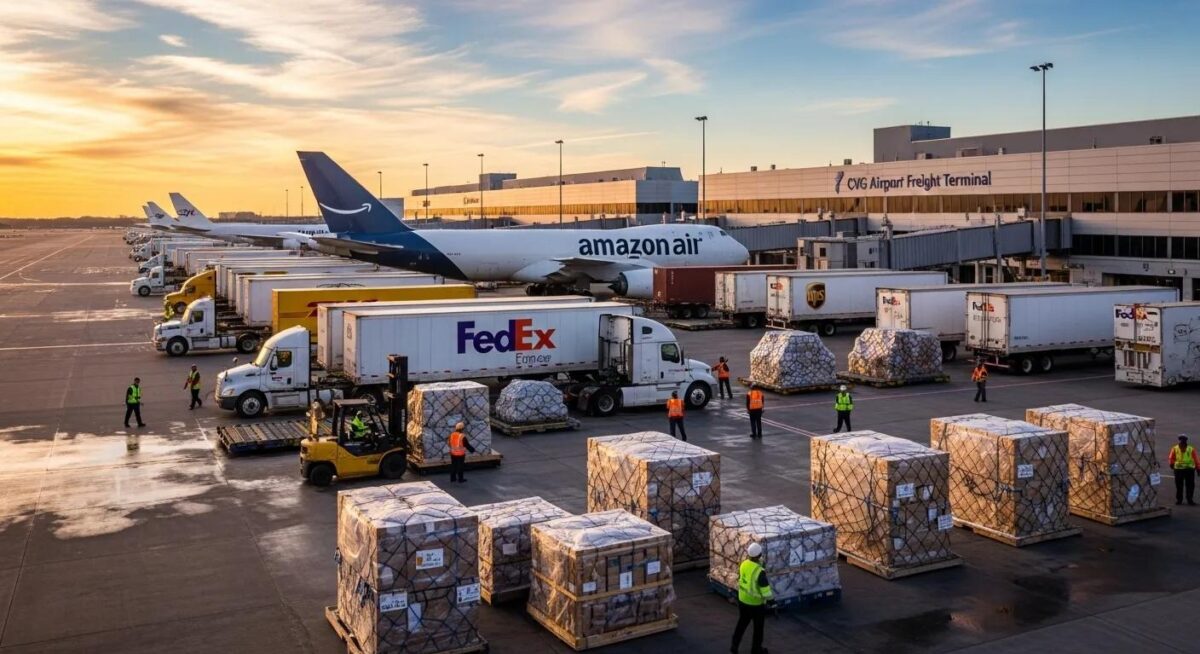
LTL vs FTL for Airport Freight Recovery at Cincinnati/Northern Kentucky
Understanding the differences between Less Than Truckload (LTL) and Full Truckload (FTL) is essential for businesses operating at Cincinnati/Northern Kentucky International Airport (CVG). This article explains the definitions, advantages, and limitations of both modes and provides guidance for selecting the optimal trucking solution for airport freight recovery. Many companies must balance cost, efficiency, and transit speed; assessing LTL and FTL characteristics enables informed decisions that improve logistics performance.
Overview of LTL and FTL Services for Airport Freight Recovery at Cincinnati/Northern Kentucky
LTL and FTL are the primary freight transport methods, each suited to distinct shipping profiles. LTL accommodates shipments that do not require a full truck by consolidating multiple customers’ loads so shippers pay only for the space used, making it cost‑effective for smaller consignments. FTL dedicates an entire truck to one shipment, which is appropriate for larger loads or expedited deliveries. Correctly matching service to shipment helps optimize freight recovery at CVG.
Advantages and Disadvantages:
Assess the advantages and disadvantages of each mode to determine the best fit for operational requirements.
- Advantages of LTL:Cost-Effective: Businesses only pay for the space they use, making it suitable for smaller shipments.Flexibility: LTL services can accommodate various shipment sizes and types.Reduced Waste: Sharing truck space minimizes the environmental impact of freight transport.
- Disadvantages of LTL:Longer Transit Times: Multiple stops for pickups and deliveries can delay shipments.Increased Handling: More handling of goods can lead to a higher risk of damage.
- Advantages of FTL:Faster Delivery: Direct transport without stops ensures quicker delivery times.Less Handling: Fewer transfers reduce the risk of damage to goods.
- Disadvantages of FTL:Higher Costs: Businesses must pay for the entire truck, which can be expensive for smaller shipments.Less Flexibility: FTL is less adaptable to varying shipment sizes compared to LTL.
Choosing the Optimal Trucking Solution:
Selecting between LTL and FTL requires assessing shipment size, budget, and delivery timeline. For smaller, non‑urgent consignments LTL is generally more economical; when speed is critical and the load fills a truck, FTL offers faster transit and less handling. Consider cargo fragility, value, and urgency when choosing the appropriate mode.
First Class Trucking, based in Cincinnati and Northern Kentucky, offers both LTL and FTL freight recovery services at CVG and helps businesses choose the best option.
What Are LTL and FTL Trucking Services at CVG Airport?
At Cincinnati/Northern Kentucky International Airport, LTL and FTL services are integral to freight recovery operations: LTL suits businesses moving smaller quantities; FTL is preferable for larger shipments that require expedited transit.
Defining Less Than Truckload and Full Truckload Freight Services
LTL consolidates multiple customers’ shipments within a single truck to maximise load efficiency and reduce per‑shipper cost. FTL assigns a full truck to one consignee, enabling direct transport and shorter transit times. These definitions inform service selection based on shipment profile.
How LTL and FTL Services Operate in Airport Freight Logistics
LTL operations collect freight from several shippers and consolidate it for delivery, which often involves multiple stops and longer transit. FTL moves goods directly from shipper to consignee without intermediate stops, reducing transit time. This operational distinction affects mode selection at CVG.
How to Choose Between LTL and FTL for Airport Freight Recovery at CVG?
Mode choice hinges on shipment volume, delivery urgency, and budget. Large, urgent loads usually justify FTL; smaller, less time‑sensitive shipments are more economical under LTL.
Key Factors Influencing the Selection of LTL or FTL Services
Decision drivers include shipment size, delivery urgency, and cost constraints.
- Shipment Size: Larger shipments are often more suited for FTL.
- Delivery Urgency: Time-sensitive shipments may require FTL for faster delivery.
- Cost Considerations: Budget constraints can make LTL a more attractive option for smaller loads.
Benefits of Tailored Freight Solutions for Cincinnati Businesses
Tailored freight solutions improve logistics efficiency for Cincinnati businesses. Selecting the appropriate service for specific requirements optimizes shipping processes, reduces cost, and shortens transit times. First Class Trucking provides customized solutions designed for local companies to support effective freight recovery at CVG.
What Are the Cost and Efficiency Differences Between LTL and FTL at CVG?
Understanding cost and efficiency differences between LTL and FTL is essential to optimize logistics. LTL typically offers lower per‑shipment costs for small loads; FTL commands higher rates but delivers faster transit.
Research underscores the importance of decision‑support tools that balance LTL and FTL modes to optimize total supply‑chain transportation costs.
LTL vs FTL Cost Optimization & Decision Support
This study aims at proposing a decision-support tool to reduce the total supply chain costs (TSCC) consisting of two separate and independent objective functions including total transportation costs (TTC) and total cross-docking operating cost (TCDC). The full-truckload (FT) transportation mode is assumed to handle supplier→customer product transportation; otherwise, a cross-docking terminal as an intermediate transshipment node is hired to handle the less-than-truckload (LTL) product transportation between the suppliers and customers. TTC model helps minimize the total transportation costs by maximization of the number of FT transportation and reduction of the total number of LTL. TCDC model tries to minimize total operating costs within a cross-docking terminal.
Cross-Docking: A Proven LTL Technique to Help Suppliers Minimize Products’
Unit Costs Delivered to the Final Customers, V Ghomi, 2019
Comparing Delivery Times and Cost Estimates for LTL and FTL Freight
Delivery times and costs vary by mode: LTL may have longer transit due to multiple stops; FTL provides direct transport and faster delivery. Assess operational requirements to select the option that aligns with budget and timelines.
| Service Type | Cost Estimate | Delivery Time |
|---|---|---|
| LTL | Lower cost per shipment | Longer delivery time due to multiple stops |
| FTL | Higher cost per shipment | Faster delivery with direct transport |
This comparison illustrates the trade-off between cost and speed, enabling businesses to select the mode that aligns with operational and budgetary requirements.
Impact of Freight Volume and Shipment Size on Pricing
Freight volume and shipment size are primary pricing factors. FTL rates improve with larger, full‑truck volumes; LTL pricing is based on the space occupied and classification. Understanding these structures helps optimize shipping expenditure.
For further detail on airport freight recovery at CVG, review dedicated resources and service offerings tailored to your operational needs.
How Does Compliance and Regulation Affect Airport Freight Recovery at CVG?
Regulatory compliance is fundamental to airport freight recovery. Both LTL and FTL carriers must meet applicable safety, documentation, and operational standards to maintain reliability.
Understanding Airport Freight Compliance Requirements for LTL and FTL
Compliance at CVG includes adherence to safety protocols, accurate documentation, and applicable transportation regulations. Shippers should confirm carrier compliance to avoid delays or penalties.
Ensuring Safety and Reliability in Freight Transport at Cincinnati/Northern Kentucky Airport
Safety and reliability depend on partnering with carriers that enforce compliance and standard operating procedures. Prioritising compliant providers protects cargo and improves overall logistics efficiency.
Frequently Asked Questions
What types of goods are best suited for LTL and FTL services?
LTL is appropriate for smaller shipments—commonly under 10,000 pounds—and suits retail products, electronics, and machinery parts that do not require a full truck. FTL is suitable for consignments large enough to fill an entire truck, such as bulk materials, heavy equipment, or time‑sensitive freight that requires expedited transport. Matching the service to the goods’ size and urgency optimizes efficiency.
How do seasonal fluctuations affect LTL and FTL pricing?
Seasonal demand affects LTL and FTL pricing. Peak periods, such as holidays or harvests, increase demand and raise rates; off‑peak periods generally offer lower prices. Monitor market cycles and plan shipments to reduce cost exposure for time‑sensitive freight.
Can I track my shipment with LTL and FTL services?
Most established carriers provide tracking for both LTL and FTL shipments, offering real‑time location and estimated arrival updates. Request carrier tracking capabilities and integration options when assessing providers to ensure visibility throughout transit.
What are the environmental impacts of LTL and FTL shipping?
Environmental impacts differ by mode. LTL consolidation reduces the number of trucks and fuel use per shipment, improving efficiency for smaller loads. FTL can be less space‑efficient but reduces handling and intermediate transfers for large consignments. Factor these effects into mode selection to support sustainability goals.
How do I prepare my cargo for LTL and FTL shipping?
Prepare LTL shipments with durable packaging, clear labelling, and palletisation to withstand multiple handling events. For FTL, secure cargo and distribute weight to prevent movement and maximise load utilisation. Provide accurate weight and dimensions to the carrier to avoid surcharges and ensure regulatory compliance.
What role do freight brokers play in LTL and FTL shipping?
Freight brokers act as intermediaries between shippers and carriers for both LTL and FTL services. They identify suitable carriers, negotiate rates, and manage routing and documentation. Using a broker can reduce procurement effort and streamline logistics execution while providing market insight on carrier performance.
Conclusion
Differentiating LTL and FTL is essential for optimizing freight recovery at Cincinnati/Northern Kentucky International Airport. By assessing shipment size, delivery urgency, and cost, businesses can select the most effective transport mode to improve logistics outcomes. Leveraging tailored solutions from experienced providers like First Class Trucking can yield measurable gains in efficiency and cost control. Explore our services today to identify the right freight solution for your operations.