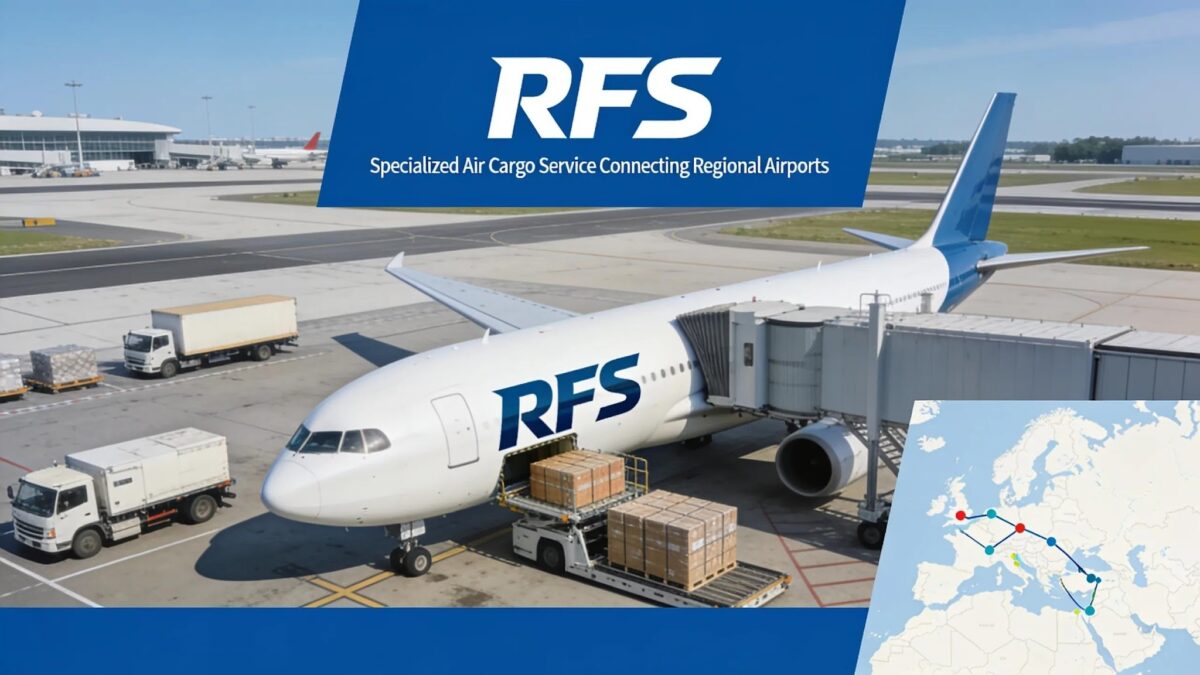
What Is Road Feeder Service? How Air Cargo Moves by Truck
Road feeder service (RFS) moves air cargo by truck instead of aircraft, using an airway bill under an airline’s authority, connecting regional airports to major hubs. Airlines and freight forwarders hire RFS providers when flight capacity runs short or destinations lack direct air service, extending your cargo network’s reach without sacrificing tracking or documentation continuity.
Key Takeaways
- Road feeder services transport air cargo via truck instead of aircraft to regional destinations.
- RFS solutions reduce shipping costs compared to traditional airfreight for time-sensitive cargo deliveries.
- Airlines and cargo operators use RFS to connect regional airports with major distribution hubs.
- Cargo moves with airway bills, maintaining air cargo documentation standards throughout ground transport.
What Exactly Is Road Feeder Service in Air Cargo?
Airlines hire a specialized trucking arrangement to link regional airports with larger hubs, and that arrangement is RFS trucking. Skip this connection and your shipment stalls between the tarmac. Its final destination, adding delay right when your supply chain can least afford it. Road feeder service fills the exact gap where flight schedules and ground demand don’t line up.
Cargo moving under this system travels with an airway bill, the same document that would accompany it on a plane. Instead of flying, the freight rides in a truck from the originating airport to a hub or straight to its destination. This substitution is what industry professionals mean by air cargo road feeder: ground transport standing in for a flight leg, without breaking the paper trail or the chain of custody.
Why Do Airlines Use Trucks Instead of Planes for Some Air Cargo Legs?
Airlines rely on RFS providers to extend their networks beyond airports with direct flight service. Providers coordinate closely with both airlines and freight forwarders to keep cargo moving on schedule, whether cargo is headed to a hub or its final drop point.
Why Do Industry Professionals Call It “Flights on Wheels”?
The nickname reflects how essential the service has become to air cargo reliability. Because RFS trucking performs the same connective role a flight would, professionals treat it as an extension of the airline network rather than a separate mode entirely.
Your shipment’s success depends on coordination at every handoff. That’s where DFW Air Cargo Trucking solutions come in for shippers routing through major air corridors. First Class Trucking’s certified logistics coordinators manage that handoff — from booking through strategic warehouse logistics to final delivery — so your cargo never sits idle between air and ground legs.

Why Are RFS Trucking Networks Expanding Worldwide?
Rising air cargo capacity constraints are pushing carriers toward ground alternatives that move freight faster and cheaper. Cost pressure, not convenience, drives most of this shift. When belly-hold and freighter space tightens, RFS trucking becomes the practical fix for keeping cargo on schedule without paying premium airfreight rates.
Recent industry moves illustrate this pattern clearly. One logistics group launched a new road feeder route connecting Europe. The Middle East, citing it as a more cost-effective option than airfreight during a period of reduced regional capacity. That decision reflects a broader trend: carriers are treating air cargo road feeder networks as insurance against volatile flight schedules and limited aircraft availability.
Why do airlines add daily truck routes between airports?
Larger shipments often exceed what standard aircraft configurations can handle. One cargo carrier introduced a daily service between two Gulf airports specifically to move oversized, widebody-compatible freight overland, avoiding the bottlenecks that come with limited wide-body flight slots.
Does trucking support sustainability goals in air cargo?
Yes—fleet upgrades tied to road feeder operations increasingly serve environmental targets. One major cargo carrier’s truck fleet modernization supports broader sustainability initiatives while still handling freight daily between two connected airports.
For shippers evaluating providers, network reliability matters as much as route coverage:
- Cost efficiency during air capacity shortages
- Capacity for oversized and widebody-equivalent freight
- Fleet modernization aligned with emissions targets
- Consistent scheduling between paired airport hubs
If you manage freight moving through DFW Air Cargo Trucking corridors, these global trends signal what to expect domestically: tighter integration between flight schedules and ground transport, plus growing pressure on providers to prove both cost and environmental performance.
What Makes Air Cargo Road Feeder Operations Reliable?
Reliability in RFS trucking starts with braking control, driver oversight, and consistent handling under load. Trucks running airport-to-airport transfers carry high-value freight against tight connection windows, so every mechanical and operational variable matters. A single skid or delayed stop can break a chain of custody that airlines and forwarders depend on.
Anti-lock braking technology plays a central role here. Air cargo road feeder trucks equipped with anti-lock braking systems detect wheel lock-up the instant it happens and adjust brake pressure automatically. That adjustment preserves traction and steering control during heavy stops, even when a driver brakes hard on short notice.
Why does braking performance matter for time-sensitive cargo?
Braking performance determines whether a shipment arrives intact and on schedule. Anti-lock systems reduce skids, help prevent jackknifing, and produce steadier stopping behavior under load. For airport transfers running against tight AWB-linked schedules, that stability is not optional. It’s the difference between a met connection and a missed one.
Road conditions add another layer of risk. Surfaces change block to block, loads shift weight distribution, and delivery windows leave no room for error. Predictable braking becomes a fleet-wide necessity, not a bonus feature, for operations like DFW Air Cargo Trucking moving between hub airports and regional destinations.
Equipment alone doesn’t guarantee reliability, though. Consider what separates a dependable carrier from an inconsistent one:
- Trained oversight — seasoned staff monitor every stage of transport, from pickup through final delivery.
- Braking technology — anti-lock systems maintain control on unpredictable surfaces.
- Schedule discipline — coordination that respects airline connection windows.
Together, these elements keep freight moving safely and on time, shipment after shipment.
How Does DFW Air Cargo Trucking Fit In?
Dallas-Fort Worth ranks among the busiest hubs where ground trucking picks up after air cargo lands. Moving outsized or heavy freight through a major airport like DFW demands strict attention to regulations. Operational standards, from weight limits to routing clearances. Skip that discipline, and you risk delays, fines, or a shipment that misses its connection entirely.
You need a partner who treats those standards as non-negotiable, not optional. Effective management of regional trucking operations tightens efficiency and strengthens the service outcomes your clients expect downstream. That means your air cargo road feeder move from DFW to a regional distribution center runs on the same precision as the flight that brought it in.
First Class Trucking builds every DFW connection around customer service first. Communication, critical thinking, and detailed logistical planning guide each route. Your cargo arrives on schedule and in the condition it left the tarmac.
What makes DFW trucking different from other regional hubs?
DFW’s cargo volume and airport layout demand tighter scheduling coordination than smaller regional airports. Trucking providers handling RFS trucking at this hub need real-time visibility into flight arrivals and dock availability to avoid bottlenecks.
Who coordinates airport-to-airport trucking for shippers using DFW?
First Class Trucking, based in Hallandale Beach, Florida, coordinates nationwide airport-to-airport ground distribution, including connections through hubs such as DFW. That structure lets shippers and freight forwarders rely on one coordinated network rather than piecing together separate regional carriers.
Consider what matters when evaluating a DFW Air Cargo Trucking partner:
- Adherence to airport-specific operational standards and permitting
- Logistical planning that accounts for flight schedules and dock windows
- Communication that keeps forwarders informed at every leg
- Nationwide coordination beyond a single regional lane
How Can Shippers Simplify RFS Booking And Payment?
Speed defines a good RFS trucking payment process. Delays at the payment stage stall pickup, and stalled pickup means missed flight connections and idle cargo sitting on a dock. First Class Trucking removes that friction by implementing PayCargo, the leading online platform for cargo payments. Freight moves the moment funds clear.
Next-day cargo release becomes the standard, not the exception, once payment runs through PayCargo. That single change saves shippers time and money compared to manual invoicing or check-based settlement, both of which can hold cargo hostage for days.
How does Ship & Pay speed up cargo release?
PayCargo’s Ship & Pay platform lets forwarders and shippers make one-time payments without setting up a full account. Cargo moves out in hours rather than days, a critical advantage for any air cargo road feeder run tied to a tight connection window.
What payment methods fit different cash flow needs?
Shippers coordinating DFW Air Cargo Trucking or any regional lane don’t all operate on the same payment cycle. First Class Trucking accommodates that reality with three options:
- Direct ACH debits for shippers who want funds pulled automatically
- Pre-funded accounts for forwarders managing high shipment volume
- Credit card payments for one-off or urgent moves
Behind every booking and payment transaction sits a focused, 22-employee coordination team. That staffing model keeps dispatch responsive and communication direct. Payment confirmation translates into truck movement without a bottleneck between departments.
FAQ
What is road feeder service in air cargo?
Road feeder service moves air cargo by truck instead of aircraft, using an airway bill under an airline’s authority. It connects regional airports to major hubs when flight capacity runs short or direct air service is unavailable.
Why do airlines use RFS trucking instead of flights?
Airlines hire RFS providers to extend their networks beyond airports lacking direct flight service. Providers coordinate with airlines and freight forwarders to keep cargo moving on schedule toward hubs or final destinations.
Does road feeder service cargo keep the same documentation as air cargo?
Yes, cargo moving under RFS travels with an airway bill, the same document used for flights. This maintains air cargo documentation standards and chain of custody throughout ground transport.
Conclusion
In closing, road feeder service represents a critical bridge between ground and air transportation networks, enabling seamless cargo movement across the final miles that connect distribution centers to airport terminals. This specialized logistics function demands precision, compliance expertise, and operational reliability—qualities that define modern air cargo supply chains. Understanding RFS capabilities empowers shippers and forwarders to optimize their multimodal strategies and maintain the velocity their time-sensitive shipments require.