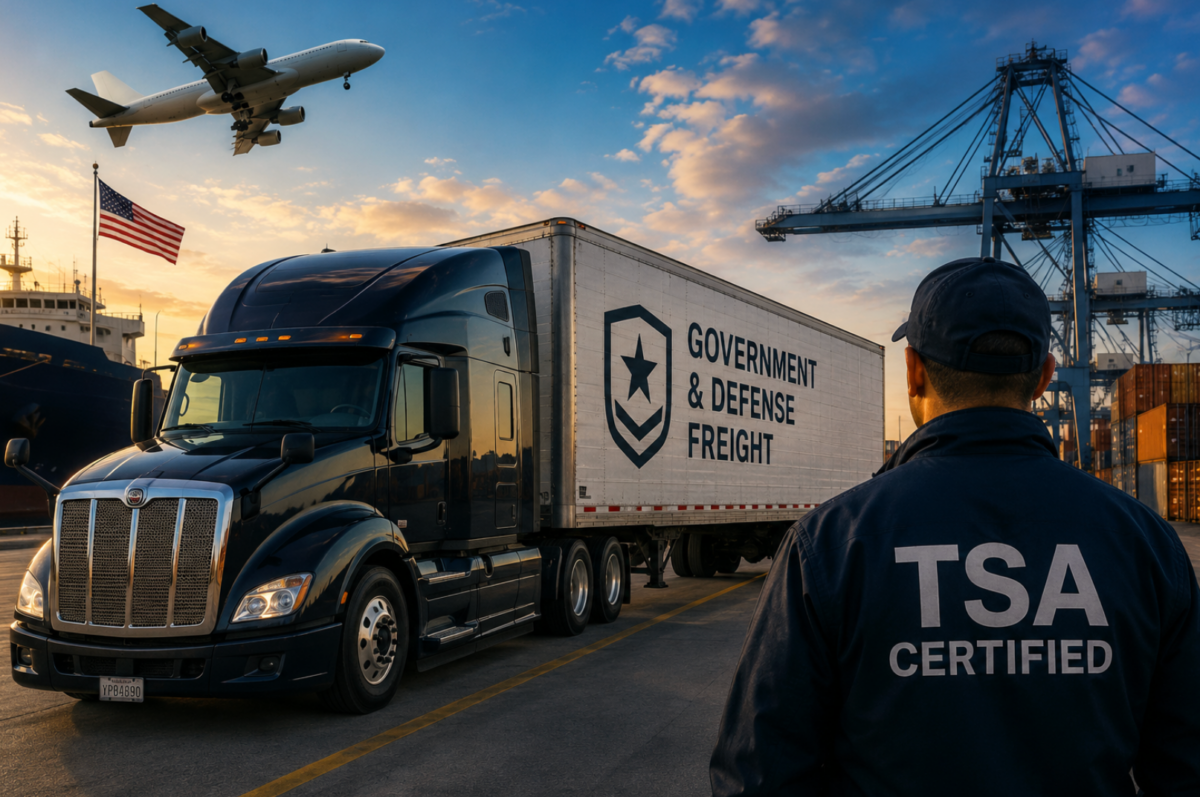
Government & Defense Freight in Los Angeles: Why Choosing a TSA Certified Trucking Company Is Essential
Government and defense logistics impose elevated security and compliance requirements. Transport in this sector demands both proven reliability and strict adherence to regulatory standards. This article examines why selecting a TSA certified trucking company in Los Angeles matters for safe, compliant freight movement under government contracts. Organizations handling government logistics must understand TSA certification, its evaluation criteria, defense-specific security standards, and the specialised services certified carriers provide.
What Does TSA Certification Mean for Government Freight Carriers in Los Angeles?
TSA certification verifies a carrier’s conformity with Transportation Security Administration requirements aimed at strengthening transport security. It indicates that the provider has passed background checks, security threat assessments, and operational reviews required for handling government and defence freight. Maintaining this certification is a prerequisite for many contracts that involve sensitive cargo and high security standards.
How TSA Certification Ensures Compliance and Security in Freight Transport
TSA certification requires carriers to implement documented security protocols that address risk assessment and mitigation across the shipment lifecycle. Certified providers ensure drivers and personnel undergo TSA vetting and follow tightened operational controls, reducing exposure to security threats. This structured approach protects sensitive shipments by enforcing elevated operational standards for government transport.
Key Requirements and Process for Obtaining TSA Approval
The TSA approval process includes submitting security documentation, completing personnel background checks, and demonstrating operational capabilities that meet agency guidelines. Certified carriers also undergo periodic audits and evaluations to confirm ongoing compliance and to retain their approved status.
Why Is TSA Certified Trucking Crucial for Defense and Military Freight Transport?
For defence and military freight, TSA certification is central to preventing unauthorised access to sensitive cargo and meeting contract requirements. Non-compliance can result in contract termination, penalties, and safety exposures. Selecting a TSA certified trucking partner mitigates these risks and helps ensure secure transport throughout the supply chain.
Security Protocols and Regulatory Standards for Defense Freight
Adherence to security protocols and regulatory standards is essential for safe defence freight transport. Core measures include documented cargo inspection procedures, real-time tracking, and compliance with applicable safety regulations. Implementing and maintaining these controls is necessary for organisations operating in government logistics.
Risks of Uncertified Carriers in Government Freight Logistics
Using uncertified carriers exposes organisations to legal liability, security breaches, and operational interruptions. Uncertified providers may not have adequate protocols for handling sensitive materials, creating gaps that can compromise government operations. These risks highlight the need to contract certified transport partners.
What Specialized Services Do Certified Trucking Companies Offer for Government Freight?
Certified carriers deliver specialised services designed to satisfy government security and compliance mandates throughout transit. These offerings are structured to maintain regulatory adherence and operational integrity across each shipment.
- Detailed Cargo Inspection: Ensuring all cargo is thoroughly screened before transport.
- Real-Time GPS Tracking: Allowing for constant monitoring and updates throughout transit.
- TSA-Compliant Drivers: Staff trained under TSA guidelines enhance security.
These services support continuous compliance while enabling secure, efficient transport of government materials.
Role of Flatbed and Full Truckload Transport in Securing Defense Freight
Flatbed and full truckload (FTL) services are integral to defence logistics. Flatbeds accommodate oversized or irregular loads that need straightforward loading and unloading, while FTL prevents consolidation with other shipments, reducing exposure to security risks. Both modalities aid secure cargo handling to meet government requirements.
Fleet Capabilities Meeting Diverse Government Cargo Requirements
A capable fleet is essential to meet varied government cargo needs. Contracts may require climate-controlled units for sensitive materials or larger platforms for oversized shipments. Certified carriers invest in diversified fleets to match contract specifications and operational demands.
How Does Choosing a Certified Defense Logistics Trucking Company Benefit Los Angeles Businesses?
Los Angeles companies benefit from partnering with a TSA certified defence logistics carrier through improved compliance, security, and operational predictability.
- Enhanced Compliance: Assurance that all shipments comply with government regulations.
- Reliability of Service: The reputation and track record of certified carriers ensure timely deliveries.
- Cost-Effectiveness: Long-term partnerships with certified providers can lead to economic benefits through streamlined operations and reduced risk.
Collectively, these advantages build trust and strengthen the security posture of governmental transport operations in the region.
Enhanced Reliability and Secure Freight Handling Guarantees
Certified trucking services provide documented handling procedures, TSA-vetted personnel, and real-time tracking to support reliable, secure shipments. These measures reduce operational risk and reinforce confidence in the safe movement of sensitive cargo.
Case Studies Demonstrating Certified Carrier Success in LA
Case studies from Los Angeles demonstrate certified carriers meeting government requirements through specialised fleets and strict security protocols. These examples illustrate how certified providers achieve compliant, successful transport outcomes for public-sector contracts.
What Are the Regulatory and Compliance Challenges for Government Freight Trucking in Los Angeles?
Regulatory compliance for government freight in Los Angeles requires continuous monitoring and adaptation. Carriers must align operational processes with TSA rules and evolving industry standards to sustain certification and support uninterrupted service.
Navigating TSA Regulations and Industry Updates for 2025 and Beyond
As transportation security requirements change, carriers must invest in regular training and technology updates to preserve compliance. Monitoring legislative and regulatory developments enables organisations to adjust procedures and retain certification eligibility.
Integrating Cybersecurity Measures in Modern Freight Tracking
Protecting freight tracking systems from cyber threats is essential to safeguard sensitive information and maintain regulatory compliance. Integrating cybersecurity controls into tracking and communication technologies enhances operational reliability and secures data across the logistics chain.
How Can Businesses Verify and Choose the Right Compliance Certified Trucking Company in LA?
Businesses selecting a TSA certified carrier should use defined criteria to confirm the provider’s compliance, capabilities, and suitability for government freight.
- Evaluation of TSA Certification: Ensure that certifications are current and valid.
- Fleet Specifications: Review the capabilities of the provider’s fleet.
- Questions to Ask Before Contracting a Defense Freight Carrier: Critical inquiries should include verification of compliance standards, service capabilities, and experience within the defense sector.
Applying these evaluation steps helps businesses identify logistics partners that align with their compliance and operational requirements.
Evaluating TSA Certification and Fleet Specifications
Assessing TSA certification requires reviewing compliance documentation and confirming permit validity. Examining fleet specifications verifies whether the provider can accommodate specialised cargo and meet contract conditions.
Questions to Ask Before Contracting a Defense Freight Carrier
When engaging a defence freight carrier, businesses should ask focused questions to verify compliance and capability before awarding contracts.
- What compliance measures do you have in place?
- Can you provide documentation of your TSA certification?
- How do you ensure the security of sensitive cargo?
These questions provide a basis for selecting a reliable partner qualified to manage government logistics and compliance demands.
Frequently Asked Questions
What steps should businesses take to maintain compliance with TSA regulations?
Maintain compliance by routinely updating transportation security plans, conducting employee security training, and performing periodic operational audits. Stay current with regulatory changes and implement secure tracking technologies to reinforce oversight and the safe transport of government freight.
How often do TSA certifications need to be renewed?
TSA certifications rely on ongoing audits and periodic reassessments rather than a fixed expiration date. Companies must continuously document compliance and demonstrate adherence to evolving standards to retain certified status and eligibility for government contracts.
What penalties might arise from using an uncertified carrier?
Using an uncertified carrier can result in legal penalties, financial losses, reputational harm, and disqualification from future government work. Mishandling sensitive cargo or security failures can also trigger fines and operational disruptions that materially affect business continuity.
Are there specific training requirements for drivers in certified freight transport?
Yes. Drivers for certified carriers undergo security vetting and training aligned with TSA guidance, covering cargo handling, security procedures, and emergency response. Ongoing training ensures drivers remain current with new regulations and technologies.
How do businesses assess the effectiveness of a trucking company’s security protocols?
Evaluate a carrier’s security by requesting its security plan, reviewing incident response procedures, and examining recent audit results. Discuss tracking technologies, driver training, and historical security records, and, where feasible, conduct site visits to observe controls in practice.
What role do technology and innovation play in TSA certified freight transport?
Technology enhances security and efficiency through GPS tracking, electronic logging devices, and secure communications that provide visibility and accountability. Combining these tools with cybersecurity measures protects data and supports compliance with TSA requirements.
Conclusion
Choosing a TSA certified trucking company strengthens the security and reliability of government freight transport in Los Angeles. Certified carriers maintain rigorous compliance standards and documented handling practices that reduce risk and support successful contract fulfilment. Partnering with an accredited provider helps organisations navigate regulatory complexity and protect sensitive shipments.